1,000 ppm?
0.1 percent fluoride.

ppm means parts per million and describes the fluoride concentration in toothpaste. 1,000 ppm equals 0.1 percent, or one milligram of fluoride per gram of toothpaste. The number is a concentration, not the total amount used for brushing.
For training & practice ↓
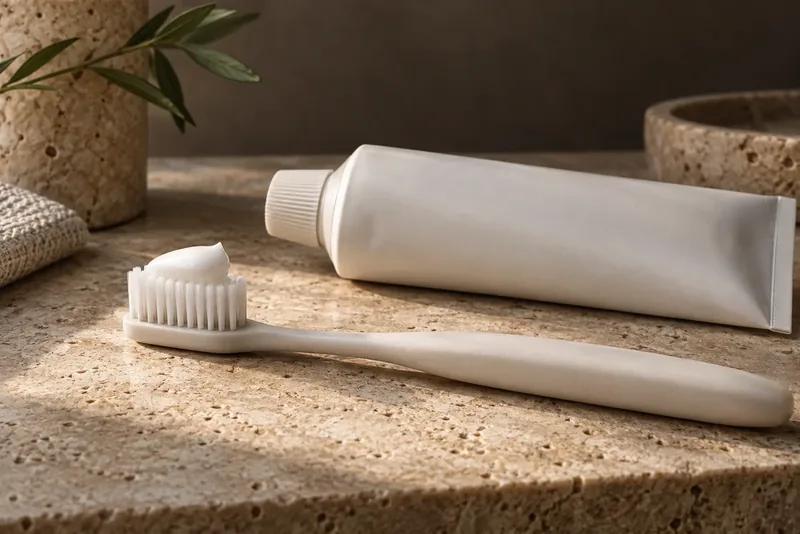
1,450 ppm means 1.45 milligrams of fluoride per gram of toothpaste. It refers to the fluoride portion, not the same percentage of the entire fluoride compound such as sodium fluoride.
At the same concentration, a larger portion contains more fluoride. For children, the ppm value therefore needs to be considered alongside an age-appropriate amount of paste.
German recommendations use 1,000 ppm with an age-appropriate amount before the transition to junior or adult paste. Around 1,450 ppm is usual after the first permanent teeth erupt. Additional products should be coordinated.
0.1 percent fluoride.
0.145 percent fluoride.
No; age, portion size and other sources also matter.
Three steps. No audio.
Each scene can also be selected manually.

Silent educational film with German on-screen text and simplified teaching images. Not a patient case or a promised treatment outcome. The full English explanation is available as text.
ppm states the proportion in the paste. The fluoride amount also depends on the mass of the portion. A tube’s volume in millilitres alone is not enough for a reliable calculation.
No. It equals 0.145 percent fluoride. One percent equals 10,000 ppm.
No. Concentration, age, decay risk, portion size and other fluoride sources need to fit together. Do not add specialised higher-strength products on your own.
Not as a general rule. Concentration and amount depend on age and individual advice. In infants especially, toothpaste and any supplements need coordination.
You can bring this question to your appointment:
Which fluoride concentration and amount of toothpaste suit me or my child?
Discuss your individual findings and whether a referral is appropriate.
Discuss your findingsAppointment selection at Doctolibppm states the proportion in the paste. The fluoride amount also depends on the mass of the portion. A tube’s volume in millilitres alone is not enough for a reliable calculation.
Editorial research: . General information, not an individual diagnosis or treatment recommendation. Teaching illustrations are simplified and do not depict a patient case.