Are tablets without vitamin D the same?
No. A fluoride preparation without vitamin D differs from a combined preparation. Vitamin D can also be given without fluoride. The active-ingredient list matters, not just the product name.

In Germany, fluoride tablets are used to help prevent tooth decay, often combined with vitamin D for infants. Their use depends on factors including age, tooth eruption and other fluoride sources. They are not an arbitrary addition to fluoride toothpaste: infants should not receive both together. Coordinate the change with the paediatric and dental practices.
For training & practice ↓
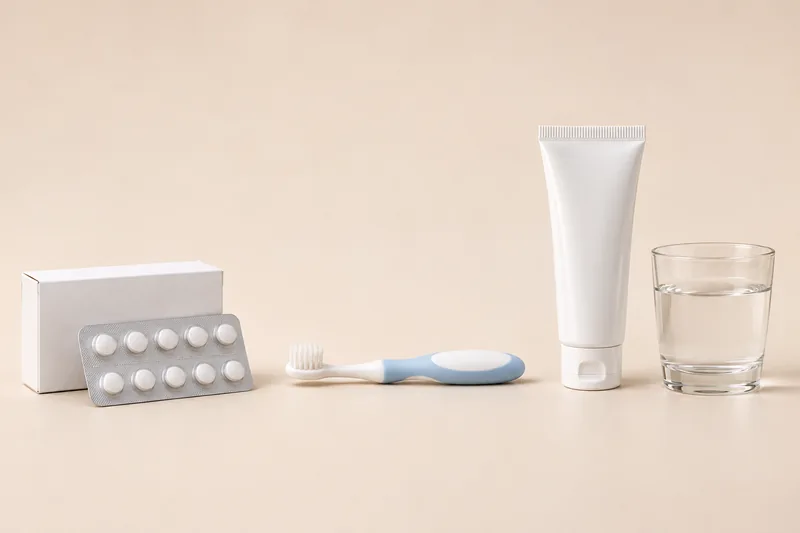
Vitamin D and fluoride have different roles. A vitamin D tablet may contain fluoride, but not all do. Check the active ingredients and name the preparation when discussing it with the paediatric or dental practice.
Brushing starts with the first tooth. Fluoride toothpaste and tablets are coordinated during the first year of life. Do not add fluoride toothpaste to a fluoride tablet; discuss vitamin D separately with the paediatric practice.
Coordination includes the tablet, toothpaste and, where applicable, water used to prepare infant formula. Age, products and amounts all matter. The illustration does not show a dose; an individual recommendation must take these details into account.
No. A fluoride preparation without vitamin D differs from a combined preparation. Vitamin D can also be given without fluoride. The active-ingredient list matters, not just the product name.
Age, tooth eruption, toothpaste and other fluoride sources need to be considered together. The age-based overview in the guide to fluoride for babies and children helps put these details into context; coordinate the specific tablet regimen with the treating practice.
Depending on the water, formula can supply additional fluoride. Check its fluoride content with the water supplier or on the bottled-water information. This is why specific recommendations apply to babies fed mainly on infant formula.
No. Regular cleaning starts with the first tooth. Tablets replace neither plaque removal nor the selection of an age-appropriate toothpaste.
The child’s age, when the first tooth appeared, the names or packs of preparations, the toothpaste used and information about water for infant formula. These details help identify unintended duplication.
Three steps. No audio.
Each scene can also be selected manually.

Silent educational film with German on-screen text and simplified teaching images. Not a patient case or a promised treatment outcome. The full English explanation is available as text.
Combined preparations contain both substances; vitamin-D-only preparations do not. Changing the fluoride source therefore does not automatically mean stopping vitamin D. Discuss which preparations fit together with the paediatric practice.
This combination is not recommended for infants. Once the first tooth appears, fluoride intake is coordinated with brushing. The KZBV recommends fluoride toothpaste and, for vitamin D supplementation, a preparation without fluoride. The joint recommendations also describe a temporary alternative until the end of the first year: fluoride tablets with toothpaste that contains no fluoride. The key is not to combine the two routes and to discuss changes with the treating practice.
The joint recommendations provide for fluoride tablets during the first year of life, no longer than the first birthday. Once the first tooth appears, the usual approach is to change to fluoride toothpaste and vitamin D without fluoride. Particular circumstances, such as fluoride in water used for infant formula, must be considered. If a preparation has been prescribed for longer, review it with the treating practice.
No. White spots have different possible causes. Dental fluorosis can develop after excessive fluoride intake while enamel is forming, but not every pale area is caused by this. Early tooth decay and other enamel changes are also possible. Neither the preparation used nor this illustration can diagnose the cause.
Editorially suggested question for a discussion with Dr. med. dent. Niusha Barahmand Pour:
Which details about toothpaste, preparations and drinking water do you need to coordinate our fluoride plan with the paediatric practice?
Unsure which fluoride sources fit together? Bring up the preparations and toothpaste at the next appointment and include the paediatric practice in coordinating the plan.
Discuss preventive careAppointment selection at DoctolibThe fluoride concentration on a toothpaste pack, the amount in a tablet and total daily intake are different measurements. None can be translated into an individual recommendation without considering age, use and other sources.
Editorial research: . General information, not an individual diagnosis or treatment recommendation. Teaching illustrations are simplified and do not depict a patient case.