What is lacking?
Some of the enamel that should originally have formed.

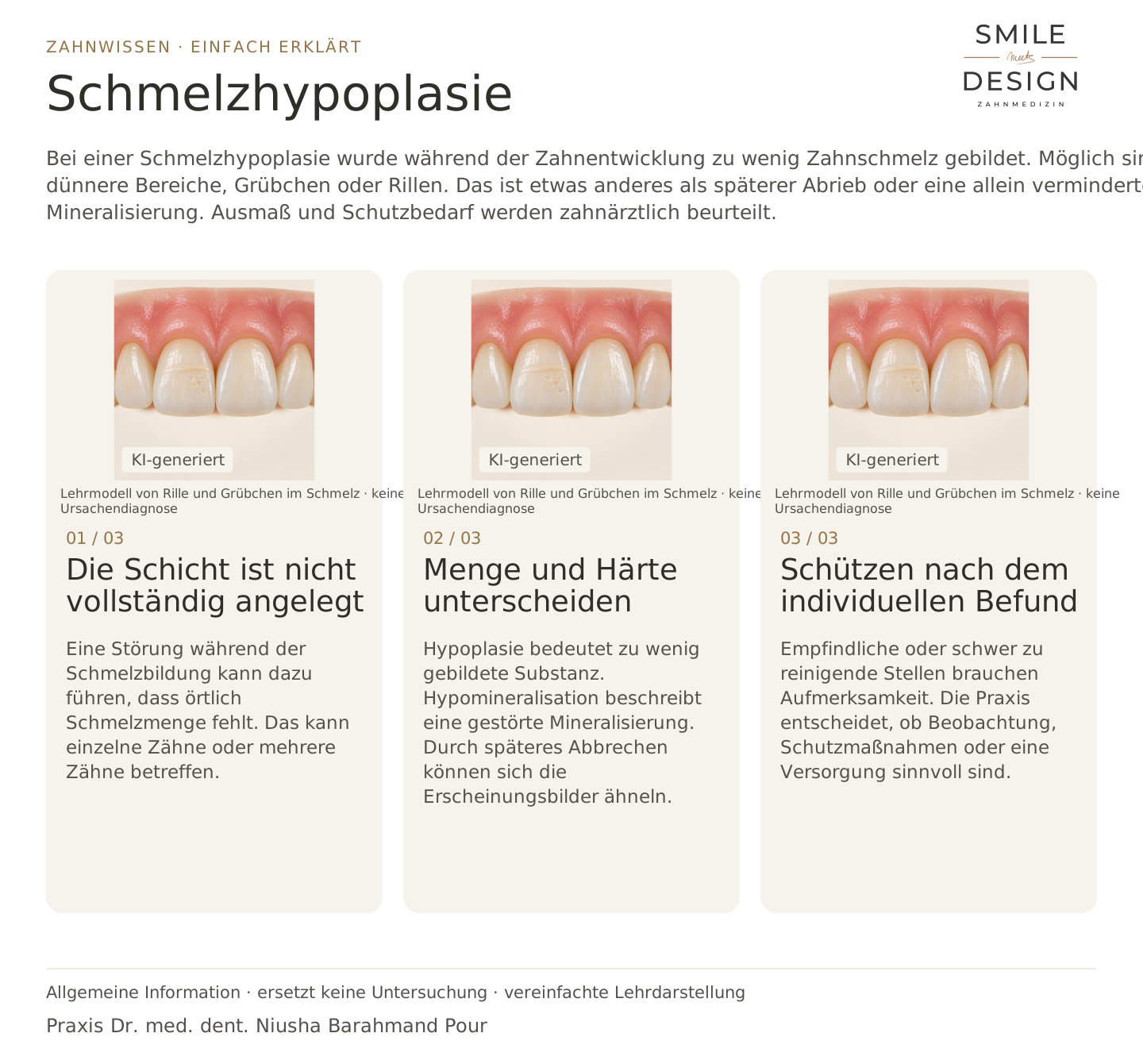
In enamel hypoplasia, too little enamel formed during tooth development. Thinner areas, pits or grooves may occur. This differs from later wear or reduced mineralisation alone. A dentist assesses the extent and the need for protection.
For dental trainees & teams
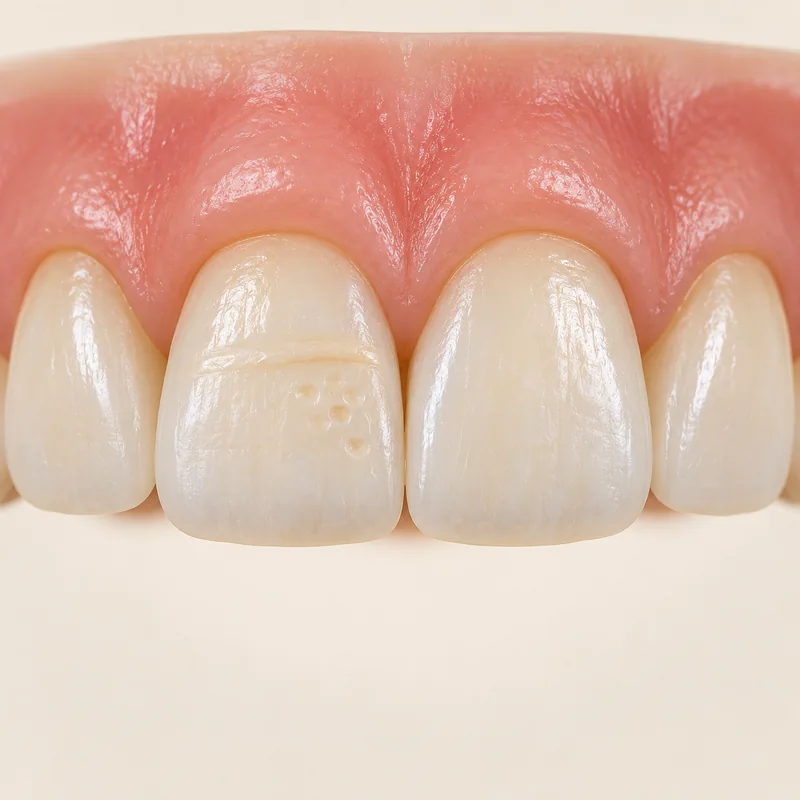
A disturbance during enamel formation may leave a local shortage of enamel. It may affect one tooth or several teeth.
Hypoplasia means too little tissue was formed. Hypomineralisation means disturbed mineralisation. Later breakdown can make their appearances similar.
Sensitive areas or surfaces that are difficult to clean need attention. The practice assesses whether observation, protective measures or restoration are appropriate.
Some of the enamel that should originally have formed.
As thin areas, pits or grooves.
Protection, cleaning and, if needed, restoration of the affected areas.
Three steps. Straight to the point.
Explanations are also shown on screen.

Silent film in German · English explanations in the three views above
Hypoplasia: too little enamel formed. Hypomineralisation: the enamel that formed is inadequately mineralised. They can have similar appearances.
A missing enamel layer does not grow back after the tooth erupts. Nevertheless, teeth can be protected and restored according to findings.
No. MIH is a specific mineralisation defect affecting certain permanent teeth. Hypoplasia concerns the amount of enamel formed.
Not reliably. Developmental history, affected teeth and examination help with assessment; the original trigger cannot always be identified afterwards.
A question to discuss with Dr. med. dent. Niusha Barahmand Pour:
Is the amount of enamel or its mineralisation affected, and what protection does the tooth need?
Symptoms, examination findings and personal wishes form the basis of individual treatment planning.
Structural enamel changes can be examined and protected appropriately.
Discuss enamel structureChoose an appointment on DoctolibBuild on the simple explanation with clinical terms, key distinctions and a knowledge question.
Examination distinguishes an original shortage of tissue from later tissue loss. Hypomineralised enamel may also break down after eruption.
Editorial research: 23 October 2026. This explanation covers general principles and does not replace a personal examination. Suitable treatment is discussed following individual assessment.