Appearance alone?
No, assess function and difficulties.

Frenotomy is an incision to release a restrictive tissue band, often a tongue-tie. Its appearance alone is not decisive; a functional restriction matters. With breastfeeding difficulties, feeding, positioning and other possible causes should first be professionally assessed.
For training & practice ↓
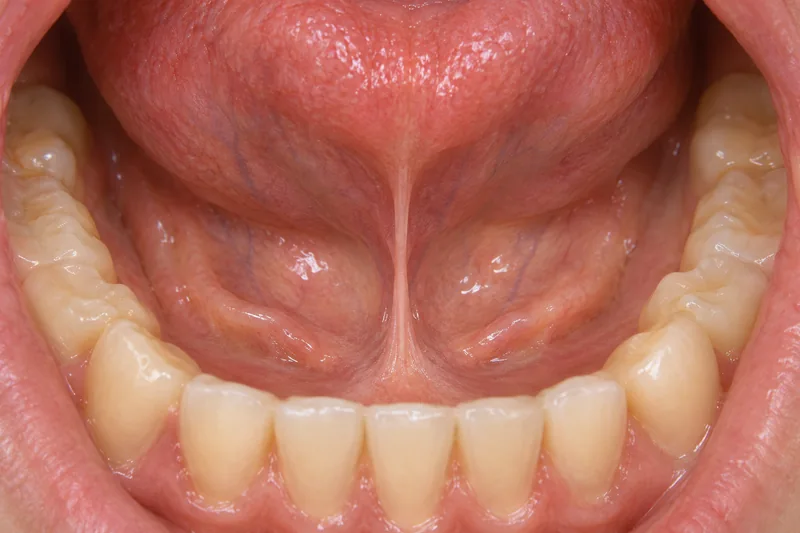
Tongue movement and specific difficulties are considered together. A visible frenulum alone is not an indication.
Skilled breastfeeding support can help infants. A procedure does not replace assessment of feeding and weight gain.
Potential benefit, bleeding, pain and aftercare need discussion. Long-term feeding or future speech benefits cannot be promised for every child.
No, assess function and difficulties.
Include breastfeeding support and paediatric assessment.
No; discuss benefits and risks individually.
Three steps. No audio.
Each scene can also be selected manually.

Silent educational film with German on-screen text and simplified teaching images. Not a patient case or a promised treatment outcome. The full English explanation is available as text.
Frenotomy means incising or dividing the band. Frenectomy means removing it; the terms are not interchangeable.
No. Without meaningful functional restriction, a procedure is not automatically needed.
This cannot be promised generally. Speech difficulties need their own professional assessment.
Seek prompt paediatric assessment; marked weakness, abnormal breathing or dehydration signs need urgent help. Do not wait for a routine dental appointment.
Editorially suggested question to discuss with Dr Niusha Barahmand Pour:
Is there a functional restriction, and who should assess it?
Assessment can identify the appropriate next professional for restricted tongue movement. Infant feeding problems need prompt paediatric attention first.
Discuss functional assessmentAppointment selection at DoctolibFrenotomy means incising or dividing the band. Frenectomy means removing it; the terms are not interchangeable.
Editorial research: . General information, not an individual diagnosis or treatment recommendation. Teaching illustrations are simplified and do not depict a patient case.