Who does the term describe?
Children under six with caries experience in baby teeth.

Early childhood caries affects baby teeth in children under six. Dental plaque, frequent sugar exposure and insufficient effective protection can combine to damage tooth structure. Early pale changes may be noticeable. This is more than a cosmetic problem and is not a reason to blame families.
For dental trainees & teams
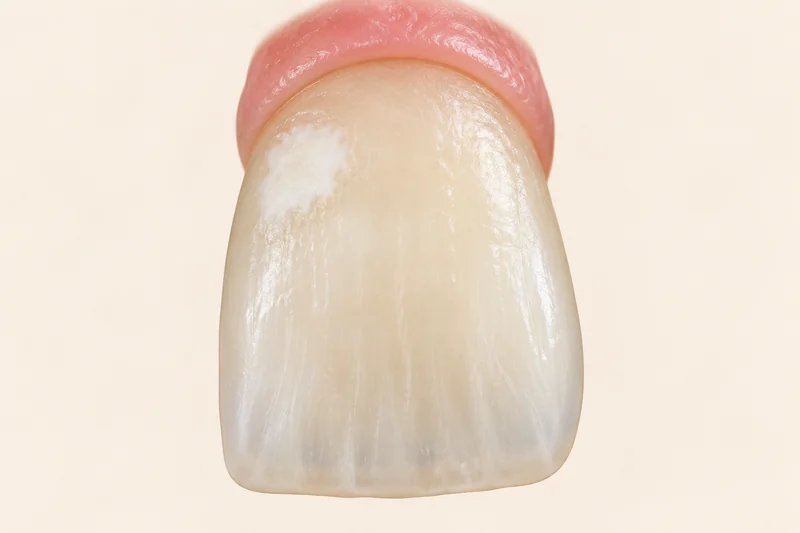
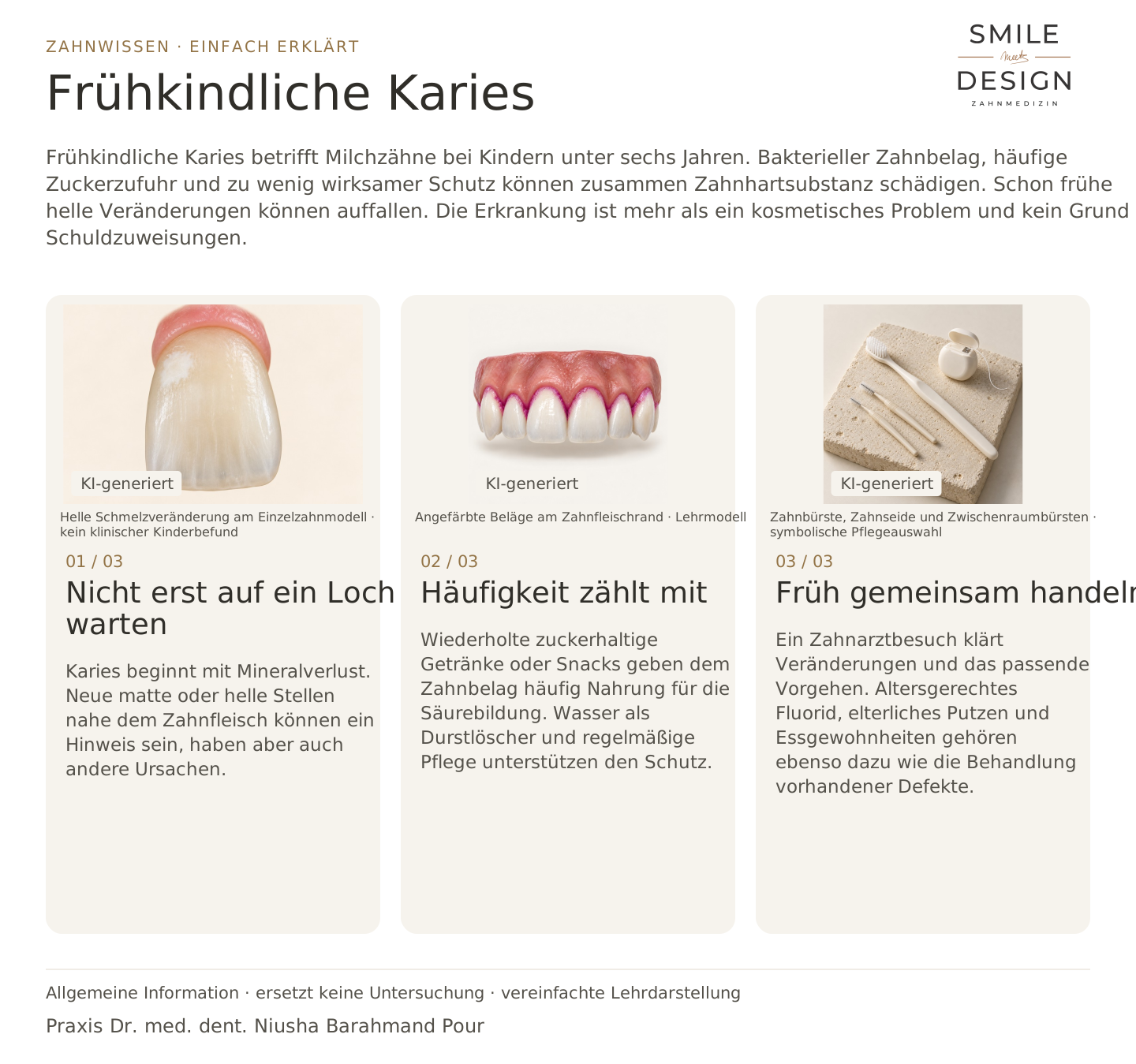
Decay starts with mineral loss. New dull or pale areas near the gum can be a clue, but other causes are possible.
Repeated sugary drinks or snacks frequently provide fuel for plaque bacteria to produce acid. Water for thirst and regular tooth care support protection.
A dental visit assesses changes and suitable care. Age-appropriate fluoride, parent-assisted brushing and eating habits matter alongside treatment of existing cavities.
Children under six with caries experience in baby teeth.
Parent-assisted brushing with age-appropriate fluoride and fewer sugar exposures.
Early for unusual marks, especially with pain or swelling.
Three steps. Straight to the point.
Explanations are also shown on screen.

Silent film in German · English explanations in the three views above
Not every pale or brown area is decay. Developmental enamel changes can look similar and can also be prone to decay. Examination establishes the cause.
No. The older term “baby bottle decay” is too narrow. Multiple risk and protective factors interact; frequent sugary drinks are one factor.
Early lesions with an intact surface can arrest with suitable preventive care. An established hole does not simply grow back. Examination and progress determine treatment.
Seek prompt dental care rather than waiting for the tooth to fall out. Fever, increasing swelling or an unwell child require urgent assessment.
A question to discuss with Dr. med. dent. Niusha Barahmand Pour:
Which changes are present in the baby teeth, and which everyday protective steps suit our child?
Symptoms, examination findings and personal wishes form the basis of individual treatment planning.
Early changes can be assessed together before symptoms develop.
Have baby teeth checkedChoose an appointment on DoctolibBuild on the simple explanation with clinical terms, key distinctions and a knowledge question.
The ECC definition includes decayed, missing due to decay or filled primary tooth surfaces. It does not refer only to large visible holes.
Editorial research: 23 October 2026. This explanation covers general principles and does not replace a personal examination. Suitable treatment is discussed following individual assessment.