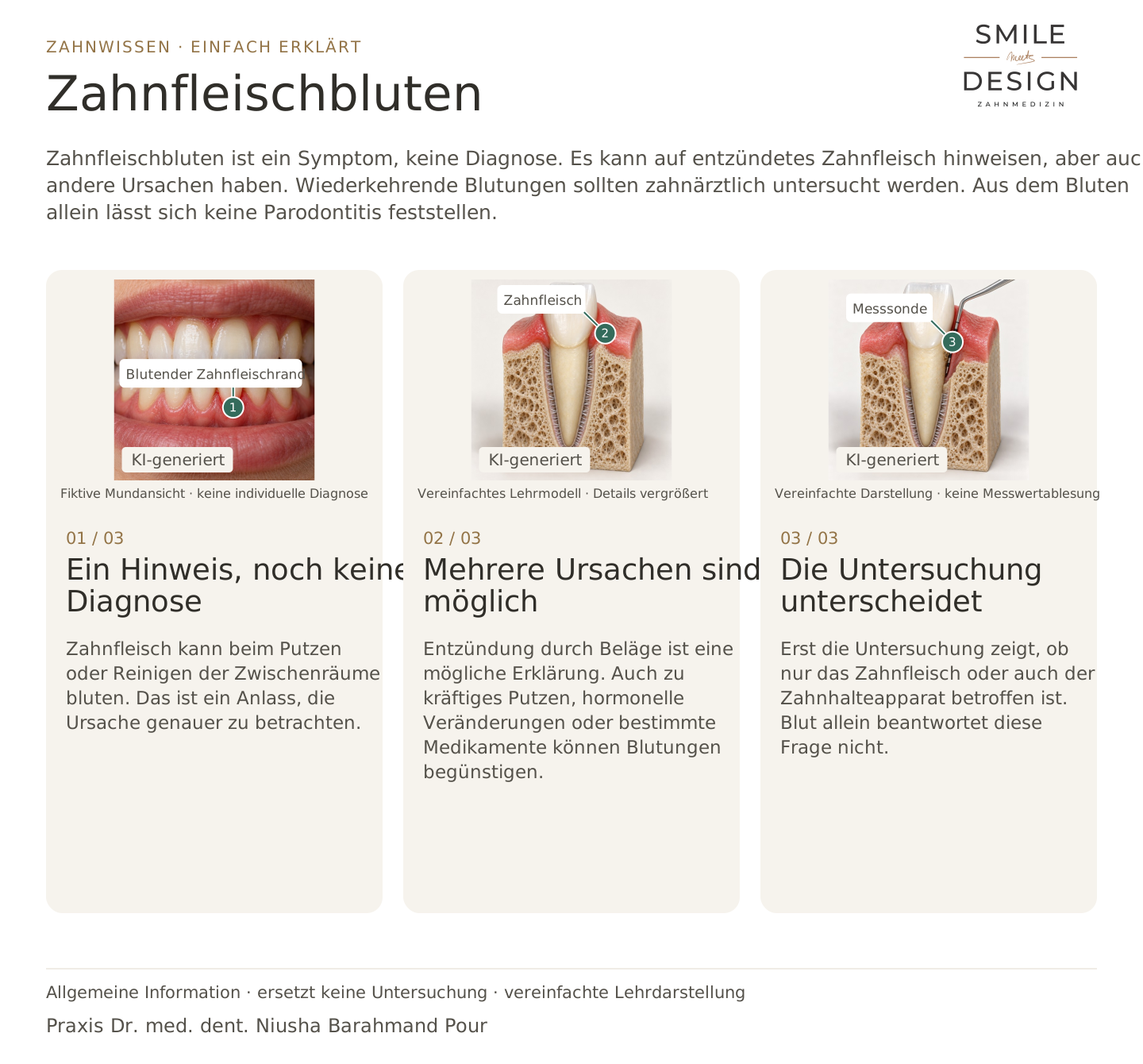
What does the bleeding tell us?
It shows that the cause deserves closer attention, but does not prove a particular disease. It cannot on its own distinguish gingivitis from periodontitis.

Bleeding gums are a symptom, not a diagnosis. They can indicate gum inflammation but may have other causes. Recurring bleeding should be examined by a dentist. Bleeding alone cannot establish a diagnosis of periodontitis.
For dental trainees & teams
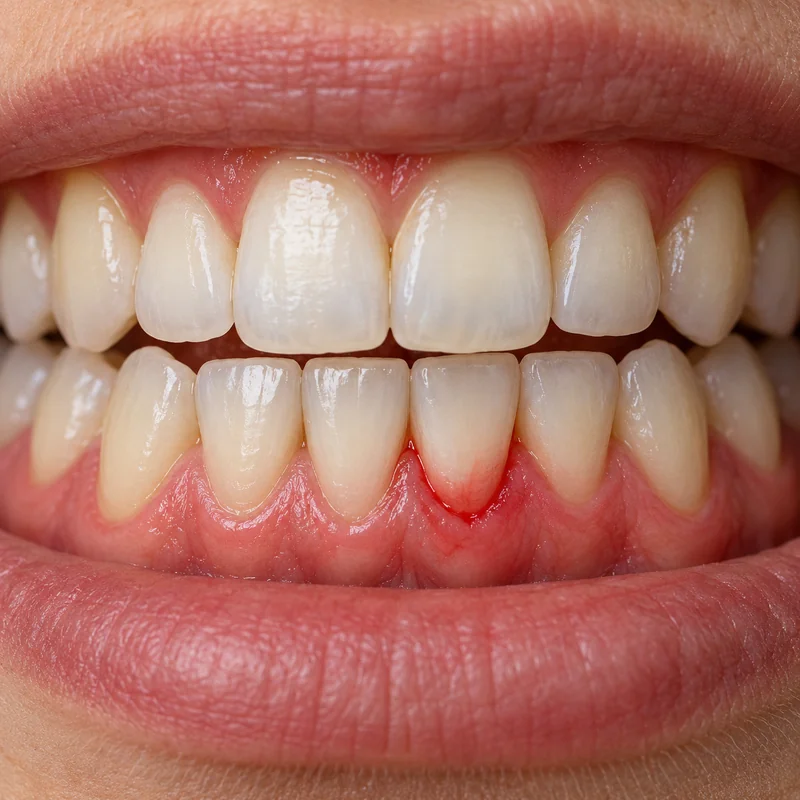
Gums may bleed during brushing or cleaning between teeth. This is a reason to look more closely at the cause.
Plaque-related inflammation is one possible explanation. Brushing too hard, hormonal changes or certain medicines can also make bleeding more likely.
Only an examination can show whether the gums alone or the supporting tissues are affected. Blood alone does not answer that question.
It shows that the cause deserves closer attention, but does not prove a particular disease. It cannot on its own distinguish gingivitis from periodontitis.
Bacterial plaque, brushing too hard, hormonal changes or certain medicines may play a role. Do not stop medicines on your own because of this.
Recurring bleeding should be assessed by a dentist. Heavy bleeding or bleeding that does not quickly subside needs immediate medical assessment.
Three steps. Straight to the point.
Explanations are also shown on screen.

Silent film in German · English explanations in the three views above
Bleeding gums describe an observation. Gingivitis and periodontitis are different conditions that are distinguished using several findings.
Cleaning remains important but should be gentle. Recurring bleeding calls for an examination and advice on a suitable technique.
No, not on your own. Tell the practice which medicines you take. Any changes should be managed by your doctor.
Heavy bleeding or bleeding that does not quickly subside needs immediate medical assessment. Significant pain and swelling also need prompt attention.
A question to discuss with Dr. med. dent. Niusha Barahmand Pour:
What might be causing the recurring bleeding, and which findings should be checked?
At her practice, planning begins with a personal discussion and an examination of the teeth and gums.
Recurring bleeding gums deserve a personal assessment of the possible cause.
Have bleeding gums assessedChoose an appointment on DoctolibBuild on the simple explanation with clinical terms, key distinctions and a knowledge question.
Bleeding gums are a symptom. A diagnosis comes from the history and examination; factors other than inflammation may also contribute.
Editorial research: 22 October 2026. This explanation covers general principles and does not replace a personal examination. Suitable treatment is discussed following individual assessment.