What does the term mean?
A relatively large amount of gum shows when smiling.

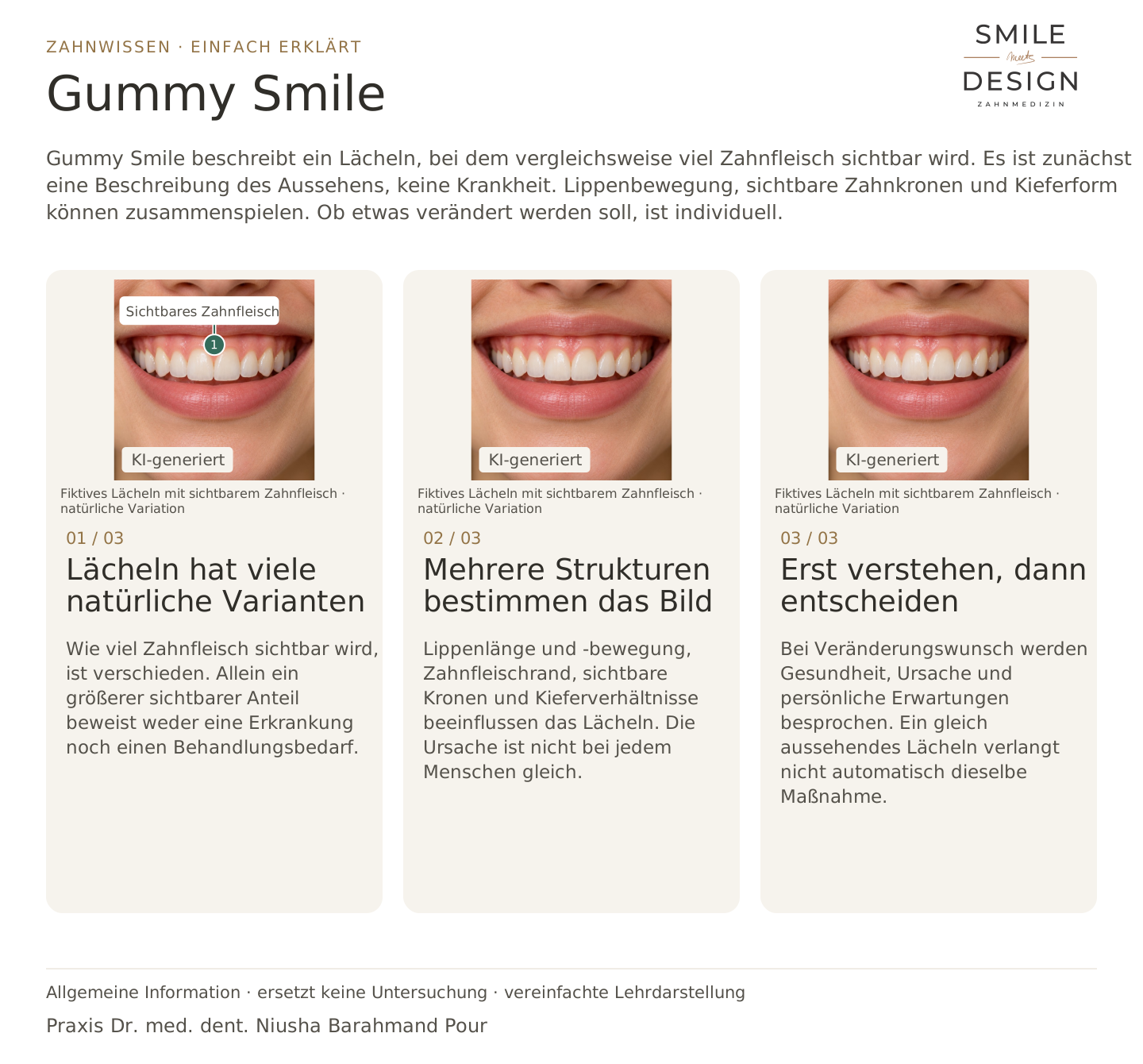
A gummy smile describes a smile that shows a relatively large amount of gum. It describes appearance, not a disease in itself. Lip movement, visible tooth crowns and jaw shape may all contribute. Whether to change anything is an individual decision.
For dental trainees & teams
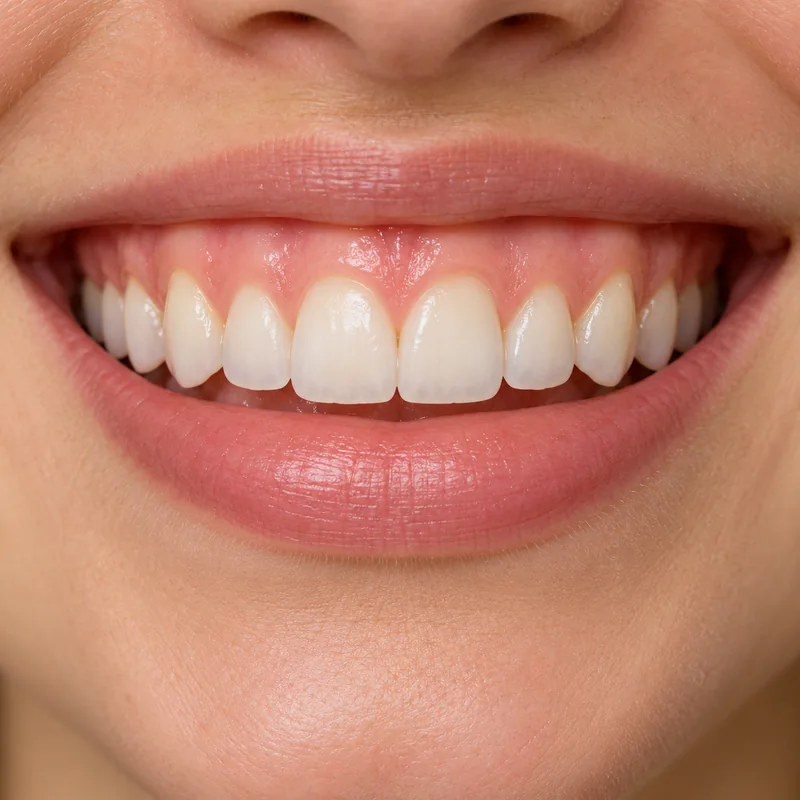
The amount of gum that shows varies. A larger visible amount alone does not prove disease or a need for treatment.
Lip length and movement, the gum margin, visible crowns and jaw relationships influence a smile. The cause is not the same for everyone.
If a change is desired, health, cause and personal expectations are discussed. Similar-looking smiles do not automatically call for the same procedure.
A relatively large amount of gum shows when smiling.
Not automatically. Many variations are healthy.
If a change is desired, or gum changes have newly appeared.
Three steps. Straight to the point.
Explanations are also shown on screen.

Silent film in German · English explanations in the three views above
Gummy smile describes gum visibility while smiling. Inflammation is a medical finding; they are not the same.
No. A smile’s appearance depends on the whole face and personal perception. A measurement alone does not determine treatment.
Not necessarily. Lip movement, tooth shape or jaw relationships may also contribute.
New swelling or enlargement should be examined separately from aesthetic wishes, especially with bleeding or discomfort.
A question to discuss with Dr. med. dent. Niusha Barahmand Pour:
Which structures shape my smile, and which options could actually suit my findings?
Symptoms, examination findings and personal wishes form the basis of individual treatment planning.
If a change is desired, its cause and your personal feelings matter.
Discuss your smile personallyChoose an appointment on DoctolibBuild on the simple explanation with clinical terms, key distinctions and a knowledge question.
The visible clinical crown is not the same as the entire anatomical crown. Soft tissue, tooth position and skeletal relationships are assessed together.
Editorial research: 23 October 2026. This explanation covers general principles and does not replace a personal examination. Suitable treatment is discussed following individual assessment.