How should adhesive be applied?
Clean the denture and then follow the instructions for the specific product: preparation and the amount needed depend on the product. There is no single number of dots or amount suitable for every product and denture.

Denture adhesive cream provides additional retention for removable dentures. It may support the hold of a well-fitting denture. It does not change the fit or replace an examination when a denture is loose, sore or painful. The amount and application method depend on the individual product.
For training & practice ↓
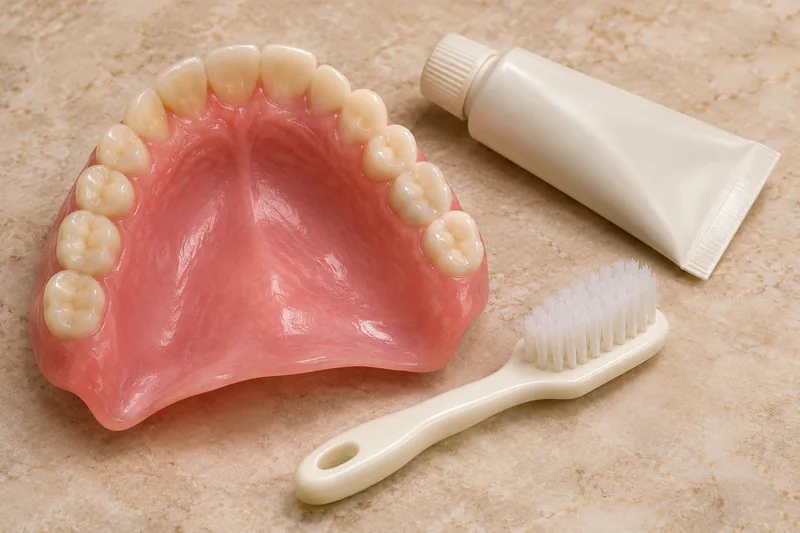
Denture adhesive may help a removable denture stay in place. It does not correct the fit or replace dental checks. If the denture rocks, rubs or causes pain, have the fit assessed.
Apply adhesive to the cleaned denture as directed for that product. Start with a small amount rather than repeatedly adding more. Oozing can mean too much was used. This still life does not illustrate a dose.
Gently remove adhesive residue from the denture and mouth lining each day. Denture cleaning and oral care go together. If increasing amounts are needed for retention, arrange an examination rather than continuing to add more.
Clean the denture and then follow the instructions for the specific product: preparation and the amount needed depend on the product. There is no single number of dots or amount suitable for every product and denture.
Remove the denture carefully and gently loosen residue using a suitable soft brush and water; clean the mouth lining gently too. Do not scrape with sharp objects or use hot water. Discuss material-compatible cleaning with the practice.
Follow the product instructions rather than reapplying without a limit. If adequate retention requires repeated applications, have the cause assessed. Do not keep covering old residue with fresh layers.
Removable dentures are generally taken out at night to give the mouth lining a rest. Different instructions may apply immediately after extraction. Adhesive is not a reason to keep dentures in continuously.
Do not use it for a home repair. Denture adhesive is not a suitable substitute for dental cement. Contact the practice about a loose fixed restoration, and do not use household glue.
Three steps. No audio.
Each scene can also be selected manually.

Silent educational film with German on-screen text and simplified teaching images. Not a patient case or a promised treatment outcome. The full English explanation is available as text.
Relining changes the fitting surface of the denture base to adapt it to the mouth. Adhesive is a temporary additional means of retention. It is also not a dental cement for loose crowns, bridges or fixed temporary restorations.
The jaw and tissues can change, and the denture itself may be damaged or no longer fit. More adhesive cannot reliably address these causes. Have the denture checked if you need increasing amounts or frequent reapplication, develop sore spots or struggle to chew securely. Depending on the findings, adjustment, relining or another solution may be appropriate.
Excessive, prolonged use of zinc-containing adhesives can lead to too much zinc being absorbed; this has been linked to problems including nerve damage. It does not mean that every use according to the instructions is harmful. Follow the directions and amount specified. Zinc-free products are available. Stop using the product and seek medical assessment if new tingling or numbness develops in the hands or feet.
Do not independently put adhesive on a fresh wound or an open sore spot. If a denture was fitted immediately after a tooth extraction, the treating practice should specify when and how it may be worn, cleaned and, if appropriate, used with adhesive.
Editorially suggested question to discuss with Dr Niusha Barahmand Pour:
Is my increasing need for adhesive related to the application, the denture or changes in my mouth?
Does the denture feel loose or rub? An examination can assess the mouth lining, the denture and possible adjustments.
Arrange a denture fit checkAppointment selection at DoctolibAdditional retention from adhesive and an adequately fitting denture base are different things. Increasing adhesive needs may prompt a check but do not establish a particular cause on their own.
Editorial research: . General information, not an individual diagnosis or treatment recommendation. Teaching illustrations are simplified and do not depict a patient case.