
What is the aim?
Improve support and fit of the existing denture.

A reline adapts the tissue-facing denture base to changes in the mouth. Suitable material is added or replaced after assessment. Relining can improve fit, but it cannot solve every problem with an old or damaged denture.
For dental trainees & teams
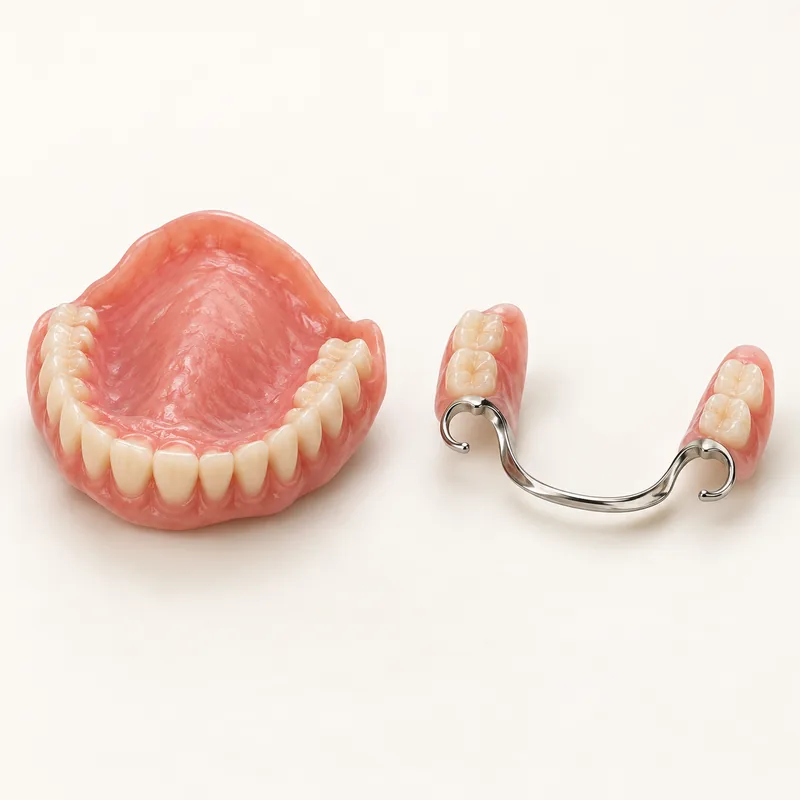
Bone and soft tissue can change after tooth loss and over time. A denture that once fitted may become loose.
After checking the mouth, denture and bite, the supporting surface is adapted. Depending on the findings, this is done directly or in a laboratory.
The base is only part of the picture: teeth, borders and bite also matter. Extensive wear may call for replacement instead.
Improve support and fit of the existing denture.
When fit changes, for example as a toothless ridge heals.
Soft tissues, denture condition, bite and the cause of looseness.
Three steps. Straight to the point.
Explanations are also shown on screen.

Silent film in German · English explanations in the three views above
Relining adapts the supporting surface. A repair addresses damage such as a fracture or broken denture tooth.
No. Relining changes base fit. Adhesive cannot replace assessment of a poorly fitting denture.
No. Examination determines whether the existing denture is suitable.
There is no universal fixed interval. Fit, tissue changes, bite and symptoms guide the decision.
A question to discuss with Dr. med. dent. Niusha Barahmand Pour:
Would a reline be enough, or are there additional wear or bite problems?
At the practice, findings, personal wishes and possible next steps are discussed through a consultation and examination.
If a denture moves, a fit check can clarify which adjustment is actually needed.
Have denture fit checkedChoose an appointment on DoctolibBuild on the simple explanation with clinical terms, key distinctions and a knowledge question.
Using increasing amounts of adhesive to compensate for looseness may conceal an underlying fit problem.
Editorial research: 23 October 2026. This explanation covers general principles and does not replace a personal examination. Suitable treatment is discussed following individual assessment.