Only for suspected cancer?
No.

Histopathology examines sampled tissue under a microscope. The arrangement and changes of cells and their surroundings help identify a condition. It can help distinguish inflammation and benign or malignant changes.
For training & practice ↓
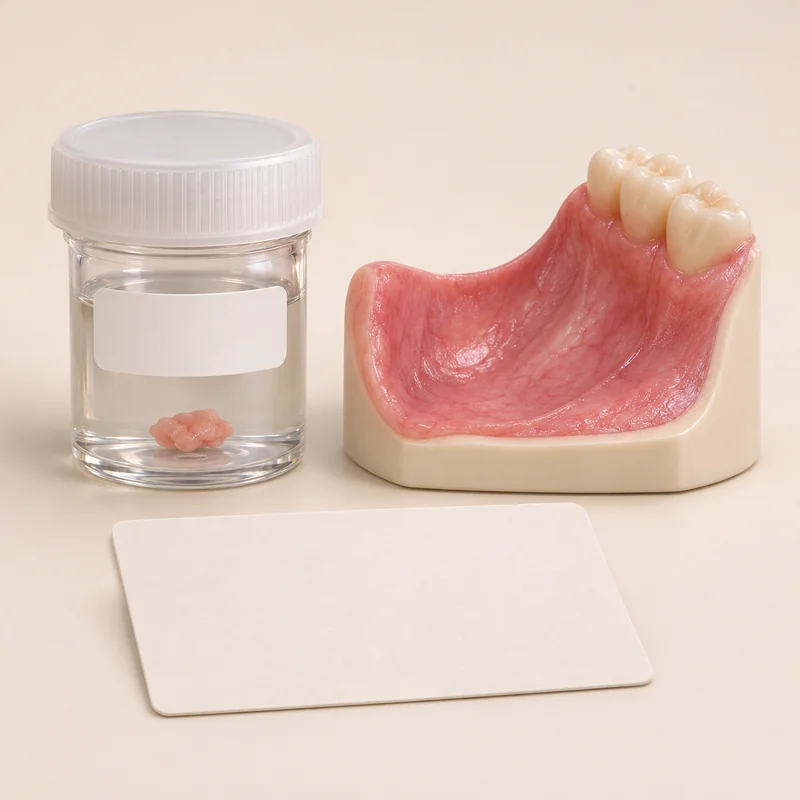
A tissue sample is examined with information about its site and the clinical question. Linking the sample to the clinical findings supports interpretation.
The laboratory prepares stained tissue sections. Pathologists examine their structures; additional investigations may be needed.
The report is considered alongside examination and progress. Discuss what it establishes, its limitations and whether treatment or review is needed.
No.
Further tests or another sample may be needed.
Contact the treating team at the agreed time.
Three steps. No audio.
Each scene can also be selected manually.

Silent educational film with German on-screen text and simplified teaching images. Not a patient case or a promised treatment outcome. The full English explanation is available as text.
Histopathology assesses tissue architecture. Cytology examines cells. These approaches answer different questions and are not freely interchangeable.
No. Uncertain or benign lesions and inflammation may also be investigated.
A biopsy obtains the sample. Histopathology is its microscopic tissue examination.
Processing and extra tests affect timing. Agree who will contact you and when; waiting time cannot establish a diagnosis.
You can bring this question to your appointment:
What does the tissue report explain, and what follow-up or other steps does it require?
An examination can clarify the finding and any need for referral.
Arrange an assessmentAppointment selection at DoctolibHistopathology assesses tissue architecture. Cytology examines cells. These approaches answer different questions and are not freely interchangeable.
Editorial research: . General information, not an individual diagnosis or treatment recommendation. Teaching illustrations are simplified and do not depict a patient case.