What is it?
A mineral component of teeth, also manufactured as a care-product ingredient.

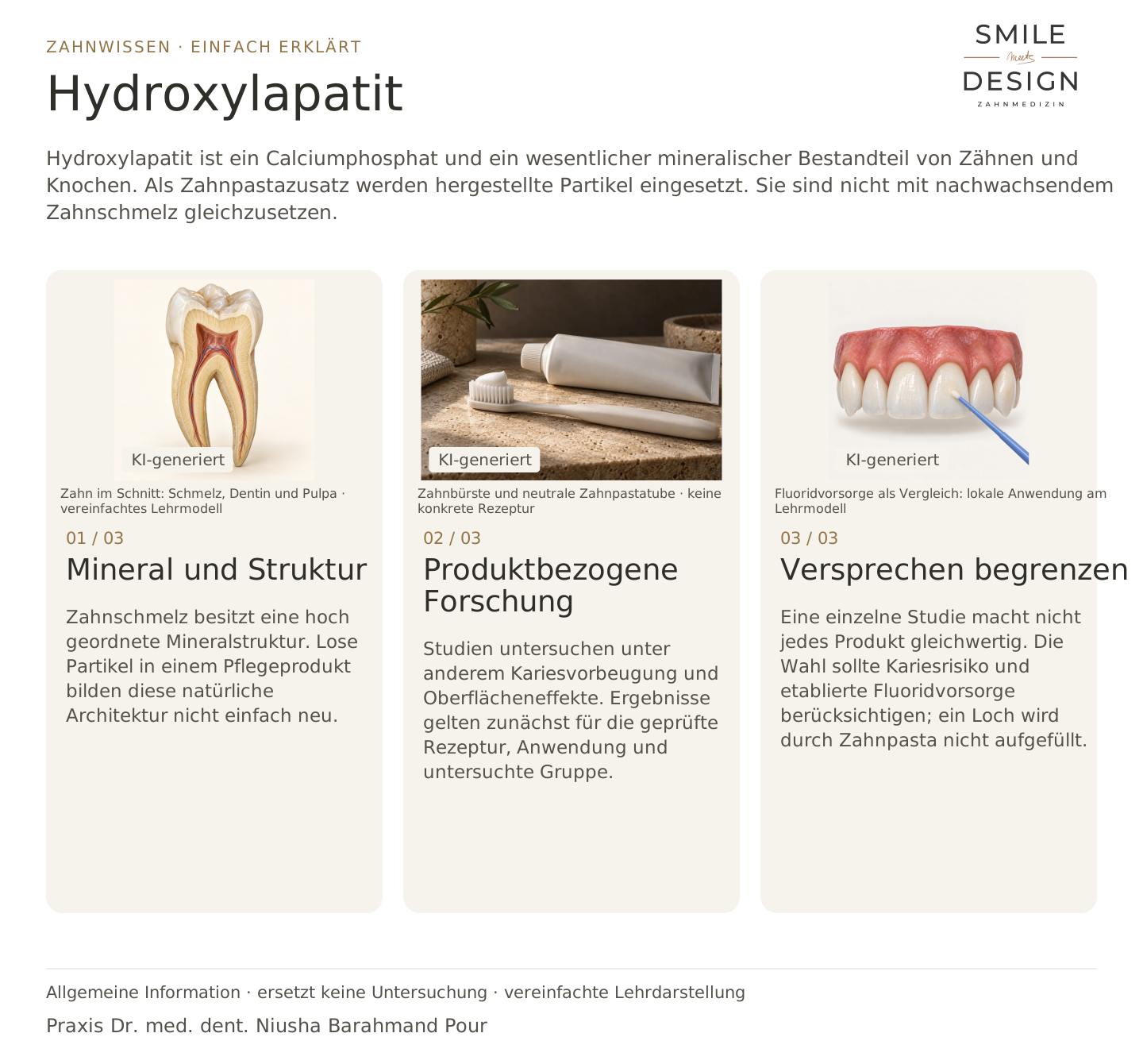
Hydroxyapatite is a calcium phosphate and a major mineral component of teeth and bone. Manufactured particles are used in some toothpastes. They are not the same as regrowing tooth enamel.
For dental trainees & teams
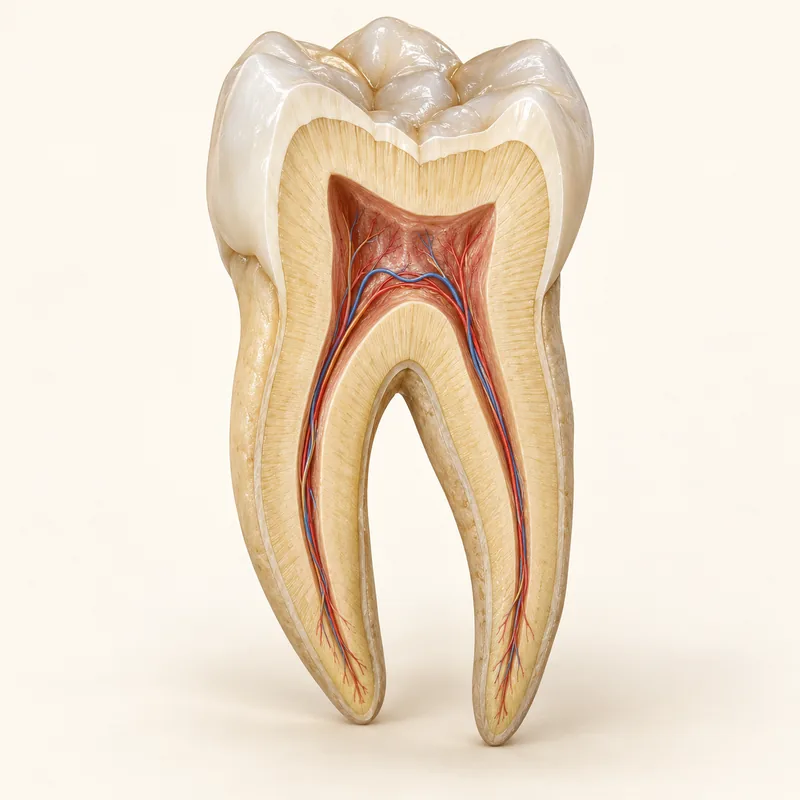
Enamel has a highly organised mineral structure. Loose particles in a care product do not simply recreate that natural architecture.
Studies examine cavity prevention and surface effects, among other outcomes. Findings first apply to the formulation, use and population actually studied.
One study does not make every product equivalent. Choice should consider cavity risk and established fluoride prevention; toothpaste cannot fill a cavity.
A mineral component of teeth, also manufactured as a care-product ingredient.
Effects of specific formulations on tooth surfaces and cavity development, among other outcomes.
That every HAP toothpaste replaces lost enamel or is generally better than fluoride.
Three steps. Straight to the point.
Explanations are also shown on screen.

Silent film in German · English explanations in the three views above
Mineral gain in early surface lesions does not mean that lost tooth shape or larger defects regrow.
No. Hydroxyapatite is a calcium phosphate; fluoride is a different ingredient with its own action and broad prevention evidence.
No. Particle properties, concentration and the full formulation vary. Results cannot automatically be transferred between them.
No. The safety of a particular material and its effectiveness against a disease are separate questions.
A question to discuss with Dr. med. dent. Niusha Barahmand Pour:
Which finding is relevant to my teeth, and which is only a product claim?
Individual findings are the basis for discussing appropriate next steps.
Before changing toothpaste, consider how the choice fits personal cavity prevention.
Discuss toothpaste choiceChoose an appointment on DoctolibBuild on the simple explanation with clinical terms, key distinctions and a knowledge question.
A positive non-inferiority result does not establish general superiority or automatically apply to other products.
Editorial research: 23 October 2026. This explanation covers general principles and does not replace a personal examination. Suitable treatment is discussed following individual assessment.