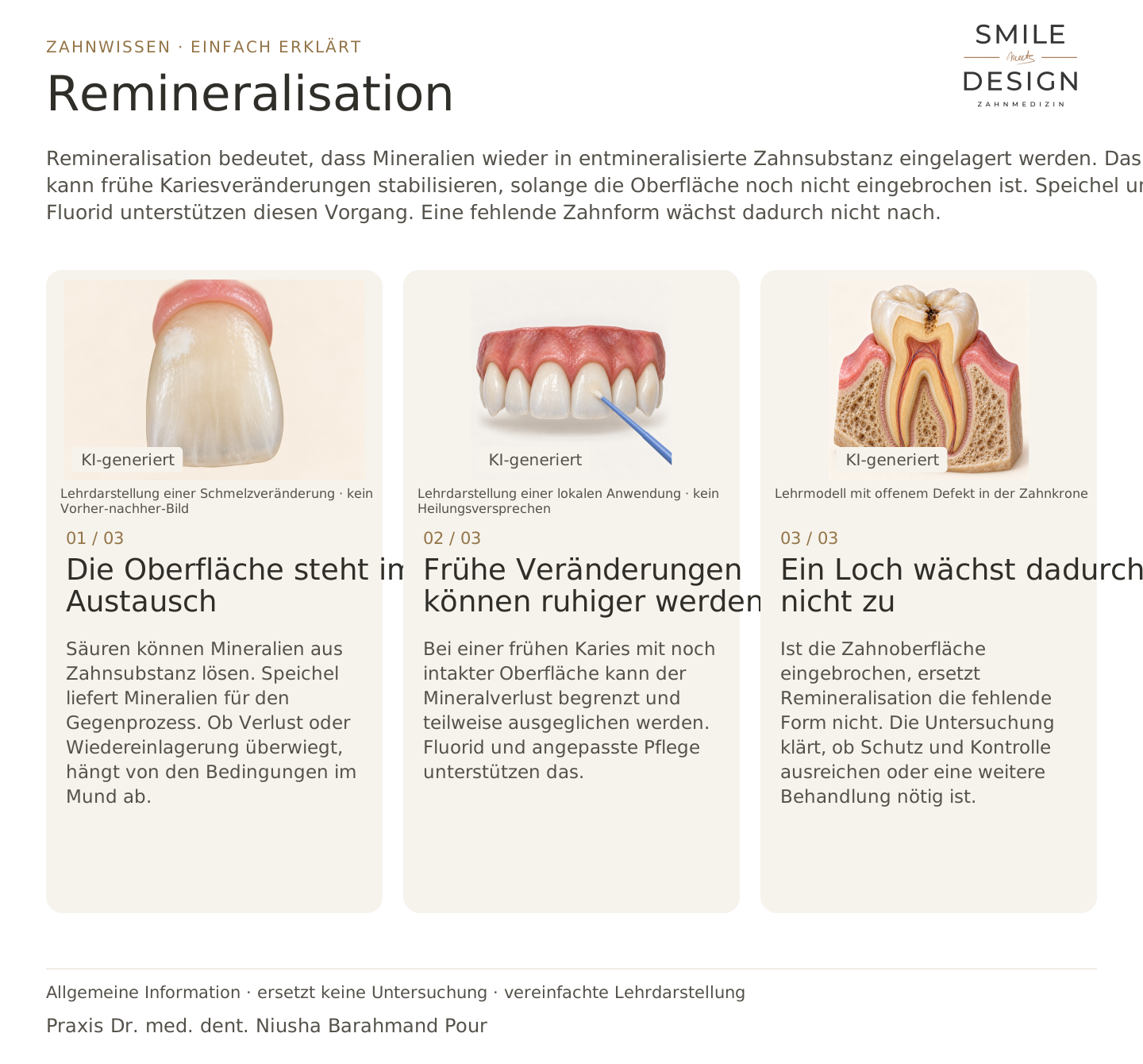
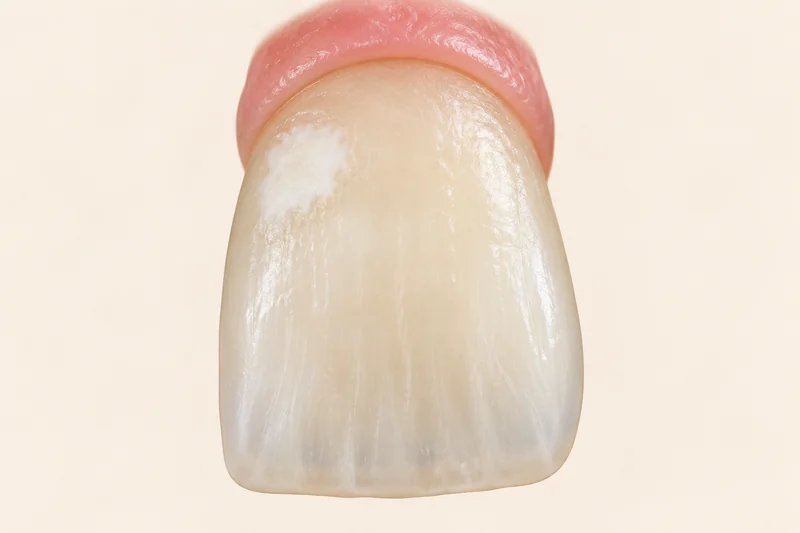
What returns to the tooth tissue?
Minerals can be incorporated into remaining tissue that was previously demineralised. Saliva supplies minerals; fluoride can support the process.

Remineralisation means minerals are incorporated back into demineralised tooth tissue. This can stabilise early decay while the surface remains intact. Saliva and fluoride support the process. Missing tooth shape does not grow back as a result.
For dental trainees & teams
Acids can dissolve minerals from tooth tissue. Saliva supplies minerals for the reverse process. Whether loss or replacement predominates depends on conditions in the mouth.
In early decay with an intact surface, mineral loss can be limited and partly reversed. Fluoride and suitable care support this.
If the tooth surface has broken down, remineralisation does not replace the missing shape. An examination establishes whether protection and monitoring are enough or further treatment is needed.
Minerals can be incorporated into remaining tissue that was previously demineralised. Saliva supplies minerals; fluoride can support the process.
In early decay with an intact surface, mineral loss can be partly reversed. An examination establishes whether these conditions are present.
It does not rebuild a broken-down surface or a missing tooth fragment. Nor can the disappearance of a white spot be guaranteed.
Three steps. Straight to the point.
Explanations are also shown on screen.

Silent film in German · English explanations in the three views above
Remineralisation strengthens remaining demineralised tooth tissue. A filling or another restoration can replace lost shape. These are different processes.
No. It concerns minerals in tooth tissue that is still present. It does not rebuild a broken-down surface or a missing tooth fragment.
No. Appearance and stability are different things. White spots can have different causes; the treatment aim depends on the findings.
Conditions in the mouth matter: regular plaque control, suitable fluoride use and less frequent sugar exposure. Appropriate measures are discussed individually.
A question to discuss with Dr. med. dent. Niusha Barahmand Pour:
Is the surface still intact, and how would we tell whether the change remains stable?
Preserving tooth tissue is part of the practice's approach. Possible steps are planned based on the examination.
We discuss what an unusual tooth surface needs after assessing the findings.
Have your tooth surface examinedChoose an appointment on DoctolibBuild on the simple explanation with clinical terms, key distinctions and a knowledge question.
Remineralisation concerns existing demineralised tissue. It neither replaces broken-down tooth shape nor automatically removes the need for restorative treatment.
Editorial research: 22 October 2026. This explanation covers general principles and does not replace a personal examination. Suitable treatment is discussed following individual assessment.