What should I note?
When it began, medicines and links with eating or swallowing.

Hypersalivation means increased saliva production. However, feeling that there is too much saliva or drooling does not always result from overproduction: swallowing or lip closure may also be impaired. Production, clearance and accompanying symptoms therefore need separate assessment.
For training & practice ↓
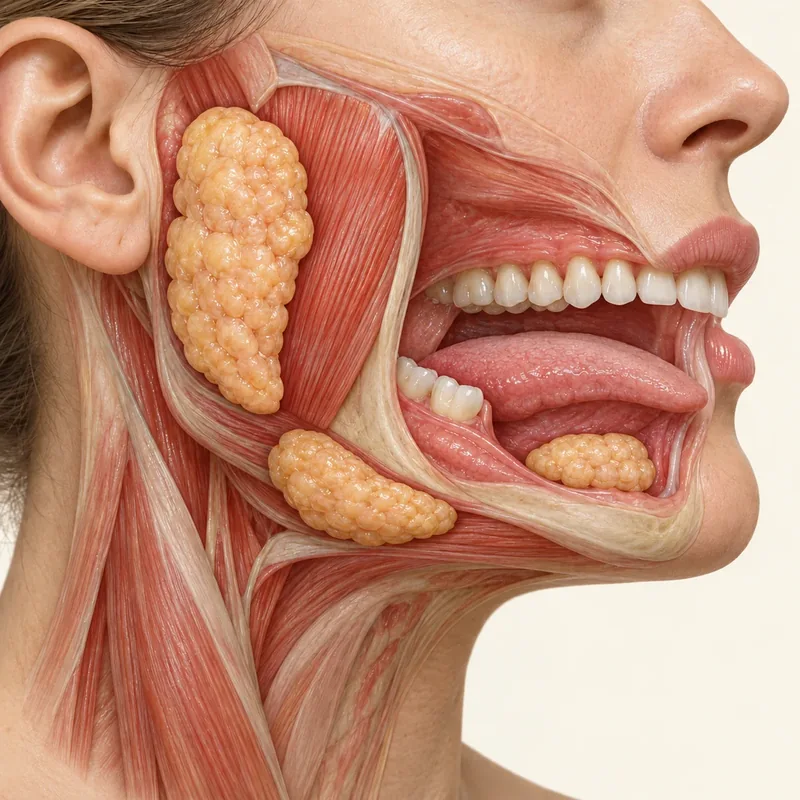
Salivary glands release fluid into the mouth. Increased production is one possible explanation for excess saliva, but not the only one.
The tongue, lips and swallowing help manage saliva. If this is impaired, saliva may collect or leave the mouth without increased production.
New or persistent drooling needs assessment. Swallowing difficulty, repeated choking or a wet voice after eating or drinking needs urgent medical advice. For acute severe breathing difficulty in Germany: call 112.
When it began, medicines and links with eating or swallowing.
Yes. Swallowing difficulty, repeated choking or a wet voice after eating or drinking needs urgent medical advice.
No. Other medical specialties may be involved depending on the cause.
Three steps. No audio.
Each scene can also be selected manually.

Silent educational film with German on-screen text and simplified teaching images. Not a patient case or a promised treatment outcome. The full English explanation is available as text.
Drooling does not prove overproduction. In clinical use, sialorrhoea can also refer to saliva escaping from the mouth.
No. Production, swallowing and mouth closure may contribute differently. The symptom alone does not identify its cause.
Yes. A medication list can help with assessment. Do not stop a medicine or change its dose without professional advice.
Management depends on the cause. Medical assessment and support for swallowing may be appropriate. A general home remedy will not suit every situation.
You can bring this question to your appointment:
Is this increased production or difficulty with swallowing or mouth closure?
Persistent drooling can be discussed. If swallowing is difficult, seek urgent medical advice rather than waiting for a routine dental appointment.
Discuss symptomsAppointment selection at DoctolibVisible drooling, measured saliva quantity and the underlying cause are not interchangeable.
Editorial research: . General information, not an individual diagnosis or treatment recommendation. Teaching illustrations are simplified and do not depict a patient case.