Purpose?
Consistent recording of decay findings.

ICDAS is a standardised system for recording visible signs of decay on a cleaned tooth surface. Codes 0 to 6 describe increasingly evident changes through to extensive defects. They are neither a pain scale nor a stand-alone decision to place a filling.
For training & practice ↓
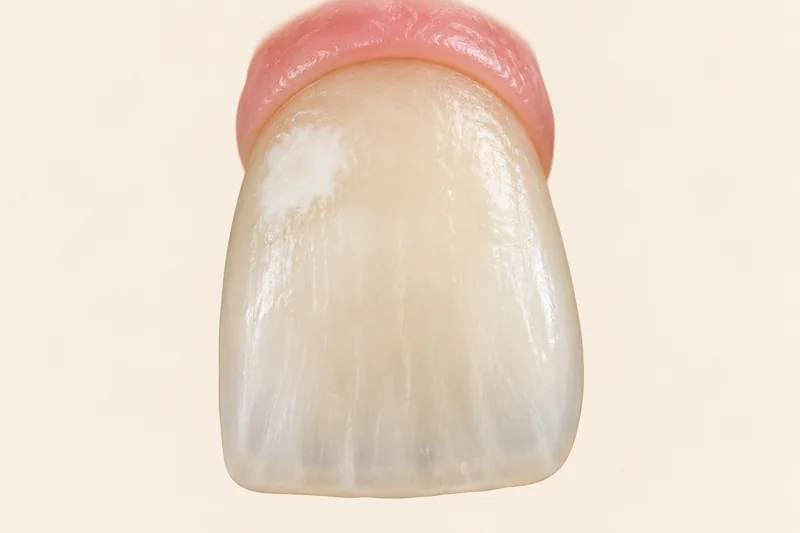
Plaque can hide changes. The surface is assessed under suitable conditions, sometimes after drying.
An early enamel change differs from a visible cavity exposing dentine. ICDAS makes this distinction easier to record consistently.
Activity, risk, accessibility and other findings complement the code. Together they inform individual planning.
Consistent recording of decay findings.
0 to 6 for a surface.
Activity and individual risk.
Three steps. No audio.
Each scene can also be selected manually.

Silent educational film with German on-screen text and simplified teaching images. Not a patient case or a promised treatment outcome. The full English explanation is available as text.
The code describes visible extent. Whether a lesion is likely to progress is assessed separately.
No. It concerns the assessed surface under the examination conditions, not a guarantee for every tooth.
No. Other enamel changes can also look pale. ICDAS requires professional differentiation.
The code alone does not determine treatment. Depth, activity and other factors are considered together.
Editorially suggested question to discuss with Dr Niusha Barahmand Pour:
What does this tooth's code mean, and is the lesion active?
Unsure about a code in your dental record? Ask which surface it concerns and what comes next.
Discuss a decay findingAppointment selection at DoctolibThe code describes visible extent. Whether a lesion is likely to progress is assessed separately.
Editorial research: . General information, not an individual diagnosis or treatment recommendation. Teaching illustrations are simplified and do not depict a patient case.