Who may be suitable?
People with suitable natural teeth after assessment of the discoloration and oral health.

In-office bleaching applies a whitening agent to natural teeth during a dental appointment. Teeth, gums and the reason for discolouration are assessed first, and the gums are protected. The degree and evenness of colour change vary. Fillings, crowns and veneers do not lighten in the same way as natural teeth.
For training & practice ↓
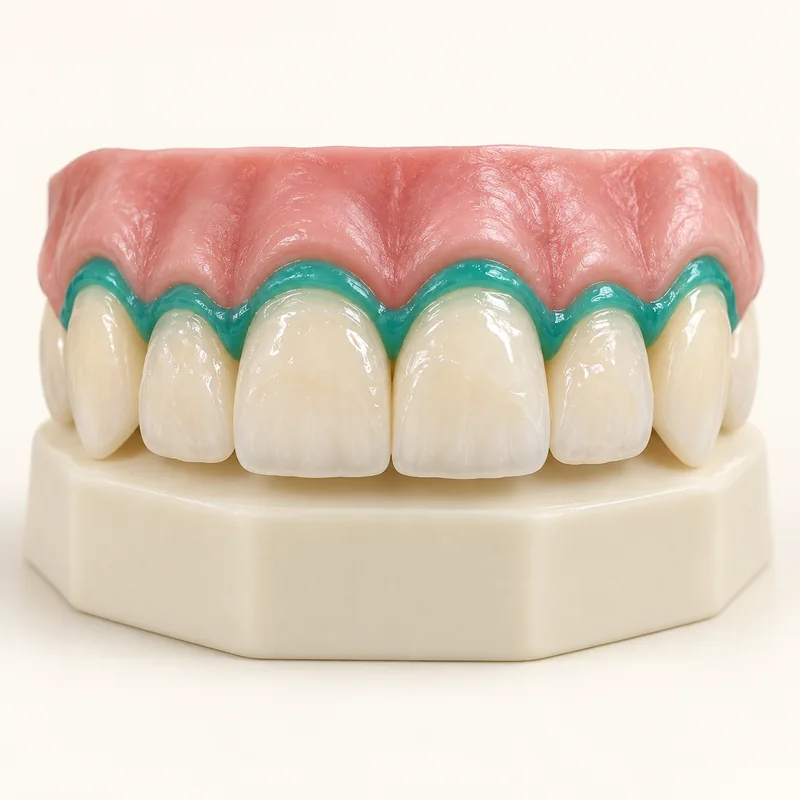
Deposits, the tooth’s own colour and existing restorations are different issues. Examination establishes whether bleaching suits the cause and condition of the teeth.
Peroxide-containing gel changes coloured compounds in the tooth. Soft tissues are protected. Light activation is not part of every method or a universal quality guarantee.
Temporary sensitivity and irritation can occur. Tell the dental team about symptoms; the result and further steps need individual review.
People with suitable natural teeth after assessment of the discoloration and oral health.
Assessment, shade planning, tissue protection, application and review.
Neither a fixed final shade nor risk-free whitening can be promised.
Three steps. No audio.
Each scene can also be selected manually.

Silent educational film with German on-screen text and simplified teaching images. Not a patient case or a promised treatment outcome. The full English explanation is available below.
Deposits, the tooth’s own colour and existing restorations are different issues. Examination establishes whether bleaching suits the cause and condition of the teeth.
Peroxide-containing gel changes coloured compounds in the tooth. Soft tissues are protected. Light activation is not part of every method or a universal quality guarantee.
Temporary sensitivity and irritation can occur. Tell the dental team about symptoms; the result and further steps need individual review.
Cleaning removes deposits. Bleaching aims to change the colour of natural tooth tissue; they have different purposes.
Bleaching does not change the material colour of crowns, veneers and fillings as it does natural teeth. Possible colour differences should be discussed beforehand.
No. Starting colour, the cause of staining, tolerance and the desired change affect planning. A particular shade or appointment count cannot be promised universally.
No. Cleaning mainly removes deposits and surface build-up. Bleaching uses a whitening agent to change the colour of natural teeth.
An editorially suggested question for a conversation with Dr. med. dent. Niusha Barahmand Pour:
Which teeth could lighten, and might existing fillings or crowns stand out afterwards?
Before whitening, consider tooth colour and existing restorations together.
Discuss tooth whiteningAppointment selection at DoctolibCleaning removes deposits. Bleaching aims to change the colour of natural tooth tissue; they have different purposes.
Editorial research: . General information, not an individual diagnosis or treatment recommendation. Teaching illustrations are simplified and do not depict a patient case.