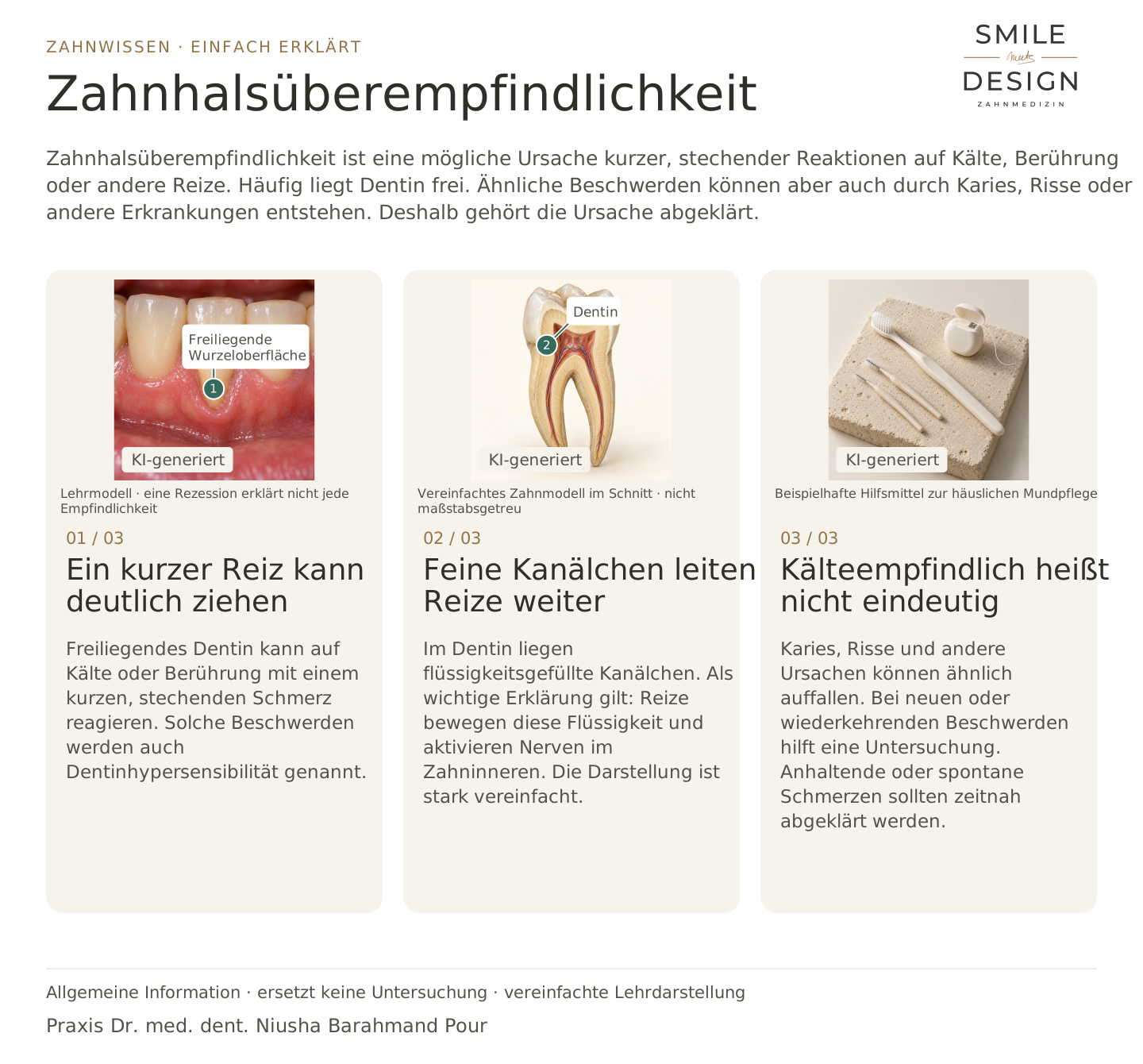
What reaction is typical?
Exposed dentine can respond to cold, touch or other stimuli with brief, sharp pain. However, similar symptoms have other possible causes.

Dentine hypersensitivity is one possible cause of brief, sharp reactions to cold, touch or other stimuli. Dentine is often exposed. Similar symptoms can also result from decay, cracks or other conditions. The cause therefore needs assessment.
For dental trainees & teams
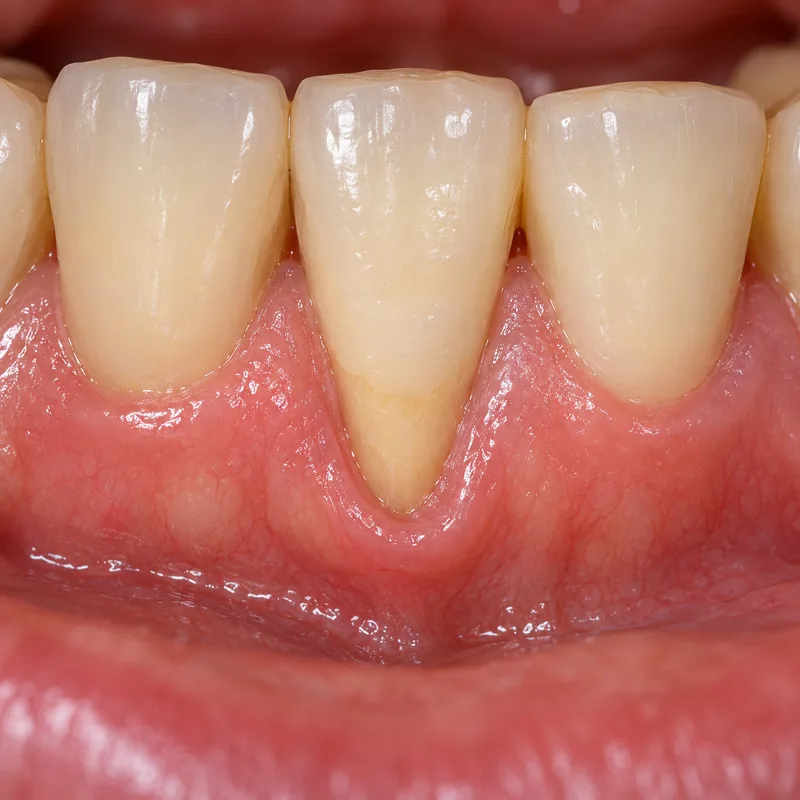
Exposed dentine can respond to cold or touch with brief, sharp pain. These symptoms are also called dentine hypersensitivity.
Dentine contains fluid-filled tubules. A leading explanation is that stimuli move this fluid and activate nerves inside the tooth. The illustration is highly simplified.
Decay, cracks and other causes can produce similar symptoms. New or recurring symptoms warrant an examination. Persistent or spontaneous pain should be assessed promptly.
Exposed dentine can respond to cold, touch or other stimuli with brief, sharp pain. However, similar symptoms have other possible causes.
A leading explanation involves fluid movement in fine dentinal tubules. This can allow nerves inside the tooth to respond to external stimuli.
Decay, cracks or other conditions can produce similar symptoms. Persistent or spontaneous pain should be assessed promptly.
Three steps. Straight to the point.
Explanations are also shown on screen.

Silent film in German · English explanations in the three views above
Dentine hypersensitivity describes stimulus-related symptoms from exposed dentine that are not better explained by another dental condition. This is assessed by a dentist.
No. Other dental problems can also respond to cold. Location, duration and triggers help the discussion, but do not replace an examination.
These products can reduce symptoms, but do not work equally for every cause. Persistent symptoms call for an assessment of the cause.
Note which tooth seems affected, what triggers the pain and how long it lasts. Mention any spontaneous pain or swelling too.
A question to discuss with Dr. med. dent. Niusha Barahmand Pour:
Which cause fits my triggers and the duration of my symptoms, and what should be checked first?
Personal discussion, examination and clear treatment planning go together at the practice.
An examination can distinguish sensitive exposed dentine from other possible causes of the symptoms.
Have sensitive teeth assessedChoose an appointment on DoctolibBuild on the simple explanation with clinical terms, key distinctions and a knowledge question.
Cold sensitivity is a symptom. Dentine hypersensitivity is assessed after other plausible causes have been checked.
Editorial research: 22 October 2026. This explanation covers general principles and does not replace a personal examination. Suitable treatment is discussed following individual assessment.