Can decay become inactive?
Yes, arrest is possible.

Yes. A carious lesion can be active or arrested. Activity describes the likelihood of progression at a particular site. Assessment considers the surface, location, plaque and changes over time. Colour alone is insufficient.
For training & practice ↓
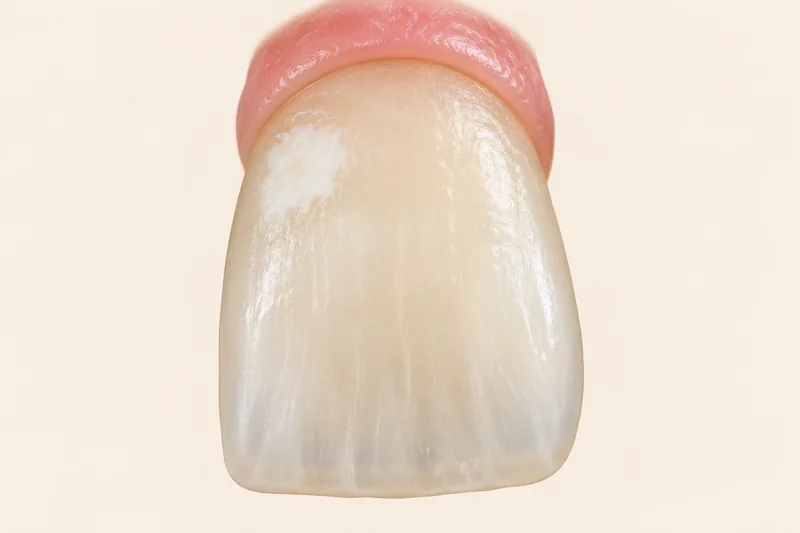
Matt or rough enamel can differ from smooth, shiny surfaces. A clinician assesses this gently and in context.
Plaque, access for cleaning and the individual's situation influence the assessment. One observation does not prove activity.
Reviews show whether a finding changes. An arrested lesion still needs suitable care and monitoring.
Yes, arrest is possible.
Using several clinical features.
Care and agreed reviews.
Three steps. No audio.
Each scene can also be selected manually.

Silent educational film with German on-screen text and simplified teaching images. Not a patient case or a promised treatment outcome. The full English explanation is available as text.
Activity concerns an existing lesion. Caries risk concerns the likelihood of new or progressing damage in a person.
No. Dark areas may be hard and inactive; pale changes can be active.
No. Arrest does not mean lost tooth structure has grown back. An existing cavity requires separate assessment.
No. Do not scratch or probe tooth marks yourself. This can damage surfaces and is not a reliable assessment.
Editorially suggested question to discuss with Dr Niusha Barahmand Pour:
Which signs suggest that this lesion is active or arrested?
Concerned about a mark? An examination can clarify its nature and how it should be monitored.
Have a tooth change assessedAppointment selection at DoctolibActivity concerns an existing lesion. Caries risk concerns the likelihood of new or progressing damage in a person.
Editorial research: . General information, not an individual diagnosis or treatment recommendation. Teaching illustrations are simplified and do not depict a patient case.