What is the aim?
Limit progression of a selected early caries lesion.

Resin infiltration introduces a low-viscosity resin into the pores of a suitable early caries lesion and hardens it. The aim is to limit progression. An appropriate, non-cavitated surface is required; prevention and follow-up remain important.
For dental trainees & teams
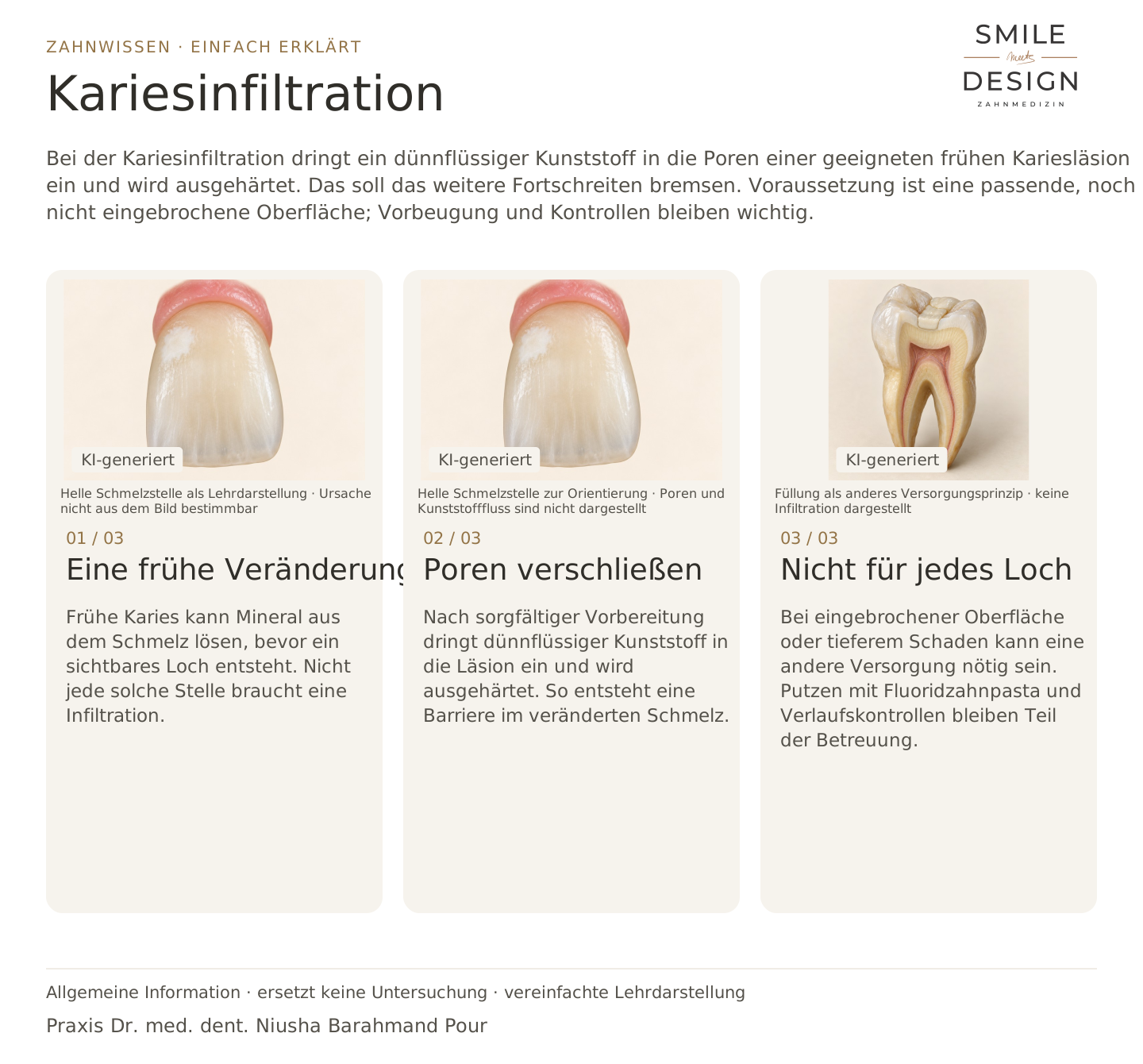
Early decay can remove minerals before a visible hole forms. Not every such lesion needs infiltration.
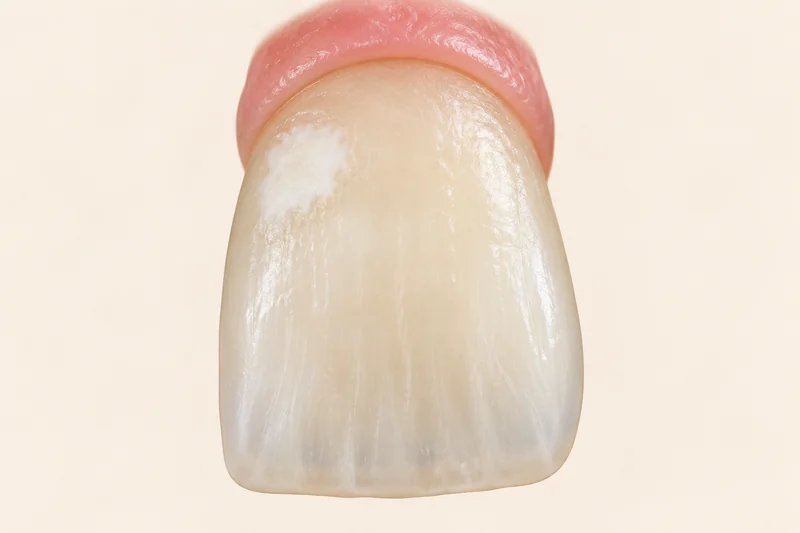
After careful preparation, thin resin enters the lesion and is hardened. This forms a barrier inside the altered enamel.
An open cavity or deeper damage may need other care. Fluoride toothpaste and monitoring remain part of management.
Limit progression of a selected early caries lesion.
For suitable non-cavitated lesions after dental assessment.
Prevention and review; it is not a general protective coating.
Three steps. Straight to the point.
Explanations are also shown on screen.

Silent film in German · English explanations in the three views above
Infiltration acts within a porous lesion. A sealant forms a protective layer over a suitable surface, such as a fissure.
It is a microinvasive option for selected lesions. It does not replace a filling for every defect; the surface is deliberately prepared.
Some suitable white spots may become less noticeable. Causes differ, and colour matching is not guaranteed.
No. Personal caries risk and other tooth surfaces still need attention.
A question to discuss with Dr. med. dent. Niusha Barahmand Pour:
What type of change is present, and which approach sensibly preserves tooth tissue?
At the practice, findings, personal wishes and possible next steps are discussed through a consultation and examination.
An early lesion can be understood better when its surface and progress are assessed.
Discuss a decay findingChoose an appointment on DoctolibBuild on the simple explanation with clinical terms, key distinctions and a knowledge question.
White spot describes appearance first. Cause, depth and surface integrity must be assessed before infiltration.
Editorial research: 23 October 2026. This explanation covers general principles and does not replace a personal examination. Suitable treatment is discussed following individual assessment.