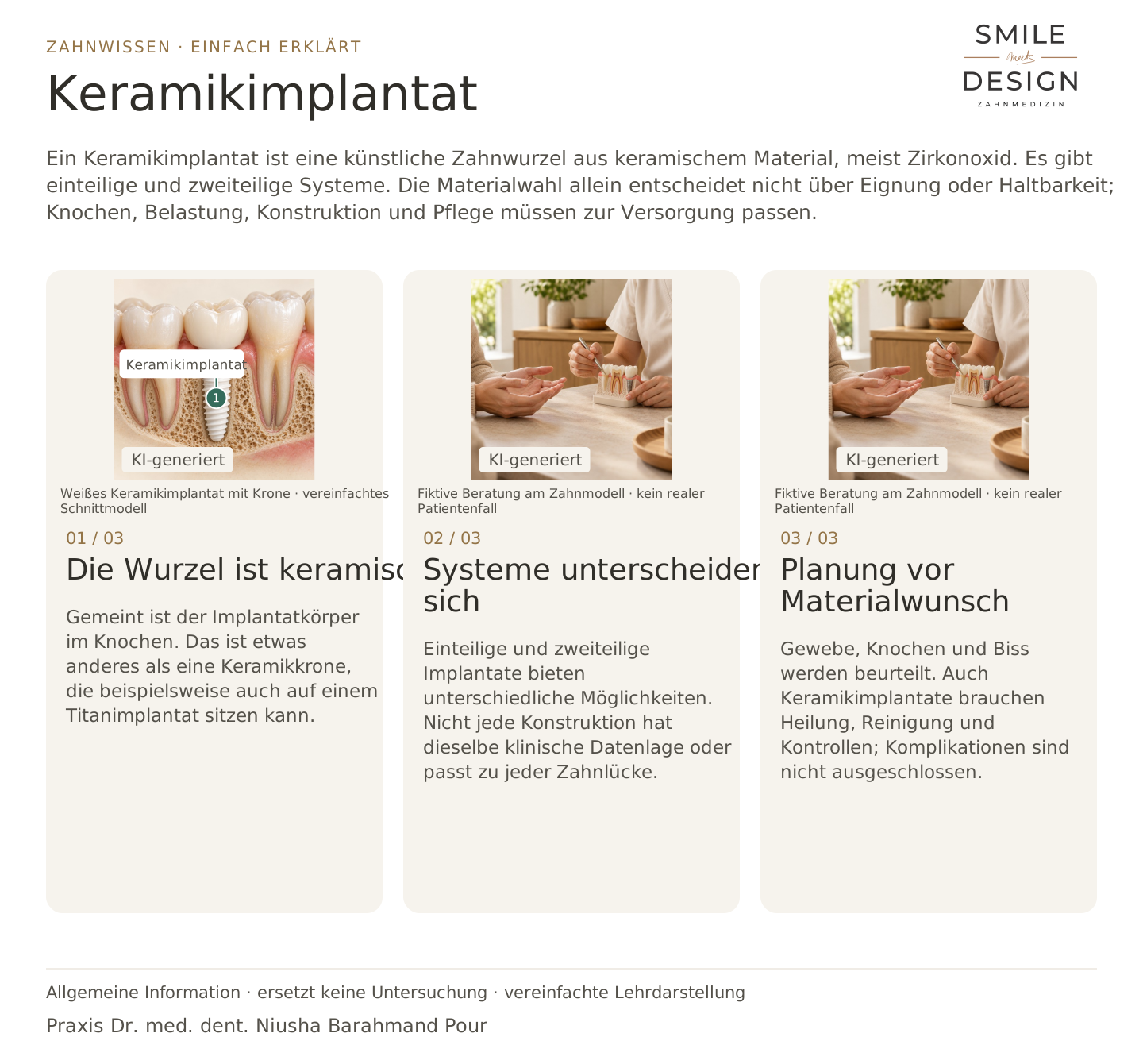
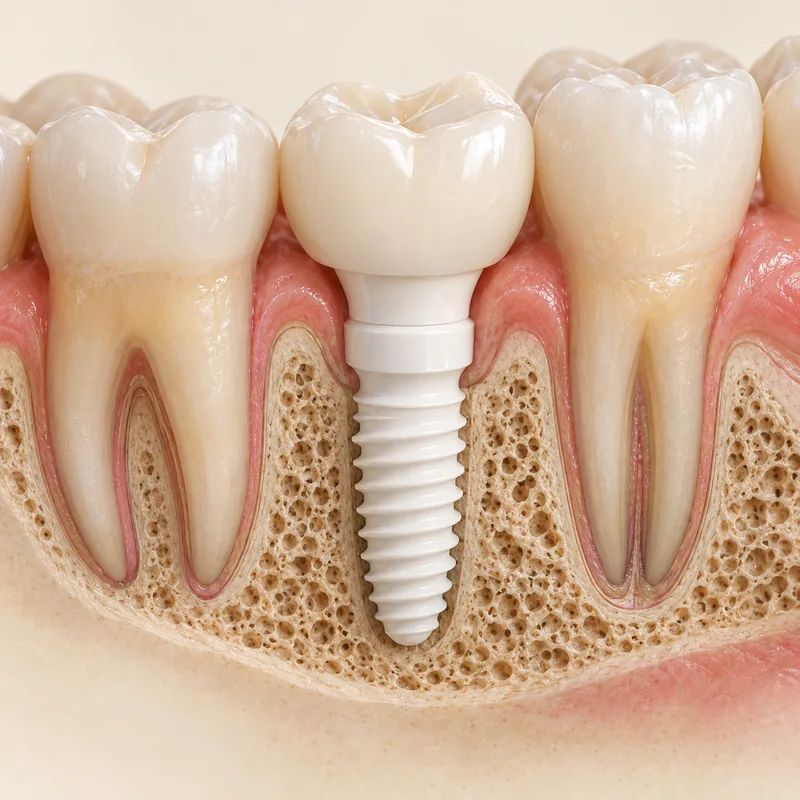
What is replaced?
A missing root with a ceramic implant body.

A ceramic implant is an artificial tooth root made of ceramic, usually zirconia. One-piece and two-piece systems exist. Material alone does not determine suitability or longevity; bone, loading, design and maintenance must fit the restoration.
For dental trainees & teams
The term refers to the implant body in bone. It differs from a ceramic crown, which may also sit on a titanium implant.
One-piece and two-piece designs offer different possibilities. They do not all have the same clinical evidence or suit every gap.
Tissues, bone and bite are assessed. Ceramic implants also need healing, cleaning and review; complications remain possible.
A missing root with a ceramic implant body.
Selected situations after individual implant planning.
The actual system, components, evidence, loading and long-term maintenance.
Three steps. Straight to the point.
Explanations are also shown on screen.

Silent film in German · English explanations in the three views above
An implant replaces a root. A crown forms the visible tooth; its material does not automatically identify the implant beneath it.
No general conclusion fits every case. Clinical suitability and evidence for the actual system matter more than a broad material claim.
That needs checking for the actual system, including its abutment and connectors. The implant-body label does not answer every material question.
Yes. Tissues around a ceramic implant can become diseased. Cleaning and maintenance remain important.
A question to discuss with Dr. med. dent. Niusha Barahmand Pour:
Which materials and design suit the findings and planned restoration?
At the practice, findings, personal wishes and possible next steps are discussed through a consultation and examination.
Material preferences are best considered alongside the individual findings.
Discuss an implant restorationChoose an appointment on DoctolibBuild on the simple explanation with clinical terms, key distinctions and a knowledge question.
Findings for a particular one-piece system cannot automatically be applied to all two-piece ceramic implants.
Editorial research: 23 October 2026. This explanation covers general principles and does not replace a personal examination. Suitable treatment is discussed following individual assessment.