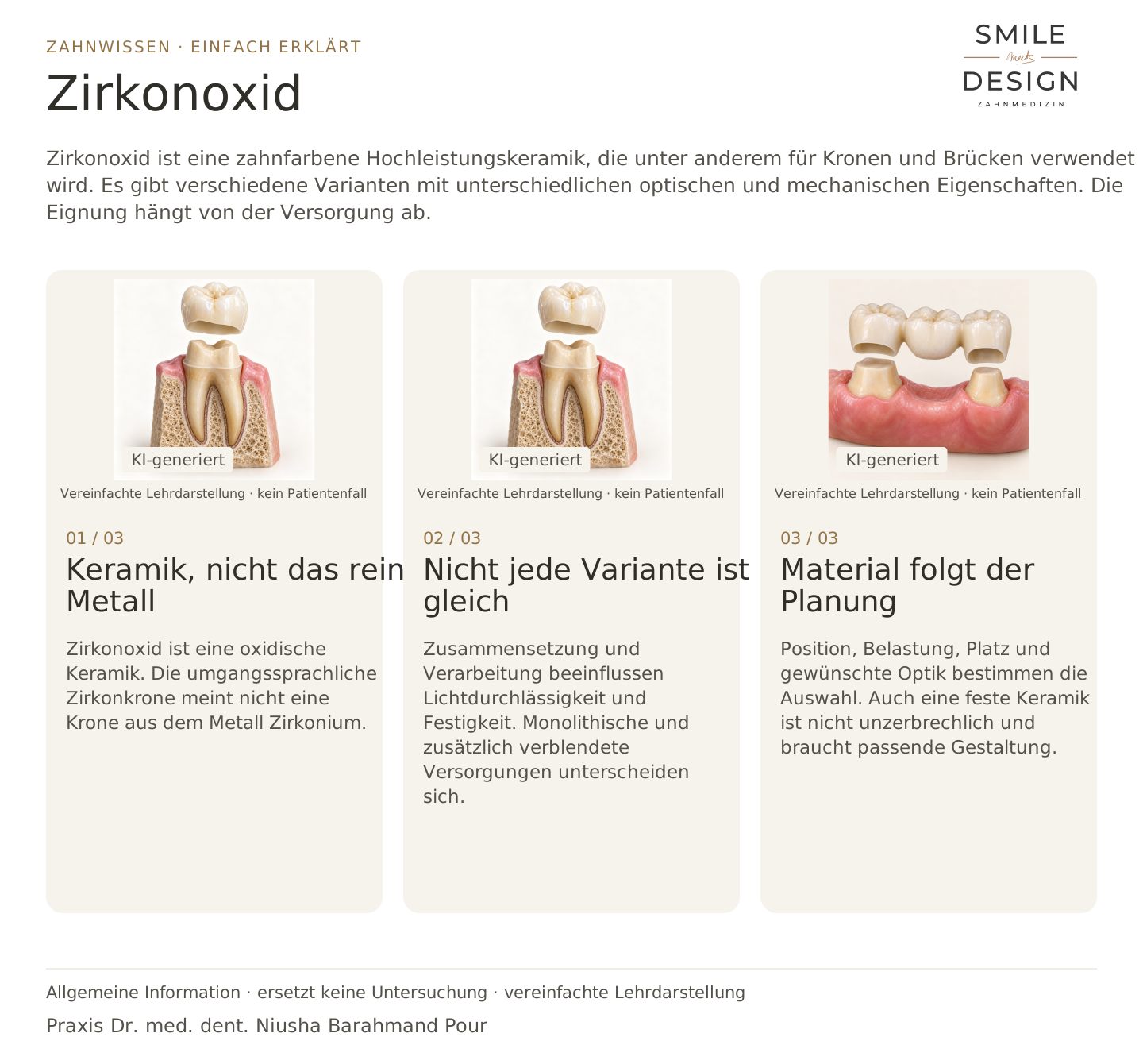
What is it used for?
Crowns and bridges, among other uses, depending on the material indications and plan.

Zirconia is a tooth-coloured high-performance ceramic used for crowns and bridges, among other restorations. Different varieties have different optical and mechanical properties. Suitability depends on the planned restoration.
For dental trainees & teams
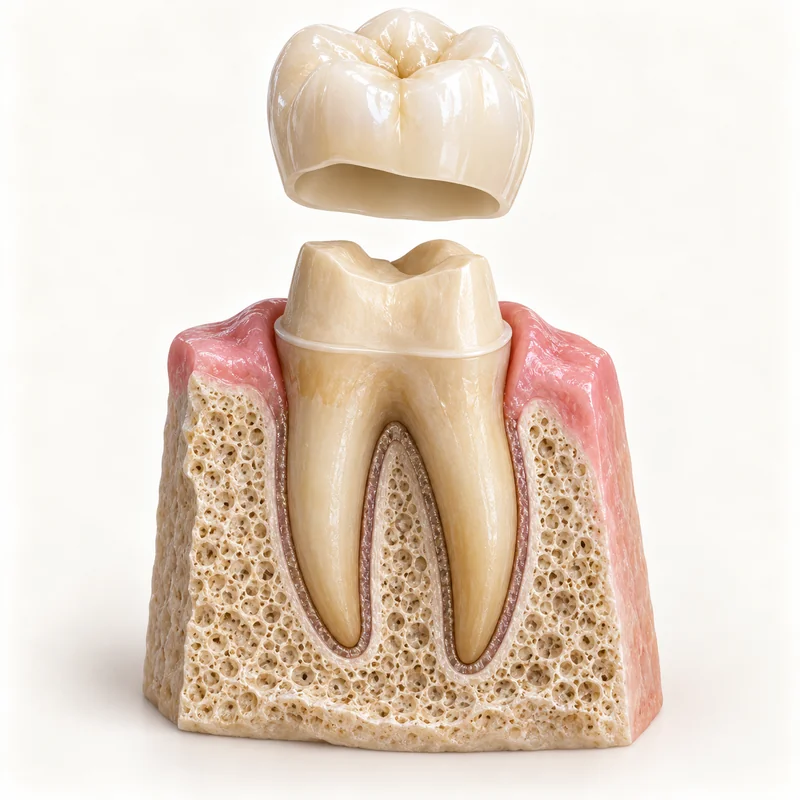
Zirconia is an oxide ceramic. A zirconia crown does not mean a crown made from zirconium metal.
Composition and processing affect translucency and strength. Monolithic restorations differ from those with an additional veneering layer.
Position, loading, available space and appearance guide the choice. Even a strong ceramic is not unbreakable and needs appropriate design.
Crowns and bridges, among other uses, depending on the material indications and plan.
Translucency and mechanical properties depend partly on composition.
By considering tooth position, loading, available space and the planned restoration shape.
Three steps. Straight to the point.
Explanations are also shown on screen.

Silent film in German · English explanations in the three views above
Zirconium is a chemical element and metal. Zirconia is its oxide compound, processed as a ceramic.
There is no single best material for every situation. The tooth, loading, space and design must be considered together.
The restoration is made essentially from one continuous ceramic body rather than a framework with a separate veneering layer.
Yes. Thickness, design, processing and loading influence the risk.
A question to discuss with Dr. med. dent. Niusha Barahmand Pour:
Which material properties matter most for the function and appearance of my tooth?
At the practice, the findings, personal wishes and possible next steps are discussed through a consultation and examination.
Material selection can be discussed in relation to the tooth and planned restoration.
Discuss restorative materialsChoose an appointment on DoctolibBuild on the simple explanation with clinical terms, key distinctions and a knowledge question.
Material name, manufacturing method and individual suitability are three different pieces of information.
Editorial research: 23 October 2026. This explanation covers general principles and does not replace a personal examination. Suitable treatment is discussed following individual assessment.