Sign of the fixed form?
The mouth will not close.

In a jaw dislocation, the joint head leaves its normal joint position. In the fixed form, the jaw usually remains locked open and cannot close normally. This requires prompt professional care; do not force it back yourself.
For training & practice ↓
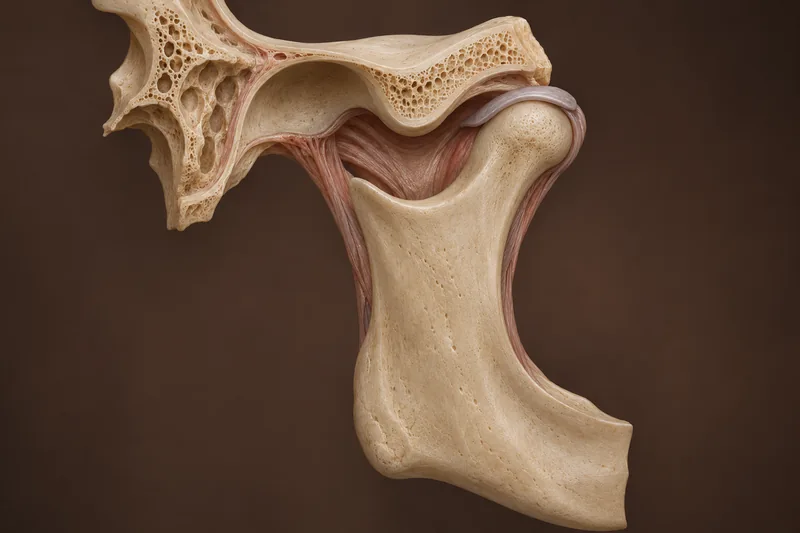
Normal closing is blocked. This differs from difficulty opening the mouth.
Do not attempt forceful reduction or follow video manoeuvres. A clinician also checks for injury and other causes.
After acute care, possible triggers and recurrent episodes can be assessed. Further measures depend on the findings.
The mouth will not close.
No.
Urgent assessment.
Three steps. No audio.
Each scene can also be selected manually.

Silent educational film with German on-screen text and simplified teaching images. Not a patient case or a promised treatment outcome. The full English explanation is available as text.
An out-of-position joint head and a displaced joint disc are different findings.
Trismus limits opening. In a fixed jaw dislocation, closing is typically blocked instead.
Wide opening can contribute, but injury and other factors are also possible.
Contact an urgent dental service or appropriate emergency service promptly if the jaw is stuck open.
Editorially suggested question to discuss with Dr Niusha Barahmand Pour:
How can recurrence be addressed after urgent treatment?
Seek help directly if the jaw is acutely locked open. If the practice is unavailable, contact an urgent dental service or appropriate emergency service.
Contact the practice by phone · 0221 669 401 80Telephone contactAn out-of-position joint head and a displaced joint disc are different findings.
Editorial research: . General information, not an individual diagnosis or treatment recommendation. Teaching illustrations are simplified and do not depict a patient case.