What is it?
An enlargement around the jaw with a cause that needs assessment.

Jaw swelling is a visible or palpable enlargement around the jaw. It describes a symptom, not a diagnosis. One possible cause is an infection involving a tooth or nearby tissue. New, painful or increasing swelling should be assessed promptly.
For training & practice ↓
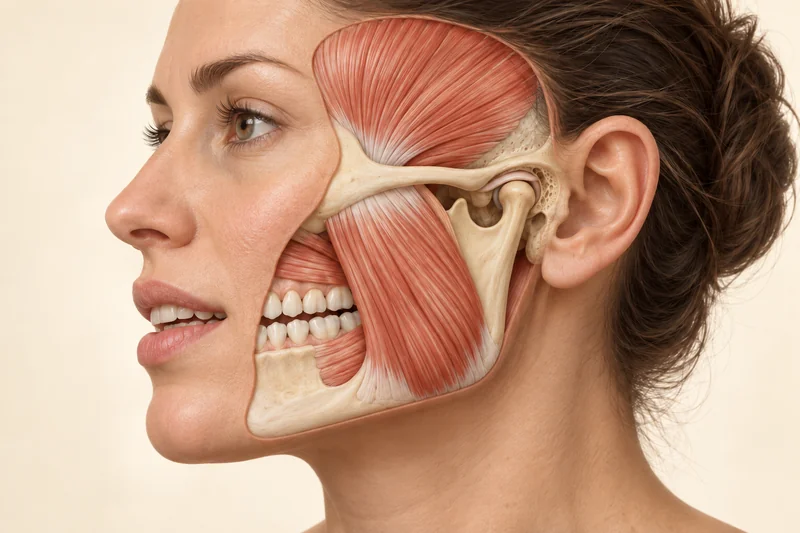
The gums, cheek and jaw region are close together. A swelling visible from outside does not reliably show which tissue is involved. Examination, its onset and how it has changed help identify the cause.
An infection around a tooth can spread into neighbouring tissue. Pain, fever and limited mouth opening are important details. The absence of fever does not rule out a spreading infection.
A suspected dental infection requires treatment of its source. Examination determines whether drainage or dental treatment is needed. Breathing or swallowing difficulties require immediate medical help.
An enlargement around the jaw with a cause that needs assessment.
Promptly if new, painful or increasing; urgently if infection is suspected.
Onset, progression, pain, fever, mouth opening and any recent treatment.
Three steps. No audio.
Each scene can also be selected manually.

Silent educational film with German on-screen text and simplified teaching images. Not a patient case or a promised treatment outcome. The full English explanation is available as text.
Swelling describes an enlargement that can be seen or felt. An abscess is a localised collection of pus and is only one possible cause. Not every swelling is an abscess.
Yes. The absence of toothache or fever does not rule out a cause that needs treatment. Appearance alone cannot reliably identify where swelling originates.
No. Treating the source is central to managing dental infection. Antibiotics may be added depending on spread and general health; they do not replace necessary local treatment.
Do not puncture or squeeze the area yourself. A suspected infection needs professional care. Seek further advice if symptoms increase, even if you already have an appointment.
You can bring this question to your appointment:
Which structure is causing the swelling, and how urgently does it need treatment?
For new symptoms, contact a dental practice promptly. Emergency warning signs require immediate help.
Contact the practice · 0221 669 401 80Telephone contactLocal swelling, an encapsulated collection of pus and a spreading soft-tissue infection are different findings. External size alone does not establish their significance.
Editorial research: . General information, not an individual diagnosis or treatment recommendation. Teaching illustrations are simplified and do not depict a patient case.