Who should take notice?
Anyone with new, recurring or persistent gum swelling.

Swollen gums are an observation, not yet a diagnosis: the tissue may look enlarged, tender or red. Inflammation is a common reason, but appearance alone cannot identify the cause. The location, course and accompanying symptoms help guide an examination.
For training & practice ↓
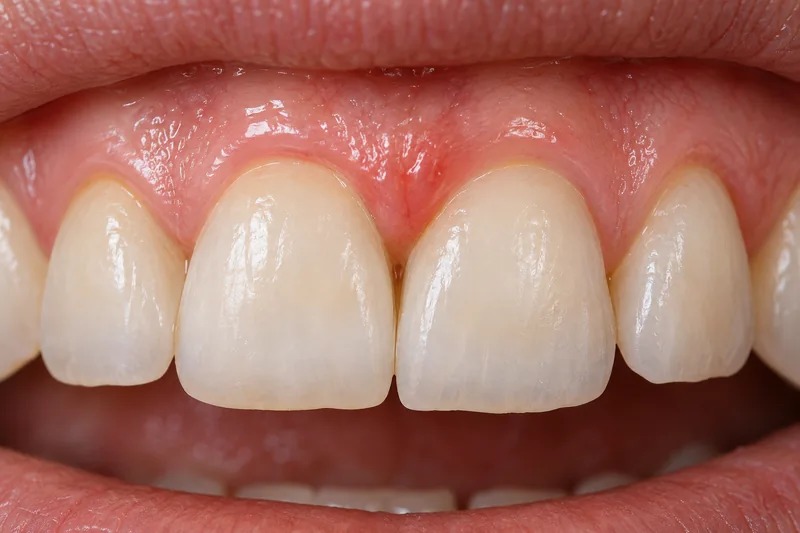
Is one small spot affected or a larger part of the gums? Is there bleeding, tooth pain or an unpleasant taste? These details are useful without establishing a diagnosis on their own.
Plaque can irritate the gums. A localised swelling may also be linked to an infection deeper down. Depending on the findings, the tooth, gums and neighbouring tissues need assessment.
Increasing swelling, severe pain, pus or fever needs prompt dental assessment. Breathing or swallowing difficulty and rapidly spreading swelling require immediate medical help.
Anyone with new, recurring or persistent gum swelling.
With questions about the course and an examination of the tooth and gums.
Promptly for clear worsening, severe pain or fever; immediately for breathing or swallowing difficulty.
Three steps. No audio.
Each scene can also be selected manually.

Silent educational film with German on-screen text and simplified teaching images. Not a patient case or a promised treatment outcome. The full English explanation is available below.
Is one small spot affected or a larger part of the gums? Is there bleeding, tooth pain or an unpleasant taste? These details are useful without establishing a diagnosis on their own.
Plaque can irritate the gums. A localised swelling may also be linked to an infection deeper down. Depending on the findings, the tooth, gums and neighbouring tissues need assessment.
Increasing swelling, severe pain, pus or fever needs prompt dental assessment. Breathing or swallowing difficulty and rapidly spreading swelling require immediate medical help.
Swelling is a visible or palpable finding. An abscess is a localised collection of pus. Not every swelling is an abscess, and a photograph cannot reliably identify its cause.
No. Periodontitis affects the tissues supporting teeth. Swollen gums alone do not show whether those tissues have been damaged; appropriate findings are needed.
No. Squeezing or piercing can cause injury and delay care. Even if fluid drains or pressure eases, a cause requiring treatment may remain.
A rinse does not establish the cause or replace a necessary examination or treatment. Continue gentle cleaning while arranging care; suitable tools can be discussed at the practice.
An editorially suggested question for a discussion with Dr med dent Niusha Barahmand Pour:
Is the source more likely to be the gum or the tooth, and what examination would clarify it?
Swelling needs professional assessment. For acute symptoms, call directly instead of waiting for a routine online appointment.
Call the practice · 0221 669 401 80Telephone contactSwelling is a visible or palpable finding. An abscess is a localised collection of pus. Not every swelling is an abscess, and a photograph cannot reliably identify its cause.
Editorial research: . General information, not an individual diagnosis or treatment recommendation. Teaching illustrations are simplified and do not depict a patient case.