
What is retreatment?
Further treatment of the canal system in a tooth that has already had root canal treatment.

Root canal retreatment treats the inside of a tooth that has already had root canal treatment. It may be considered if disease persists or develops again. The cause is assessed first.
For dental trainees & teams
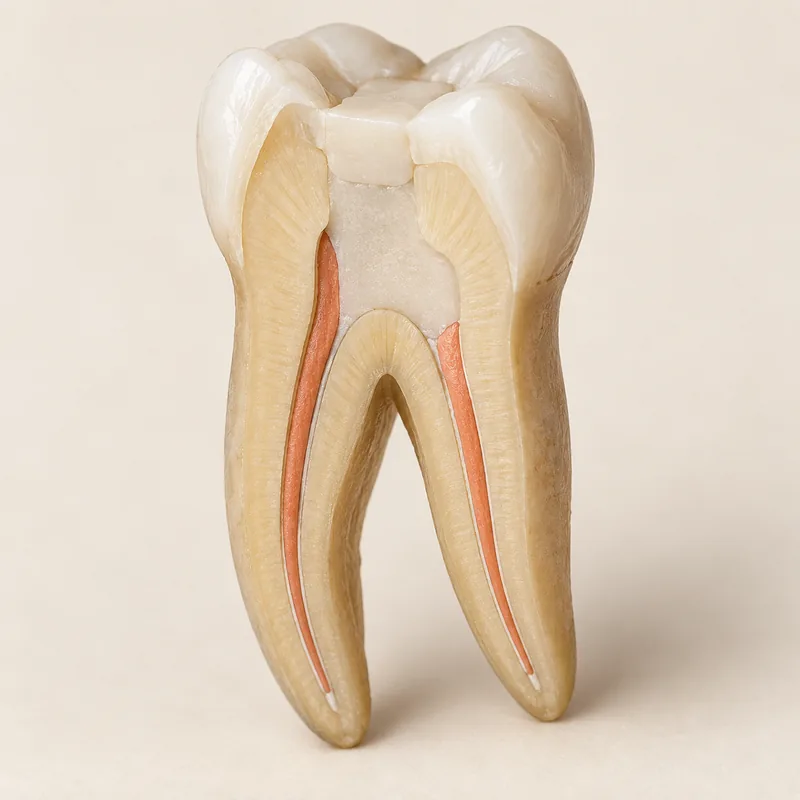
Inflammation can persist after root canal treatment or develop again later. Possible reasons include hard-to-reach canals or a leaking seal at the top of the tooth.
During retreatment, the tooth is reopened. Old root fillings are removed, the canals cleaned again, then refilled and sealed.
Access, tooth condition and the cause all influence the decision. Retreatment is not suitable for every tooth. Options, limitations and follow-up checks are discussed.
Further treatment of the canal system in a tooth that has already had root canal treatment.
When disease persists or develops again, if the findings and access support this approach.
Old canal fillings are removed and the canals cleaned, filled and sealed again. The tooth then needs a suitable permanent seal at its crown end.
Three steps. Straight to the point.
Explanations are also shown on screen.

Silent film in German · English explanations in the three views above
Retreatment treats the canal system again through the crown of the tooth. An apicectomy uses surgical access to the root tip.
Not automatically. An examination first assesses whether further treatment is appropriate and technically possible.
No. Retreatment accesses the canal system through the tooth. An apicectomy accesses the root tip surgically.
Existing filling materials and sometimes build-ups must be accessed or removed. The shape and accessibility of the canals also matter.
A question to discuss with Dr. med. dent. Niusha Barahmand Pour:
What explains the new findings in my root-treated tooth, and what options are there to preserve it?
The practice profile lists endodontics as an area of continuing education; treatment options are discussed on the basis of an examination.
Symptoms in a previously root-treated tooth can be examined, and possible next steps discussed in person.
Have a treated tooth assessedChoose an appointment on DoctolibBuild on the simple explanation with clinical terms, key distinctions and a knowledge question.
Retreatment and apicectomy use different approaches. New pain alone establishes neither the cause nor which procedure is appropriate.
Editorial research: 23 October 2026. This explanation covers general principles and does not replace a personal examination. Suitable treatment is discussed following individual assessment.