What is MIH?
A developmental enamel quality disturbance affecting typical permanent molars and sometimes incisors.

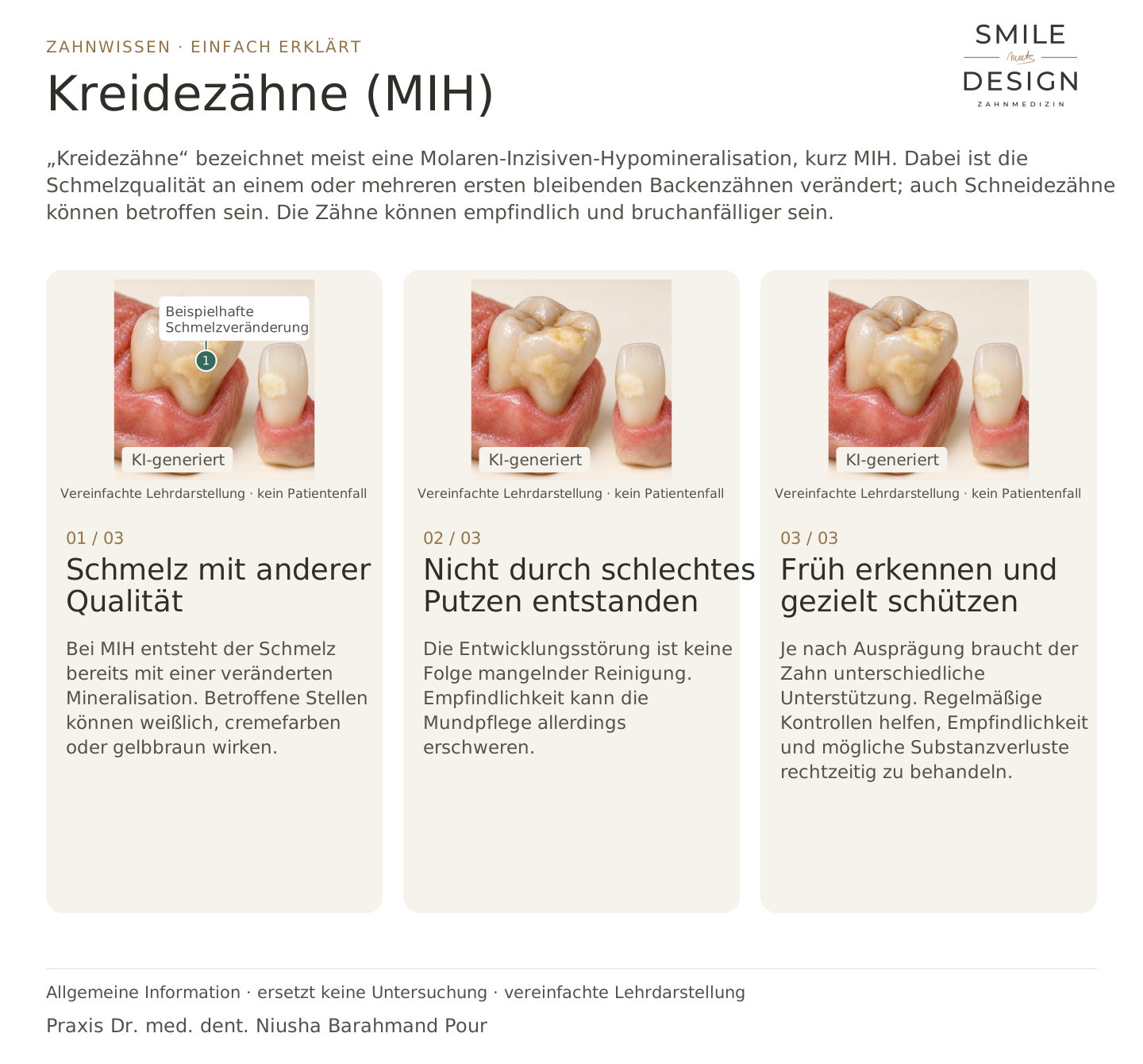
MIH affects enamel quality in one or more first permanent molars; incisors may also be involved. In German, these teeth are often called 'Kreidezähne'. They can be sensitive and more prone to breakdown.
For dental trainees & teams
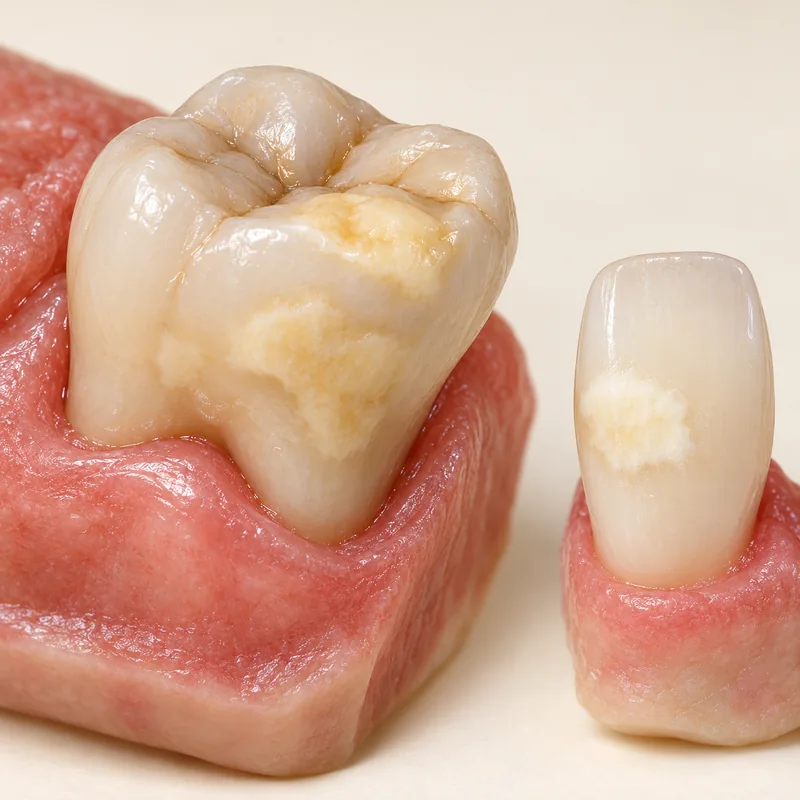
In MIH, enamel develops with altered mineralisation. Affected areas can look white, cream-coloured or yellow-brown.
This developmental condition is not caused by inadequate cleaning. Sensitivity may, however, make oral care more difficult.
Support depends on severity. Regular checks help address sensitivity and possible enamel breakdown in good time.
A developmental enamel quality disturbance affecting typical permanent molars and sometimes incisors.
During tooth development; a single cause does not reliably explain all cases.
Affected teeth may be sensitive and more prone to losing enamel.
Three steps. Straight to the point.
Explanations are also shown on screen.

Silent film in German · English explanations in the three views above
MIH is a disturbance of enamel development. Decay results from a recurring imbalance between mineral loss and repair at tooth surfaces.
No. Pale enamel changes have different causes. The characteristic pattern of affected teeth matters for MIH.
Yes. MIH and decay are different processes but can occur in the same tooth.
Development of MIH is complex. One cause does not reliably explain all affected cases.
A question to discuss with Dr. med. dent. Niusha Barahmand Pour:
Does the enamel change fit MIH, and what care would be appropriate?
Specific treatment is selected only after the circumstances have been assessed.
Unusual enamel changes can prompt a discussion of suitable assessment or care.
Ask about assessmentArrange an appointment with the practiceBuild on the simple explanation with clinical terms, key distinctions and a knowledge question.
MIH affects enamel quality. Enamel hypoplasia, in contrast, means a reduced amount of enamel.
Editorial research: 23 October 2026. This explanation covers general principles and does not replace a personal examination. Suitable treatment is discussed following individual assessment.