What is altered?
How upper and lower teeth relate when biting together.

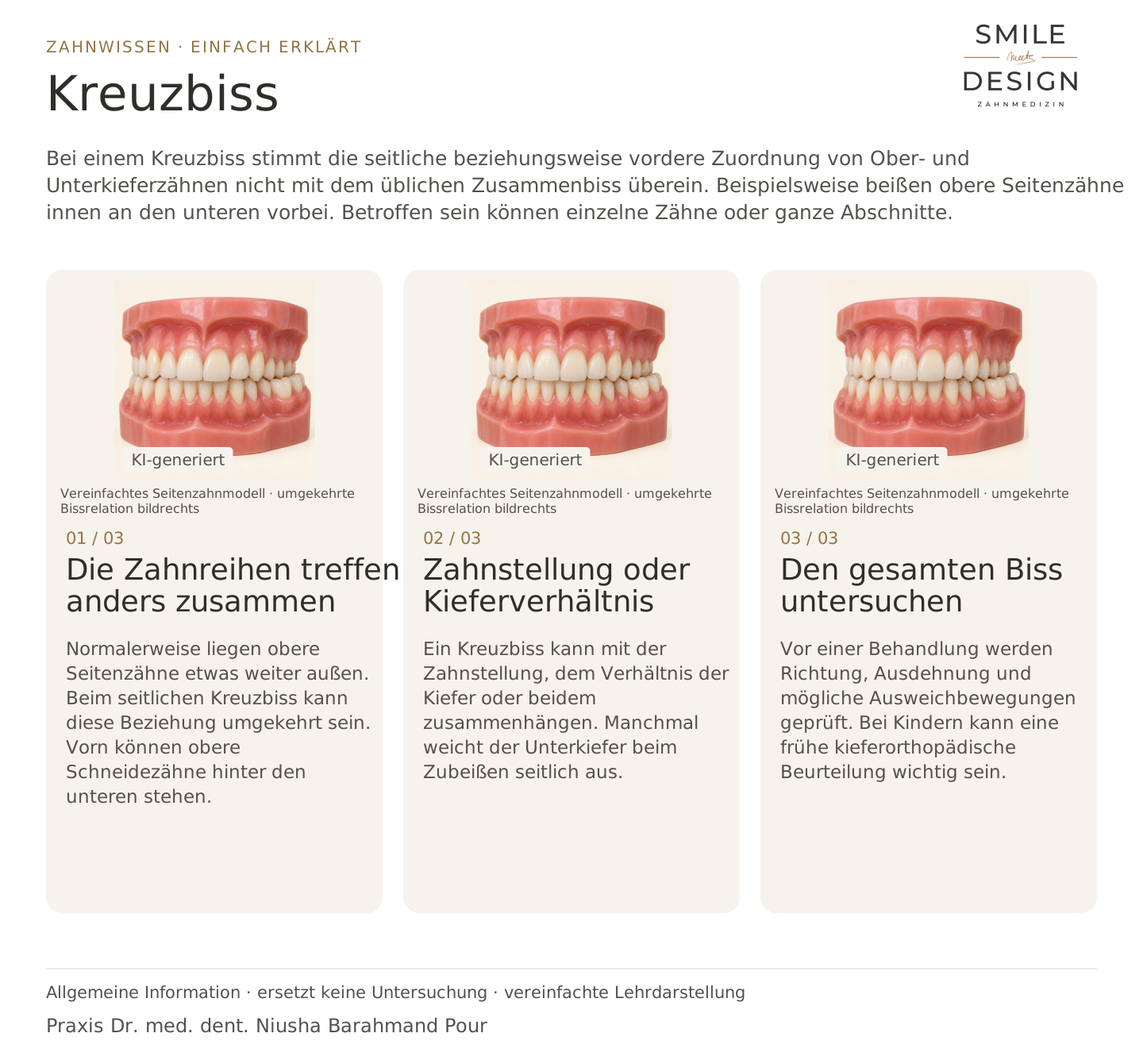
In a crossbite, the side-to-side or front-to-back relationship of opposing teeth differs from the usual bite. For example, upper back teeth may bite inside the lower teeth. It may affect individual teeth or whole sections of the arches.
For dental trainees & teams
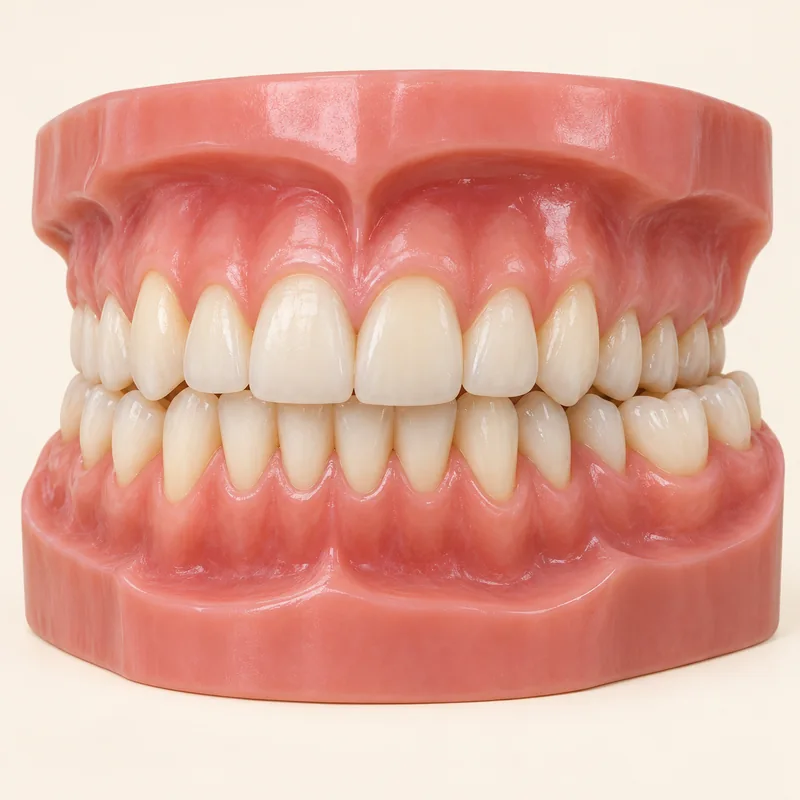
Upper back teeth normally sit slightly further outwards. This relationship may be reversed in a posterior crossbite. At the front, upper incisors may sit behind the lower ones.
A crossbite may involve tooth position, the relationship of the jaws or both. Sometimes the lower jaw shifts sideways when closing.
Direction, extent and possible shifts are assessed before treatment. In children, early orthodontic assessment may be important.
How upper and lower teeth relate when biting together.
At the front or sides, on one or both sides.
Tooth position, jaw relationship and shifts influence planning.
Three steps. Straight to the point.
Explanations are also shown on screen.

Silent film in German · English explanations in the three views above
Crossbite involves an altered spatial relationship. In an open bite, a gap remains between certain opposing teeth during biting.
No. It may be one-sided, two-sided or involve only individual teeth.
No. Individual misaligned teeth can also be in crossbite. Jaw position is assessed separately from tooth position.
Not reliably. The bite in motion and the position of both tooth rows need examination.
A question to discuss with Dr. med. dent. Niusha Barahmand Pour:
Is my crossbite mainly related to tooth position, jaw relationships or a functional shift?
Symptoms, examination findings and personal wishes form the basis of individual treatment planning.
An unusual bite relationship should be assessed as a whole.
Discuss how your teeth meetChoose an appointment on DoctolibBuild on the simple explanation with clinical terms, key distinctions and a knowledge question.
A dental crossbite and a skeletal discrepancy may look similar but need different diagnostic assessment.
Editorial research: 23 October 2026. This explanation covers general principles and does not replace a personal examination. Suitable treatment is discussed following individual assessment.