What is missing?
Contact between certain upper and lower teeth during biting.

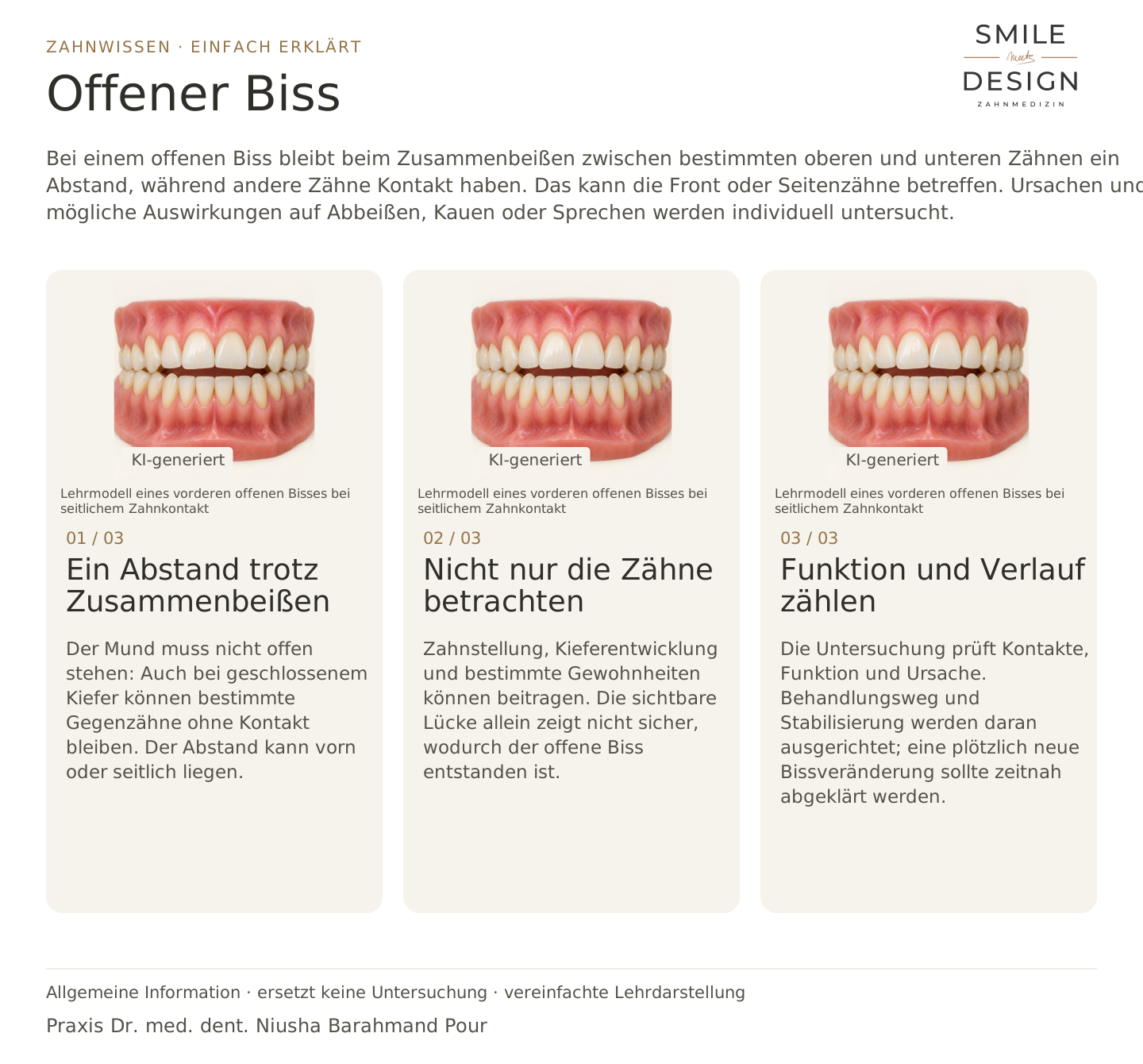
In an open bite, a gap remains between certain upper and lower teeth when biting together, while other teeth make contact. It may affect front or back teeth. Causes and possible effects on biting, chewing or speech are assessed individually.
For dental trainees & teams
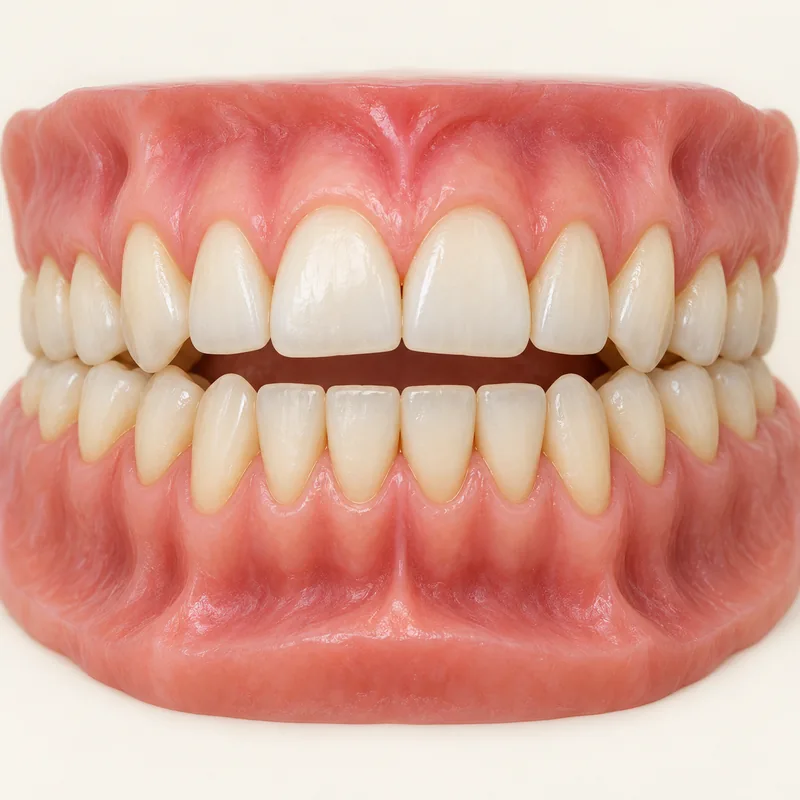
The mouth does not have to be open: certain opposing teeth can remain apart even with the jaws closed. The gap may be at the front or sides.
Tooth position, jaw development and certain habits may contribute. The visible gap alone does not reliably show why the open bite developed.
Examination assesses contacts, function and cause. Treatment and stabilisation follow those findings; a sudden new change in the bite should be assessed promptly.
Contact between certain upper and lower teeth during biting.
Biting, chewing or speech, depending on location and extent.
Assess cause and function, then plan treatment and stability.
Three steps. Straight to the point.
Explanations are also shown on screen.

Silent film in German · English explanations in the three views above
Open bite describes missing vertical contact. Overjet is the horizontal distance between the front teeth. Both features may be present together.
No. A lack of contact can also affect the back teeth.
No. Causes vary; tongue position may be a cause, contributing factor or adaptation. A single explanation is not reliable.
Planning also addresses the underlying factors and long-term stability. Appearance alone is too narrow a focus.
A question to discuss with Dr. med. dent. Niusha Barahmand Pour:
Which contacts are missing, what might be causing this, and how could function be improved?
Symptoms, examination findings and personal wishes form the basis of individual treatment planning.
Missing tooth contacts and a new change in your bite can be examined specifically.
Have bite relationships assessedChoose an appointment on DoctolibBuild on the simple explanation with clinical terms, key distinctions and a knowledge question.
Open bite is assessed with the teeth biting together. An open-mouth posture alone does not establish it.
Editorial research: 23 October 2026. This explanation covers general principles and does not replace a personal examination. Suitable treatment is discussed following individual assessment.