Often on both sides?
Yes.

Leukoedema is a benign variation of the oral mucosa, usually producing a milky grey-white sheen on both inner cheeks. It becomes less noticeable with gentle stretching. A newly noticed white change should nevertheless be professionally assessed.
For training & practice ↓
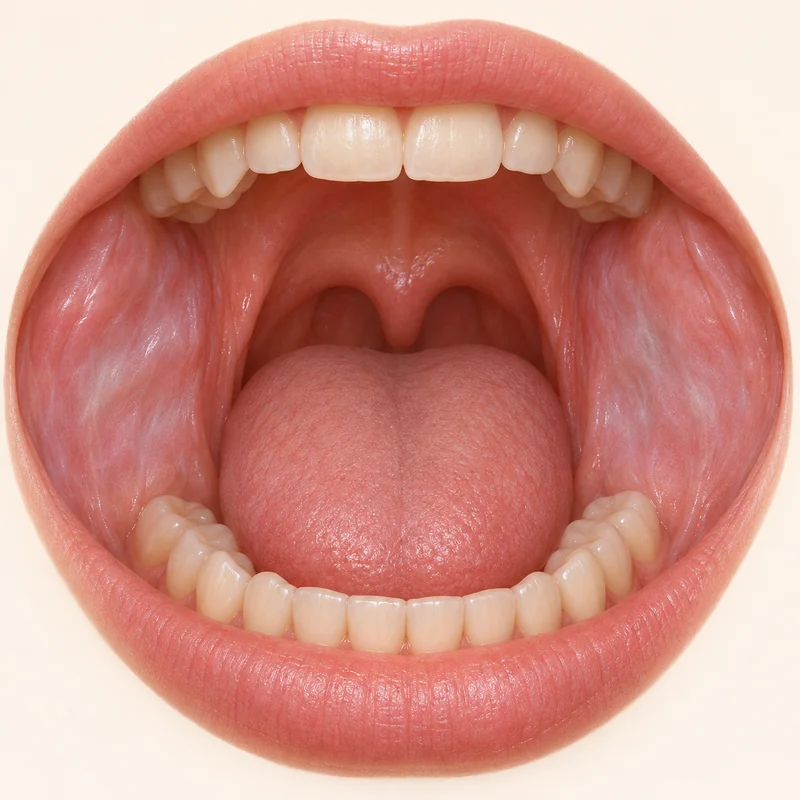
The appearance is within the mucosa itself. It is not dirt that should be scrubbed away.
Fading with stretching helps dental assessment. Distribution, surface and development are considered together; one home test cannot exclude other conditions.
A confidently identified leukoedema usually needs no treatment. New focal, painful, growing or ulcerated areas should be reassessed.
Yes.
No.
Usually explanation without treatment is sufficient.
Three steps. No audio.
Each scene can also be selected manually.

Silent educational film with German on-screen text and simplified teaching images. Not a patient case or a promised treatment outcome. The full English explanation is available as text.
White mucosal changes have different causes. Leukoedema, irritation, fungal infection and leukoplakia are distinguished through the complete findings.
No. Despite similar names, they are different findings. A persistent white patch cannot be called leukoedema based only on its colour.
No. Unnecessary rubbing or irritating products can injure the mucosa.
No. It is one clinical clue, not a reliable self-diagnosis.
You can bring this question to your appointment:
Is this typical leukoedema, or does a focal area need further assessment?
An examination can clarify the finding and any need for referral.
Arrange an assessmentAppointment selection at DoctolibWhite mucosal changes have different causes. Leukoedema, irritation, fungal infection and leukoplakia are distinguished through the complete findings.
Editorial research: . General information, not an individual diagnosis or treatment recommendation. Teaching illustrations are simplified and do not depict a patient case.