Who might need one?
Selected children after premature loss of a baby tooth.

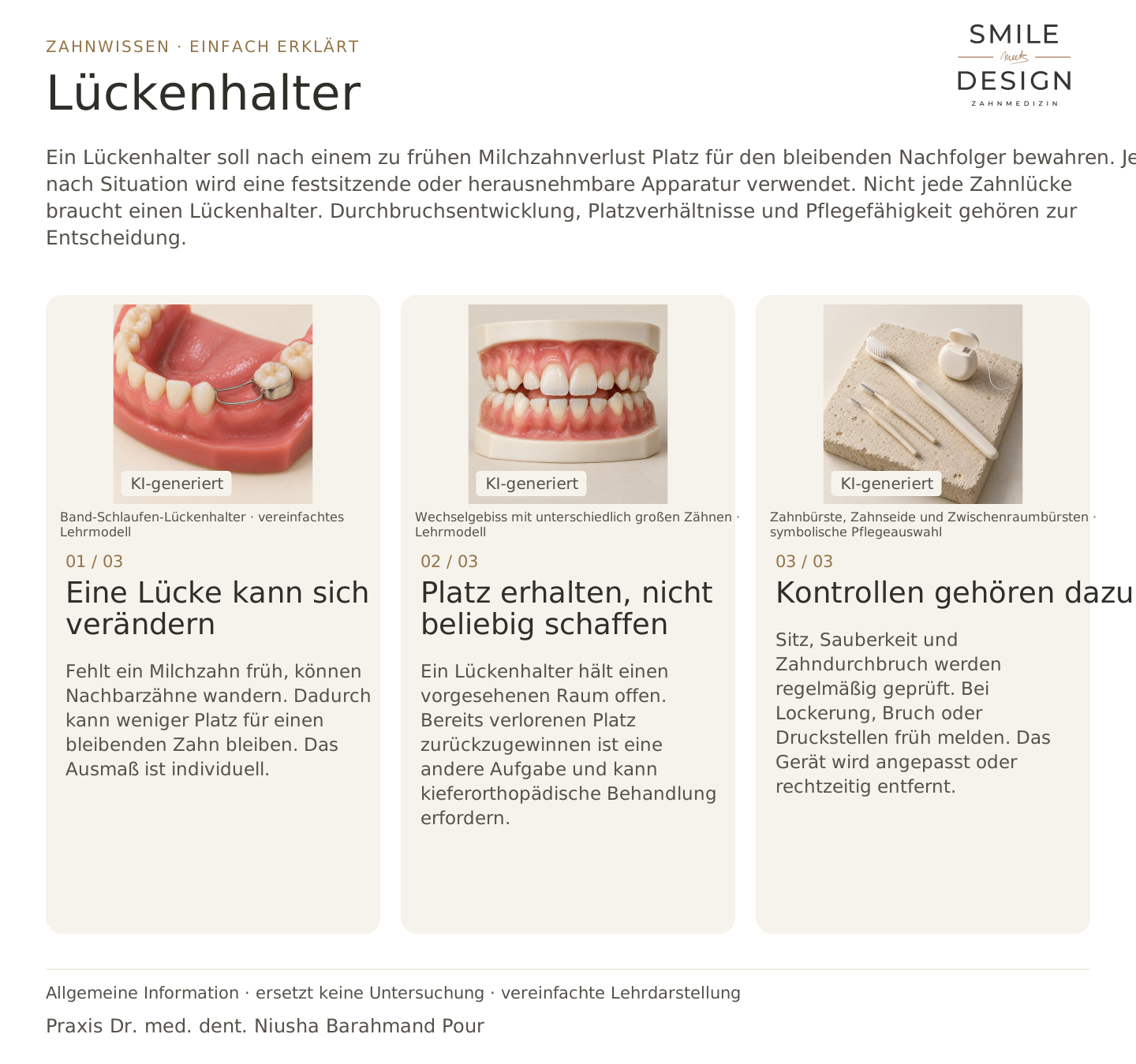
A space maintainer aims to preserve room for a permanent successor after a baby tooth is lost too early. A fixed or removable appliance may be used. Not every gap needs one. Eruption stage, available space and the ability to keep it clean inform the decision.
For dental trainees & teams
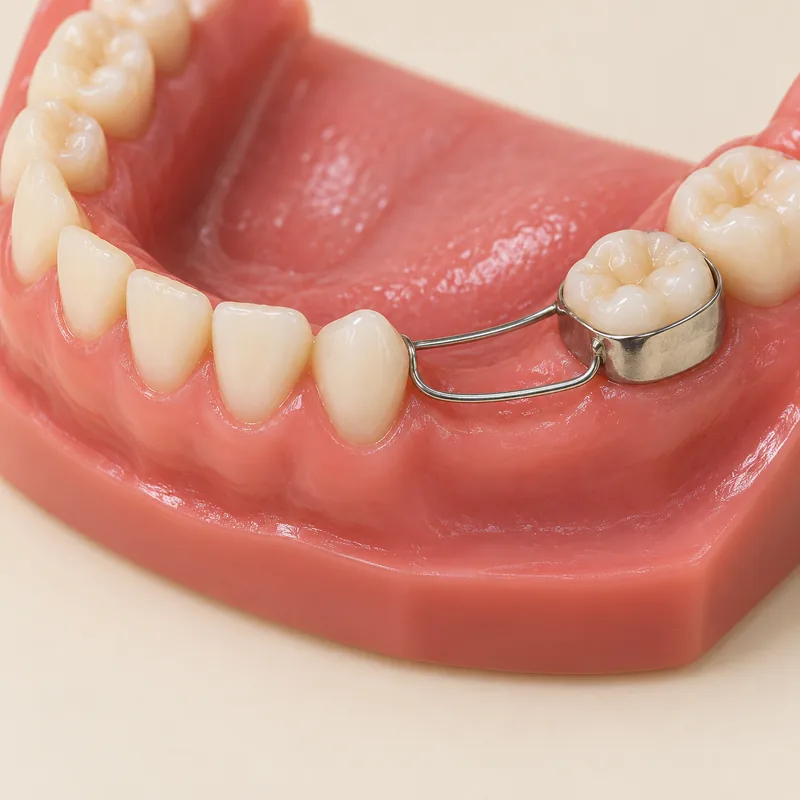
When a baby tooth is lost early, neighbouring teeth can move. Less room may remain for a permanent tooth. The extent varies individually.
A space maintainer holds a planned space open. Regaining room that has already been lost is a different task and may need orthodontic treatment.
Fit, cleanliness and eruption are checked regularly. Report looseness, breakage or sore areas promptly. The appliance is adjusted or removed at the right time.
Selected children after premature loss of a baby tooth.
Space, the successor tooth, eruption and ability to clean well.
Checks, cleaning and timely adjustment or removal.
Three steps. Straight to the point.
Explanations are also shown on screen.

Silent film in German · English explanations in the three views above
A space maintainer preserves room for an erupting successor. A retainer stabilises teeth after orthodontic correction. Both need monitoring, but their aims differ.
No. The tooth lost, time since loss, available space and development of its successor are assessed individually.
No. Its aim is to preserve space in a particular situation. Tooth and jaw development have other influences, and later treatment may still be needed.
The dental team demonstrates cleaning suited to the appliance. Plaque can accumulate around bands and attachments. Do not bend it yourself if it hurts or becomes loose.
A question to discuss with Dr. med. dent. Niusha Barahmand Pour:
Does this gap need space maintenance, and who will monitor fit, cleaning and eruption?
Symptoms, examination findings and personal wishes form the basis of individual treatment planning.
After early loss of a baby tooth, it is worth assessing space for the successor.
Discuss a child’s tooth gapChoose an appointment on DoctolibBuild on the simple explanation with clinical terms, key distinctions and a knowledge question.
Space maintainers can have adverse effects such as plaque accumulation, loosening or interference with eruption. Appropriate selection and follow-up are essential.
Editorial research: 23 October 2026. This explanation covers general principles and does not replace a personal examination. Suitable treatment is discussed following individual assessment.