What happens during replacement?
Baby teeth are replaced and additional molars erupt.

During tooth replacement, permanent teeth gradually replace baby teeth. Additional permanent molars also erupt. Both sets coexist for a time: the mixed dentition. Timing and sequence vary, so a rigid age deadline is not a reliable measure.
For dental trainees & teams
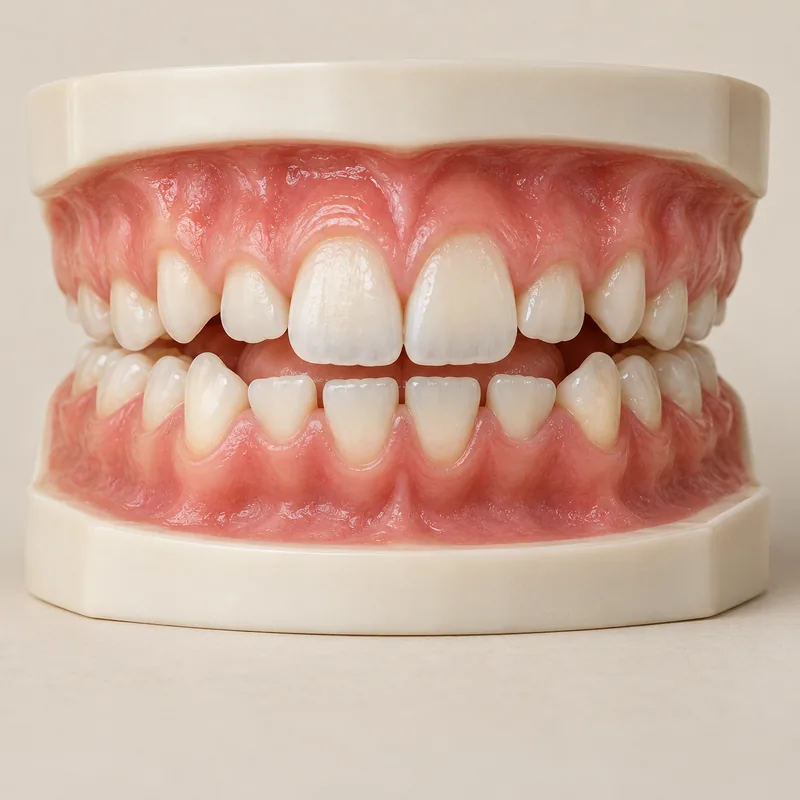
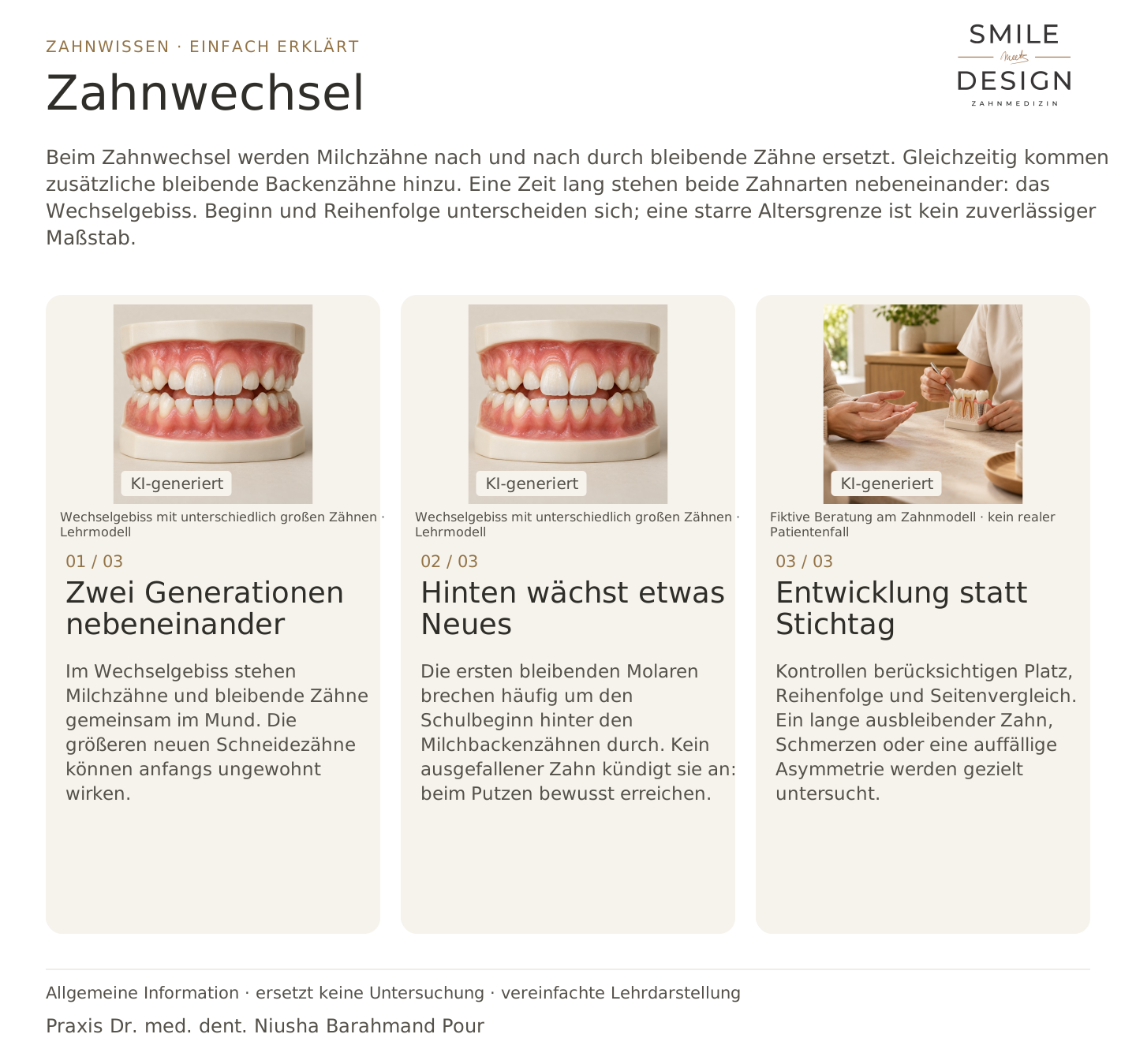
Baby and permanent teeth share the mouth during the mixed dentition. The larger new incisors can look unfamiliar at first.
First permanent molars often erupt around school-entry age behind the baby molars. No lost tooth announces them: remember to reach them when brushing.
Check-ups consider space, sequence and differences between sides. A tooth that remains absent, pain or marked asymmetry calls for targeted assessment.
Baby teeth are replaced and additional molars erupt.
Often around school-entry age, with individual variation.
Space, eruption sequence, cleaning and unusual delays.
Three steps. Straight to the point.
Explanations are also shown on screen.

Silent film in German · English explanations in the three views above
Eruption means a tooth enters the mouth. Replacement means a permanent tooth takes the place of a baby tooth. Permanent molars erupt without replacing baby teeth.
Do not force it. Many baby teeth fall out naturally. Pain, difficulty eating or uncertainty about progress is a reason for dental assessment.
Two rows may be visible temporarily during eruption. Whether observation is enough depends on looseness, available space and the direction of eruption.
They can look darker beside very pale baby teeth. New unusual marks, rough areas or symptoms should still be assessed; colour alone does not explain everything.
A question to discuss with Dr. med. dent. Niusha Barahmand Pour:
Does tooth replacement fit my child’s developmental stage, and what should we focus on when brushing now?
Symptoms, examination findings and personal wishes form the basis of individual treatment planning.
A tooth is late or in an unusual position? Its development can be assessed.
Discuss dental developmentChoose an appointment on DoctolibBuild on the simple explanation with clinical terms, key distinctions and a knowledge question.
Dental age describes the developmental stage of the dentition. It does not always match chronological age exactly.
Editorial research: 23 October 2026. This explanation covers general principles and does not replace a personal examination. Suitable treatment is discussed following individual assessment.