Is sucking always a problem?
No; it is initially a normal need in young children.

Sucking is a normal need in young children. Persistent thumb or pacifier sucking can be associated with changes in tooth position. Duration, frequency and intensity are among the relevant factors. Help with stopping should suit the child’s developmental stage and avoid shame or blame.
For dental trainees & teams
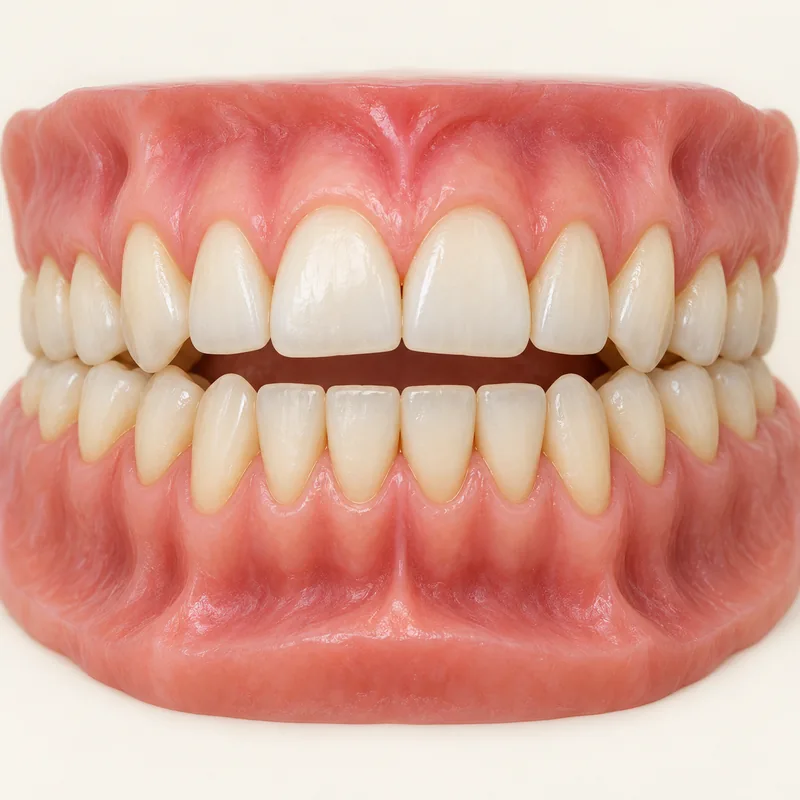
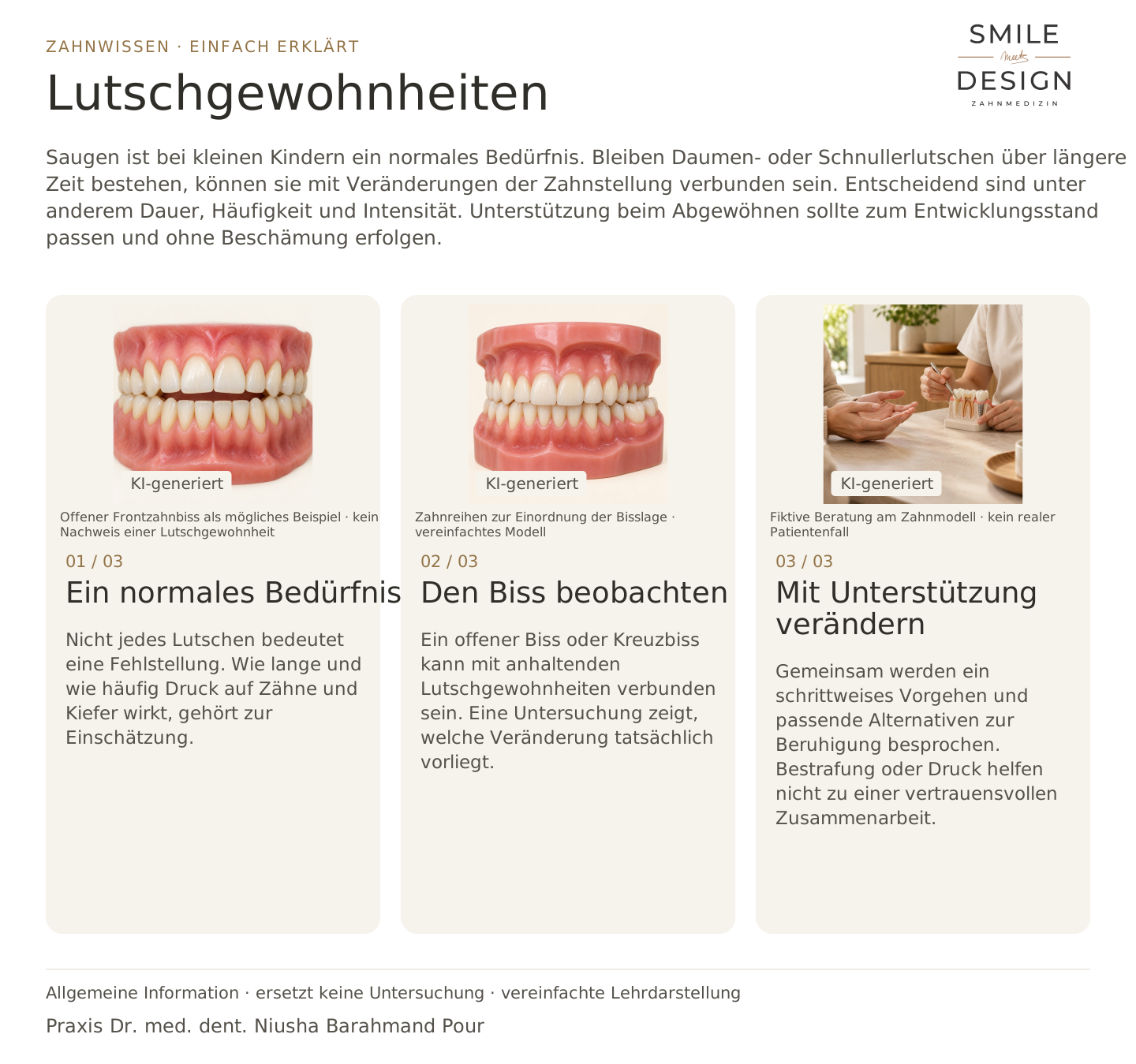
Not every sucking habit means a malocclusion. How long and how often pressure acts on teeth and jaws matters to assessment.
An open bite or crossbite may be associated with persistent sucking habits. Examination shows which changes are actually present.
A gradual approach and suitable alternative ways to settle are discussed together. Punishment and pressure do not support trusting cooperation.
No; it is initially a normal need in young children.
Persistent habits and changes in how the teeth meet.
Gradually, without shame and in a developmentally appropriate way.
Three steps. Straight to the point.
Explanations are also shown on screen.

Silent film in German · English explanations in the three views above
Thumb sucking describes behaviour. Open bite and crossbite describe findings. A habit alone cannot establish a diagnosis or predict the outcome.
Raise it early at dental check-ups. If the habit persists in the third year of life or the bite looks unusual, individual advice is useful.
Some changes may improve after the habit stops. This is not certain and depends on bite pattern, age and other influences; follow-up remains important.
No. A product shape cannot guarantee unaffected dental development. Duration of use and individual development also matter.
A question to discuss with Dr. med. dent. Niusha Barahmand Pour:
Does my child’s bite show changes, and what age-appropriate support could help the habit stop?
Symptoms, examination findings and personal wishes form the basis of individual treatment planning.
A habit and its possible effects on the bite can be considered together.
Discuss dental developmentChoose an appointment on DoctolibBuild on the simple explanation with clinical terms, key distinctions and a knowledge question.
The effect depends on frequency, duration and intensity. Bite changes often have several contributing factors.
Editorial research: 23 October 2026. This explanation covers general principles and does not replace a personal examination. Suitable treatment is discussed following individual assessment.