Where?
On permanent incisors' biting edges.

Mamelons are small rounded prominences along the biting edge of newly erupted permanent incisors. Three developmental bumps are typical. They belong to a young tooth's natural shape and are not, by themselves, a cavity or a broken tooth fragment.
For training & practice ↓
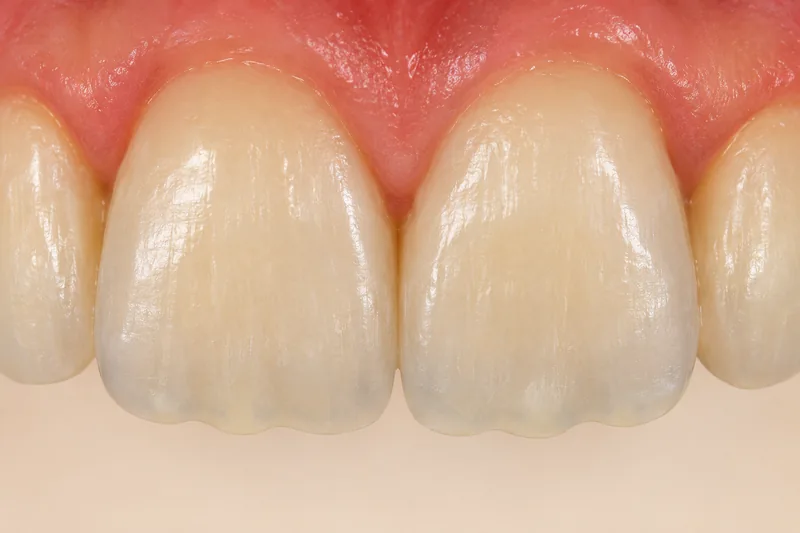
The rounded prominences sit on the incisal edge. Their shape and prominence can differ between teeth.
A gently wavy edge can be a normal developmental feature. Its visibility alone establishes neither disease nor a need for treatment.
A newly sharp edge, pain or an accident should not automatically be attributed to mamelons. Such changes need assessment.
On permanent incisors' biting edges.
Not in themselves.
No, enamel loss is permanent.
Three steps. No audio.
Each scene can also be selected manually.

Silent educational film with German on-screen text and simplified teaching images. Not a patient case or a promised treatment outcome. The full English explanation is available as text.
Mamelons are rounded features formed during tooth development. A fracture is a loss of tooth tissue and may need examination.
Not simply because they are visible. Before a purely aesthetic change, remember that removed tooth tissue does not grow back.
No. DIY filing can irreversibly remove enamel, cause sensitivity and change contacts. Even small adjustments require professional judgement.
No. Wear, small fractures and other changes can also cause uneven edges. Their history and an examination help distinguish them.
Editorially suggested question to discuss with Dr Niusha Barahmand Pour:
Is this edge a normal tooth shape or is there a finding that needs treatment?
Does a tooth edge look unusual or has it changed? An examination can distinguish natural shape from damage.
Have a tooth edge assessedAppointment selection at DoctolibMamelons are rounded features formed during tooth development. A fracture is a loss of tooth tissue and may need examination.
Editorial research: . General information, not an individual diagnosis or treatment recommendation. Teaching illustrations are simplified and do not depict a patient case.