Discuss first?
Covered option and added service.

For German statutory-insurance patients, this written agreement records choosing a filling beyond the covered service before treatment begins. The comparable statutory filling is accounted for; the patient pays the agreed additional costs. Suitable no-extra-charge filling options remain available.
For training & practice ↓
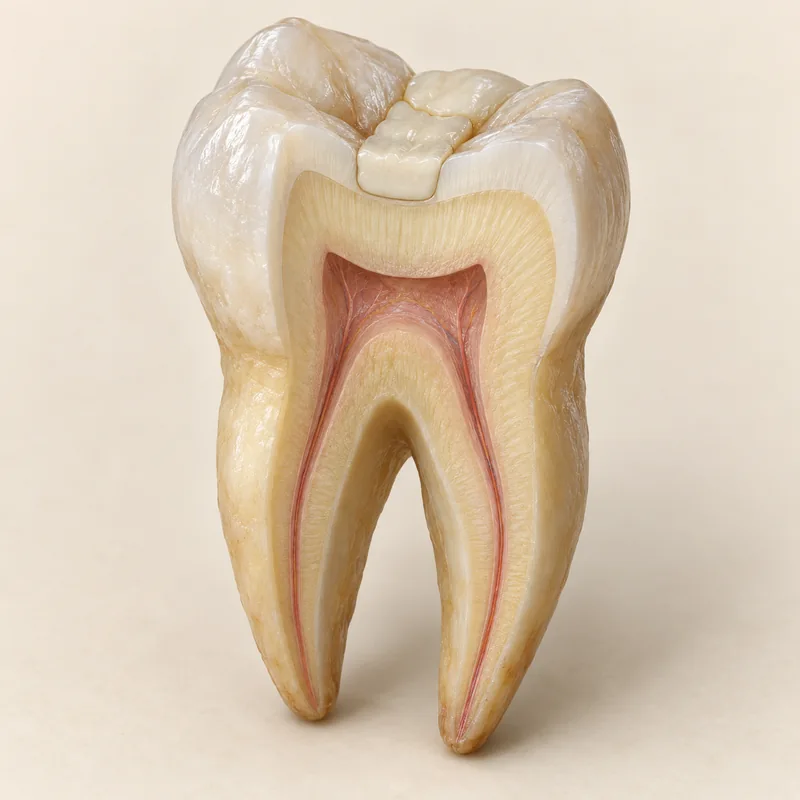
Ask which filling has no extra charge, what the additional service is and why it is proposed. Discuss this before deciding.
The chosen treatment and expected additional costs are agreed before treatment starts. Ask for unclear items to be explained.
The comparable covered filling is taken into account. Elective replacement of an intact direct filling does not qualify under this additional-cost rule.
Covered option and added service.
The agreed additional costs.
Not for purely elective replacement of an intact filling.
Three steps. No audio.
Each scene can also be selected manually.

Silent educational film with German on-screen text and simplified teaching images. Not a patient case or a promised treatment outcome. The full English explanation is available below.
Ask which filling has no extra charge, what the additional service is and why it is proposed. Discuss this before deciding.
The chosen treatment and expected additional costs are agreed before treatment starts. Ask for unclear items to be explained.
The comparable covered filling is taken into account. Elective replacement of an intact direct filling does not qualify under this additional-cost rule.
Under this filling rule the comparable statutory service is credited. That credit cannot simply be assumed for purely elective treatment.
No. Since 2025 statutory-insurance patients still have access to suitable fillings without additional charges.
No. Tooth location, technique and circumstances matter; tooth-coloured front fillings may be covered.
No. The filling rule and the fixed-subsidy system for prostheses are different arrangements.
Editorially suggested question to discuss with Dr Niusha Barahmand Pour:
Which suitable covered option exists, and what does the additional service change?
Have the differences and expected extra charges explained before deciding.
Discuss filling optionsAppointment selection at DoctolibUnder this filling rule the comparable statutory service is credited. That credit cannot simply be assumed for purely elective treatment.
Editorial research: . General information, not an individual diagnosis or treatment recommendation. Teaching illustrations are simplified and do not depict a patient case.