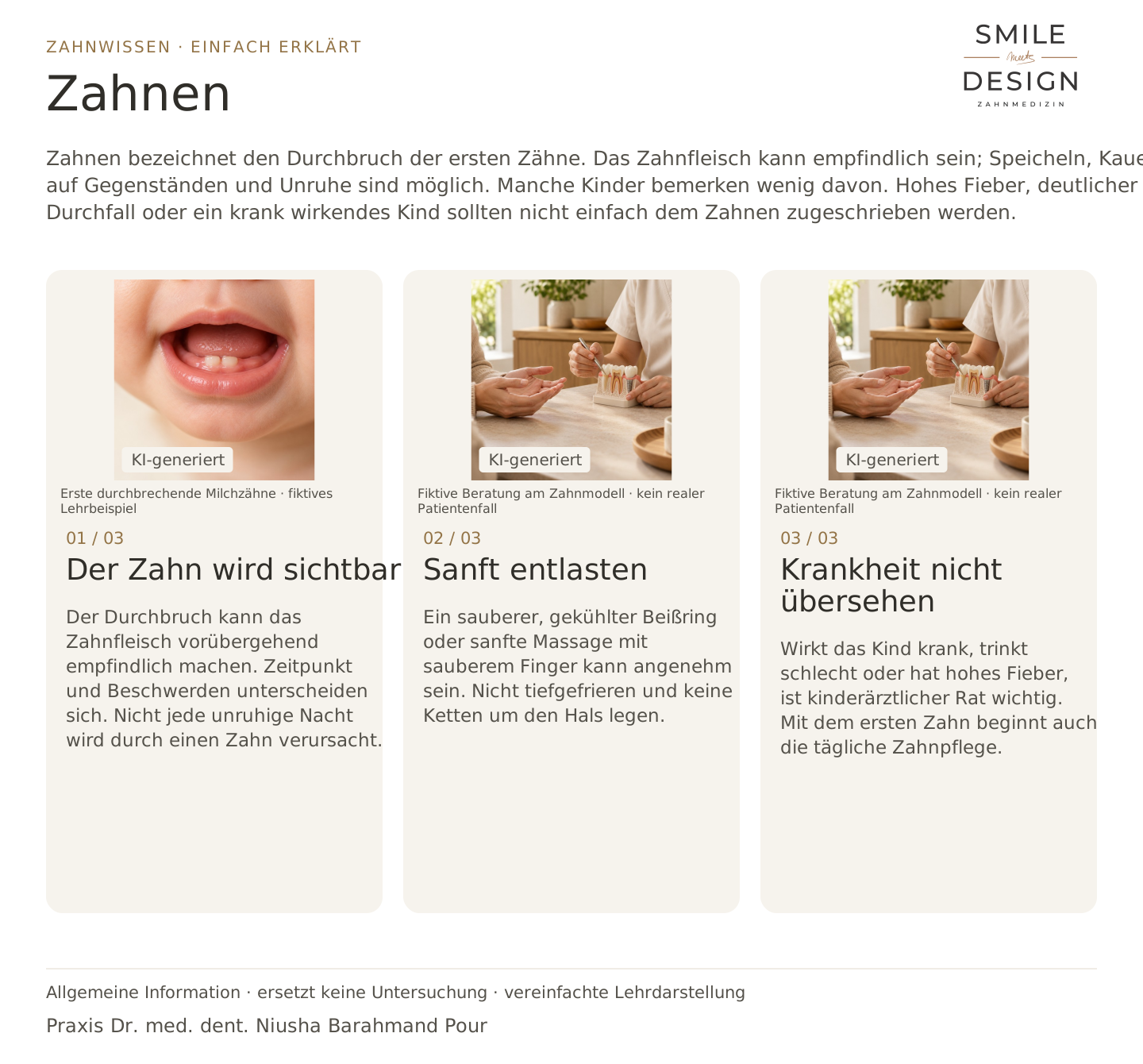
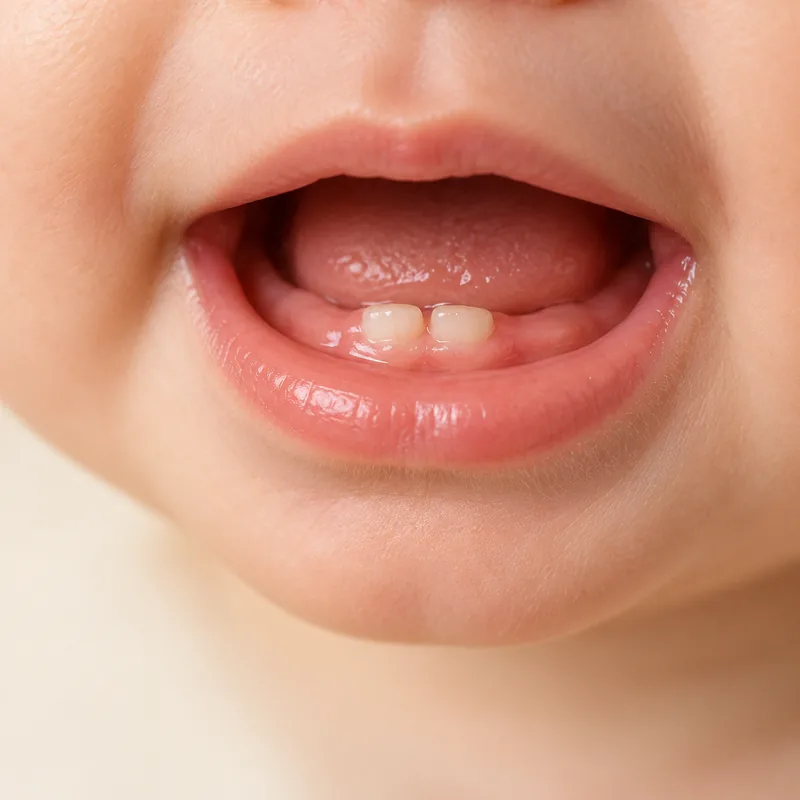
What might be noticed?
Tender gums, drooling and increased chewing.

Teething means the first teeth are erupting. The gums may be tender; drooling, chewing objects and restlessness can occur. Some children notice little discomfort. High fever, significant diarrhoea or a child who appears ill should not simply be attributed to teething.
For dental trainees & teams
Eruption can make the gum temporarily tender. Timing and symptoms vary. Not every restless night is caused by a tooth.
A clean, chilled teething ring or gentle massage with a clean finger may feel soothing. Do not freeze rings or place necklaces around the neck.
If a child seems ill, drinks poorly or has a high fever, seek medical advice. Daily tooth care also starts when the first tooth appears.
Tender gums, drooling and increased chewing.
Gentle massage or a safe chilled teething ring.
If the child appears ill, drinks poorly, has a high fever or significant other symptoms.
Three steps. Straight to the point.
Explanations are also shown on screen.

Silent film in German · English explanations in the three views above
Mild local discomfort can fit with teething. Significant illness needs separate assessment; an erupting tooth does not rule out infection.
Often in the second half of the first year, sometimes earlier or later. Individual development is observed at routine child health checks.
Not automatically. Simple measures are often enough. Use age-appropriate medicines only with professional guidance; products for adults are not a substitute.
It is not a recommended teething aid. Necklaces and small parts can create strangulation or choking hazards. Suitable supervised aids are safer.
A question to discuss with Dr. med. dent. Niusha Barahmand Pour:
Which tooth care and gentle comfort measures suit my child’s age?
Symptoms, examination findings and personal wishes form the basis of individual treatment planning.
The first teeth often bring questions about suitable care.
Discuss care for the first teethChoose an appointment on DoctolibBuild on the simple explanation with clinical terms, key distinctions and a knowledge question.
Eruption signs are non-specific. They must not replace assessment of an infant’s general condition, drinking and fever.
Editorial research: 23 October 2026. This explanation covers general principles and does not replace a personal examination. Suitable treatment is discussed following individual assessment.