How can it start?
Fever, feeling unwell and a reduced appetite may precede the painful mouth changes. Not every first herpes infection causes gingivostomatitis.

The German term “Mundfäule” usually means painful inflammation of the gums and mouth lining caused by herpes simplex viruses. It often accompanies a first infection in young children, but adults can also be affected. Keeping up fluid intake is particularly important. The name does not mean that teeth are rotting and is not evidence of poor oral hygiene.
For training & practice ↓
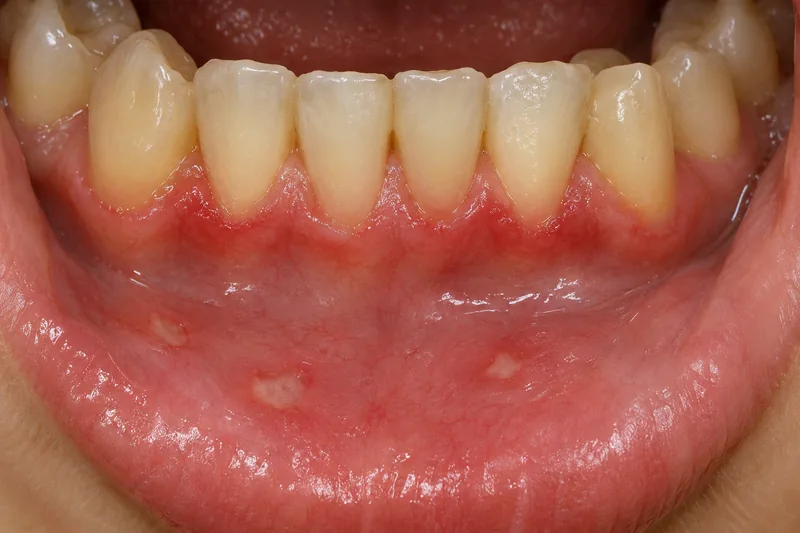
Red gums, painful blisters and small ulcers can occur during a first herpes infection. Similar changes can have other causes. A teaching image cannot establish a diagnosis; an examination is needed.
Pain can make drinking difficult. Offer small amounts frequently to help maintain fluid intake. Ask a clinician or pharmacist about suitable age-appropriate pain relief. For a short period, drinking enough matters more than eating normally.
Someone who can hardly drink or passes much less urine needs medical help today. Check wet nappies and alertness in children. If a person is difficult to wake or has impaired consciousness, call 112 immediately.
Fever, feeling unwell and a reduced appetite may precede the painful mouth changes. Not every first herpes infection causes gingivostomatitis.
Yes, although it is more common in young children. New widespread or painful mouth changes should be examined.
The cause is a viral infection. The misleading German name does not tell us anything about someone’s oral hygiene.
Seek prompt medical assessment for newborns, a weakened immune system or eye symptoms. Refusal to drink or signs of dehydration need help today; call 112 if someone is difficult to wake.
Three steps. No audio.
Each scene can also be selected manually.

Silent educational film with German on-screen text and simplified teaching images. Not a patient case or a promised treatment outcome. The full English explanation is available as text.
Recurrent aphthous ulcers, hand, foot and mouth disease and herpetic gingivostomatitis are different conditions. An isolated white or painful patch does not prove herpes infection. The course of the illness, general health and examination help distinguish them.
The lesions often heal in about 10 to 14 days. Severe episodes may last longer, up to around three weeks. This is not a reason to wait if someone refuses fluids, shows signs of dehydration or is getting worse. Seek medical assessment promptly in these situations.
Herpes simplex viruses can spread through saliva and fluid from blisters. Avoid kissing and sharing cups, cutlery or towels while unwell. Wash hands regularly and avoid touching the eyes after touching affected areas. In particular, avoid close contact with newborn babies.
Fluids and appropriate pain relief are central. Antiviral medicine is not needed in every episode. Treatment may differ for people with a weakened immune system or for severe symptoms assessed early. Do not apply cold sore creams or numbing products inside a child’s mouth without professional advice.
Editorially suggested question to discuss with Dr Niusha Barahmand Pour:
What is causing the mouth changes, and is additional medical or paediatric care needed?
Call before visiting the practice with painful mouth changes. A child with fever or poor fluid intake needs paediatric or medical care; do not wait for a routine dental appointment.
Call before visiting · 0221 669 401 80Telephone contactHerpetic gingivostomatitis is different from recurrent aphthous ulcers. Reduced fluid intake is an important warning sign for the team; a photograph cannot provide a diagnosis.
Editorial research: . General information, not an individual diagnosis or treatment recommendation. Teaching illustrations are simplified and do not depict a patient case.