Persistent change?
Arrange assessment after about two weeks, sooner if concerning.

Oral cavity carcinoma is a malignant tumour in the mouth, usually arising from cells of its lining. A persistent sore, lump, red patch or white patch can have many causes. A change lasting around two weeks should be examined, even if it does not hurt.
For training & practice ↓
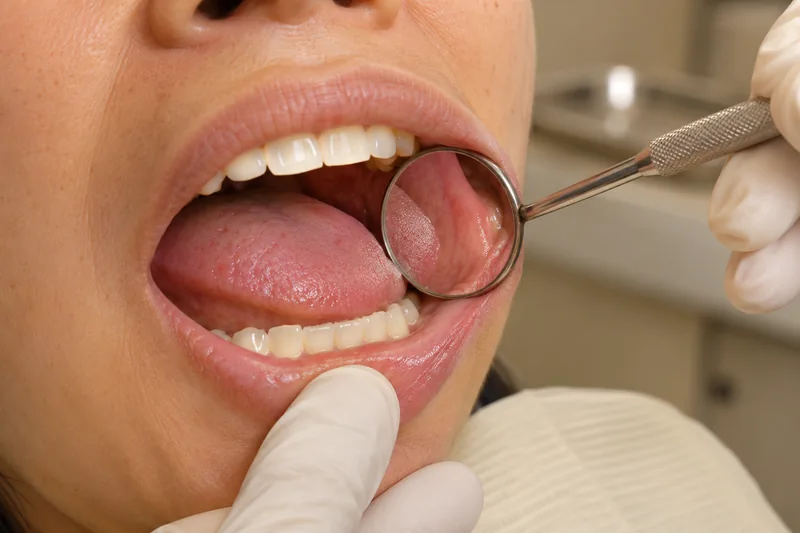
The tongue, floor of the mouth, cheeks and other areas may be affected. A visible change is not automatically cancer, but persistent findings need assessment.
Examination and, when indicated, a tissue sample establish the cause. Comparing pictures or using a self-check cannot confirm or exclude cancer.
A confirmed diagnosis requires a specialist team. Management depends on factors including the location and extent of disease.
Arrange assessment after about two weeks, sooner if concerning.
No.
Professional assessment and, if needed, biopsy.
Three steps. No audio.
Each scene can also be selected manually.

Silent educational film with German on-screen text and simplified teaching images. Not a patient case or a promised treatment outcome. The full English explanation is available below.
The tongue, floor of the mouth, cheeks and other areas may be affected. A visible change is not automatically cancer, but persistent findings need assessment.
Examination and, when indicated, a tissue sample establish the cause. Comparing pictures or using a self-check cannot confirm or exclude cancer.
A confirmed diagnosis requires a specialist team. Management depends on factors including the location and extent of disease.
The oral cavity includes the front parts of the tongue and floor of the mouth. Throat tumours arise in different regions; risks and treatment should not simply be equated.
Yes. Lack of pain is not a reason to ignore a persistent finding.
No. Many other causes exist. Examination is more reliable than judging a change by colour.
Regular examinations and avoiding tobacco are useful, but do not replace assessment of a new persistent change.
Editorially suggested question to discuss with Dr Niusha Barahmand Pour:
Is focused tissue assessment or a specialist referral necessary?
A persistent or concerning oral change deserves prompt examination. Contact a clinician directly if it worsens rapidly.
Request an examinationAppointment selection at DoctolibThe oral cavity includes the front parts of the tongue and floor of the mouth. Throat tumours arise in different regions; risks and treatment should not simply be equated.
Editorial research: . General information, not an individual diagnosis or treatment recommendation. Teaching illustrations are simplified and do not depict a patient case.