Route of the tube
The nasal route passes behind the palate through the throat towards the windpipe, leaving the mouth accessible for surgery.

A nasotracheal tube passes through the nose and throat into the windpipe. It allows the anaesthesia team to control breathing under general anaesthesia. This route can leave the mouth available for certain oral or jaw operations.
For training & practice ↓
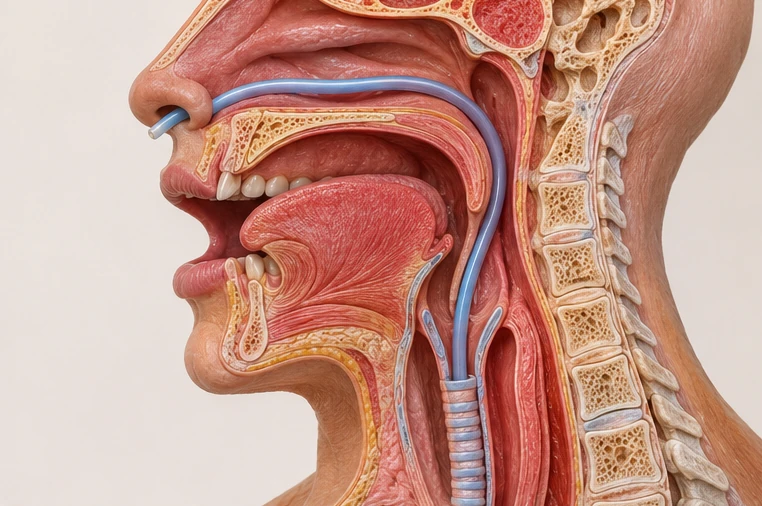
The nasal route passes behind the palate through the throat towards the windpipe, leaving the mouth accessible for surgery.
An external nasal mask may be used for nitrous oxide. It does not extend into the windpipe.
Previous nasal surgery or injury matters when selecting an airway route.
The nasal route passes behind the palate through the throat towards the windpipe, leaving the mouth accessible for surgery.
An external nasal mask may be used for nitrous oxide. It does not extend into the windpipe.
Previous nasal surgery or injury matters when selecting an airway route.
The nasal route passes behind the palate through the throat towards the windpipe, leaving the mouth accessible for surgery.
An external nasal mask may be used for nitrous oxide. It does not extend into the windpipe.
Previous nasal surgery or injury matters when selecting an airway route.
Three steps. No audio.
Each scene can also be selected manually.

Silent film with English on-screen text and simplified teaching images.
An external nasal mask may be used to deliver nitrous oxide, for example. It sits outside the body. The end of a nasotracheal tube lies inside the windpipe.
An external nasal mask may be used to deliver nitrous oxide, for example. It sits outside the body. The end of a nasotracheal tube lies inside the windpipe.
Mention previous nasal surgery or injury, frequent nosebleeds and any difficulties during an earlier anaesthetic. The team considers this history, its examination and the planned operation when choosing how to manage the airway.
The nasal lining has a rich blood supply and may become irritated or bleed. Tell your team about continuing symptoms after surgery. For your own procedure, ask which route is planned and why.
A question to ask
Which airway is planned for my procedure and what previous nasal treatment should I mention?
When arranging planned dental care, mention any questions about anaesthesia and your medical history.
Choose an appointmentAppointment selection at DoctolibNasal and oral describe the route. Tracheal describes where the end of the tube lies. A nasal oxygen cannula and a tracheal tube differ in both position and function.
Editorial research: . General information, not an individual diagnosis or treatment recommendation. Teaching illustrations are simplified and do not depict a patient case.
If you turn this on, this website stores which guides you open, separately from advertising preferences. The markers expire after a fixed 30-day period from activation. The list is not sent to us by this feature. You can turn it off here and delete the markers.
Other people using the same browser profile can also see the markers. German and English versions share one marker. Expired entries are removed the next time you open a page with this feature; deleting browser data may remove them earlier. “Viewed” means opened, not read or completed.