When?
At birth or within 30 days.

Natal teeth are present at birth; neonatal teeth erupt within the first 30 days. Stability and any feeding or tongue problems matter. A very loose tooth needs prompt assessment because it could detach and enter the airway.
For training & practice ↓
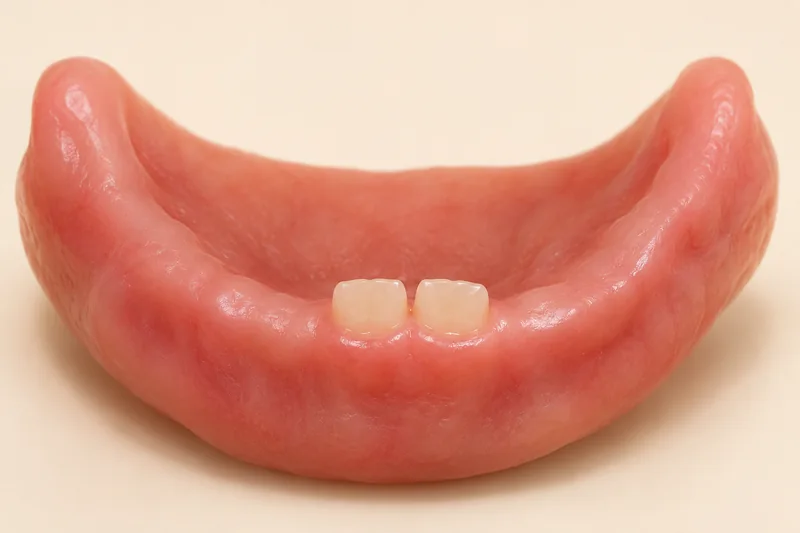
The tooth is often in the lower incisor region. An early tooth is not automatically extra or a sign of disease.
Looseness, tongue injury or feeding problems need medical or dental assessment. Do not wiggle or pull the tooth yourself.
A stable, symptom-free tooth may be monitored. Looseness or symptoms require an individual treatment decision.
At birth or within 30 days.
Stability, tongue and feeding.
Breathing difficulty: 112.
Three steps. No audio.
Each scene can also be selected manually.

Silent educational film with German on-screen text and simplified teaching images. Not a patient case or a promised treatment outcome. The full English explanation is available as text.
Natal refers to presence at birth; neonatal refers to eruption within 30 days.
No. Stability and symptoms are important factors.
Seek prompt paediatric advice. Fewer wet nappies, marked drowsiness or breathing problems require urgent medical help.
Call 112 immediately. Do not wait for a dental appointment.
Editorially suggested question to discuss with Dr Niusha Barahmand Pour:
Is the tooth stable enough, and does it affect feeding?
Involve paediatric and appropriate dental care for an early tooth, promptly if it is very loose or feeding is difficult.
Call the practice · 0221 669 401 80Telephone contactNatal refers to presence at birth; neonatal refers to eruption within 30 days.
Editorial research: . General information, not an individual diagnosis or treatment recommendation. Teaching illustrations are simplified and do not depict a patient case.