What is SLS?
A surfactant.

Sodium lauryl sulphate, or SLS, is a surfactant used for purposes including creating foam in toothpaste. It is not the fluoride ingredient. With sensitive oral tissues or recurrent mouth ulcers, it can be useful to discuss a suitable SLS-free toothpaste.
For training & practice ↓
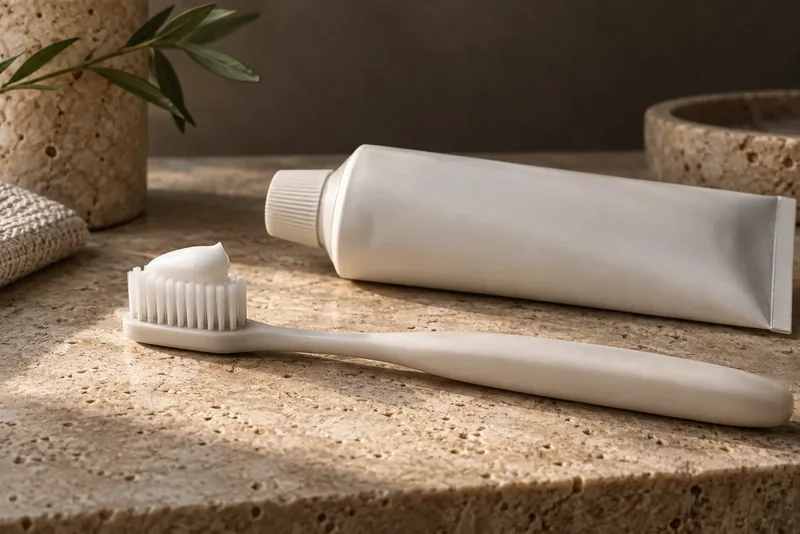
SLS relates to formulation and foam. Fluoride has a different role in decay prevention.
Burning or sore tissues can have different causes. Symptoms occurring after product use are a clue, not proof of allergy.
A replacement toothpaste should still suit your decay risk. Less foam does not automatically mean less effective cleaning.
A surfactant.
Not generally; tolerance matters.
Persistent tissue changes.
Three steps. No audio.
Each scene can also be selected manually.

Silent educational film with German on-screen text and simplified teaching images. Not a patient case or a promised treatment outcome. The full English explanation is available as text.
Heavy foaming does not measure decay prevention. Suitable ingredients and actual cleaning matter.
No. Mouth ulcers have different possible triggers. Trying an SLS-free product may be reasonable with symptoms, but it is not a promised treatment.
No. These are different properties. The ingredient list shows whether fluoride is present and in which form.
An ulcer lasting more than three weeks, unusually large or changing should be examined. Recurrent symptoms should also be discussed.
Editorially suggested question to discuss with Dr Niusha Barahmand Pour:
Which ingredients or other factors might contribute to my symptoms?
Does toothpaste burn or do ulcers keep returning? The cause and suitable care can be discussed.
Have oral discomfort assessedAppointment selection at DoctolibHeavy foaming does not measure decay prevention. Suitable ingredients and actual cleaning matter.
Editorial research: . General information, not an individual diagnosis or treatment recommendation. Teaching illustrations are simplified and do not depict a patient case.