What changes?
Tooth shape, not position.

Odontoplasty means deliberately changing tooth shape by removing hard tooth tissue. Limited aesthetic enamel reshaping is also called enameloplasty. Even when the intended change is small, the removal is permanent and must suit the enamel thickness, tooth condition and bite.
For training & practice ↓
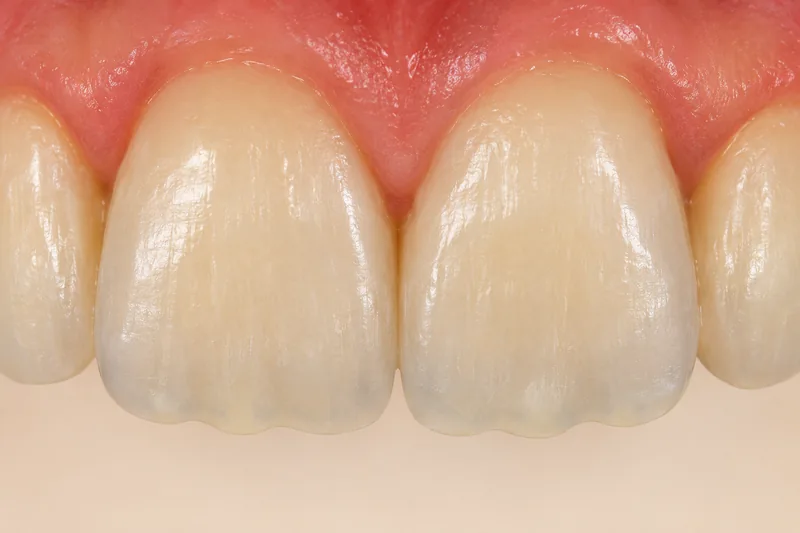
An edge that looks bothersome is initially a concern. Before altering it, the assessment distinguishes natural shape, damage and other problems.
What can reasonably be changed depends on the tooth and its contacts. Wanting a different shape does not automatically justify removing healthy tissue.
An alteration affects more than appearance. Surface quality, sensitivity and opposing-tooth contacts need consideration.
Tooth shape, not position.
Removed tissue does not grow back.
Examination and justified planning.
Three steps. No audio.
Each scene can also be selected manually.

Silent educational film with German on-screen text and simplified teaching images. Not a patient case or a promised treatment outcome. The full English explanation is available as text.
Odontoplasty removes existing tissue. An additive build-up adds material. The terms describe different changes.
No. Aligners change tooth position. Odontoplasty changes shape by removing tissue; the approaches are not interchangeable.
No. Lost enamel is not recreated in its original shape. Planning and limiting removal are therefore essential.
No. Even limited procedures need an indication. Excessive or poorly placed enamel removal can cause sensitivity and other problems. Filing at home is not a safe alternative.
Editorially suggested question to discuss with Dr Niusha Barahmand Pour:
Which tissue would be altered, and how would function be considered?
Does an edge or shape bother you? First clarify its cause and whether a change would be sensible.
Discuss tooth shapeAppointment selection at DoctolibOdontoplasty removes existing tissue. An additive build-up adds material. The terms describe different changes.
Editorial research: . General information, not an individual diagnosis or treatment recommendation. Teaching illustrations are simplified and do not depict a patient case.