When?
After assessment and review.

Surgical access allows clinicians to reach root surfaces and defects more directly. It may be considered for persistent deep sites after non-surgical care. It is not a routine step for every person with periodontitis.
For training & practice ↓
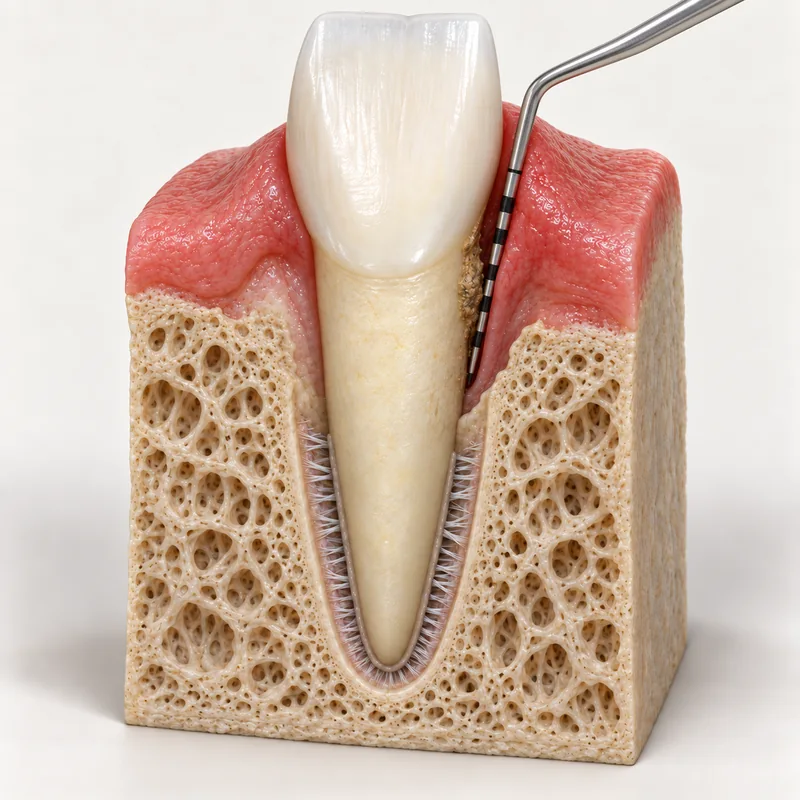
Inflammation and pockets are reviewed after initial care.
A surgical flap can facilitate cleaning or selected additional procedures.
Wound review and long-term supportive periodontal care remain important.
Inflammation and pockets are reviewed after initial care.
A surgical flap can facilitate cleaning or selected additional procedures.
Wound review and long-term supportive periodontal care remain important.
After assessment and review.
Access to difficult areas.
Continuing maintenance.
Three steps. No audio.
Each scene can also be selected manually.

Silent educational film with German on-screen text and simplified teaching images. Not a patient case or a promised treatment outcome. The full English explanation is available as text.
Non-surgical instrumentation does not involve lifting a surgical flap. Surgical access does not specify every additional technique.
No. Overall findings, previous care and individual conditions matter.
No. Access surgery is not synonymous with regeneration.
No. Hygiene and maintenance continue.
Editorially suggested question to discuss with Dr Niusha Barahmand Pour:
Which findings favour or oppose surgical access?
Discuss persistent pockets using the current examination findings.
Discuss periodontal progressAppointment selection at DoctolibNon-surgical instrumentation does not involve lifting a surgical flap. Surgical access does not specify every additional technique.
Editorial research: . General information, not an individual diagnosis or treatment recommendation. Teaching illustrations are simplified and do not depict a patient case.