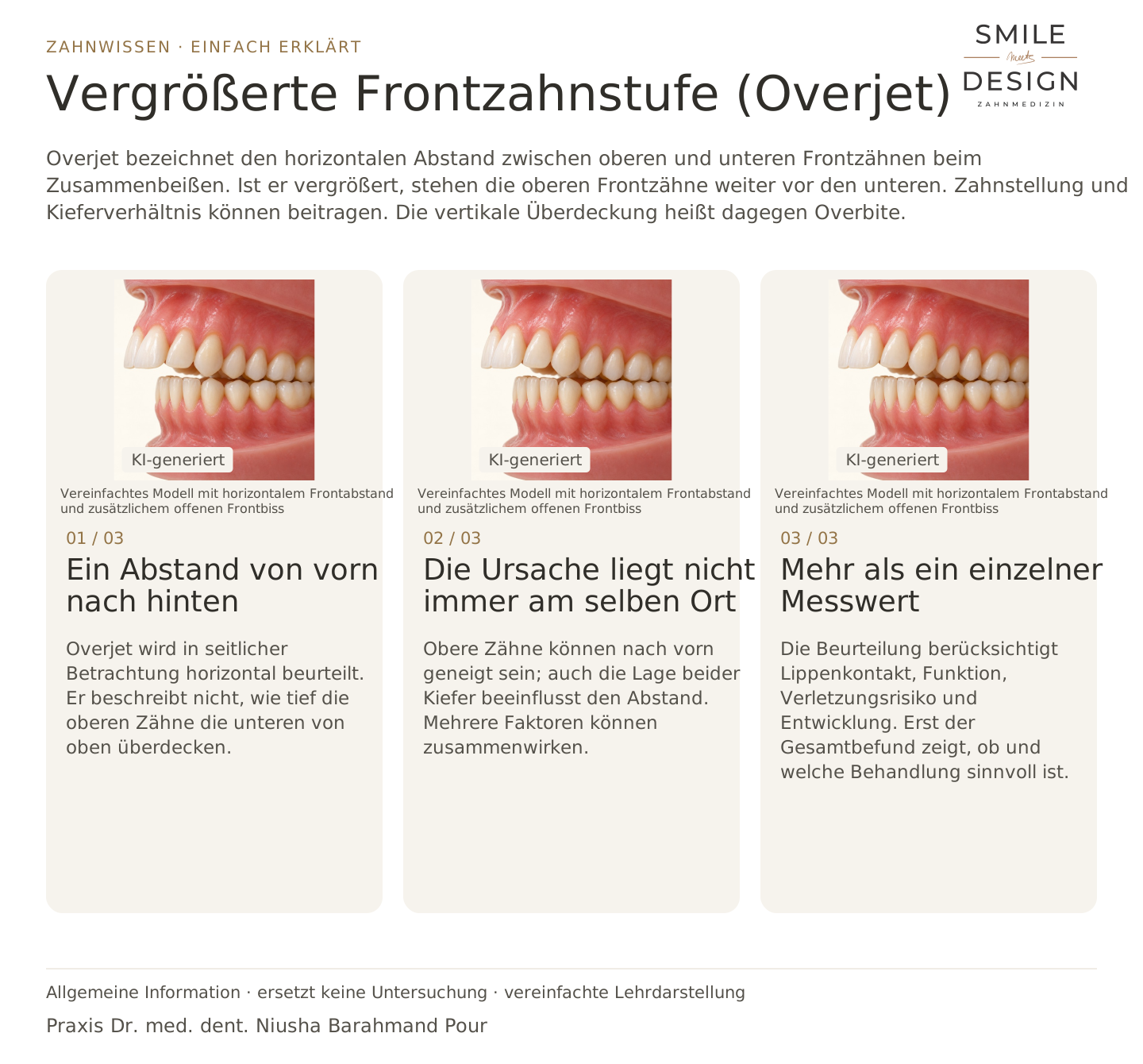
What is described?
The horizontal distance between front teeth during biting.

Overjet is the horizontal distance between upper and lower front teeth when biting together. If increased, the upper front teeth stand further ahead of the lower teeth. Tooth position and jaw relationship may contribute. Vertical overlap, by contrast, is called overbite.
For dental trainees & teams
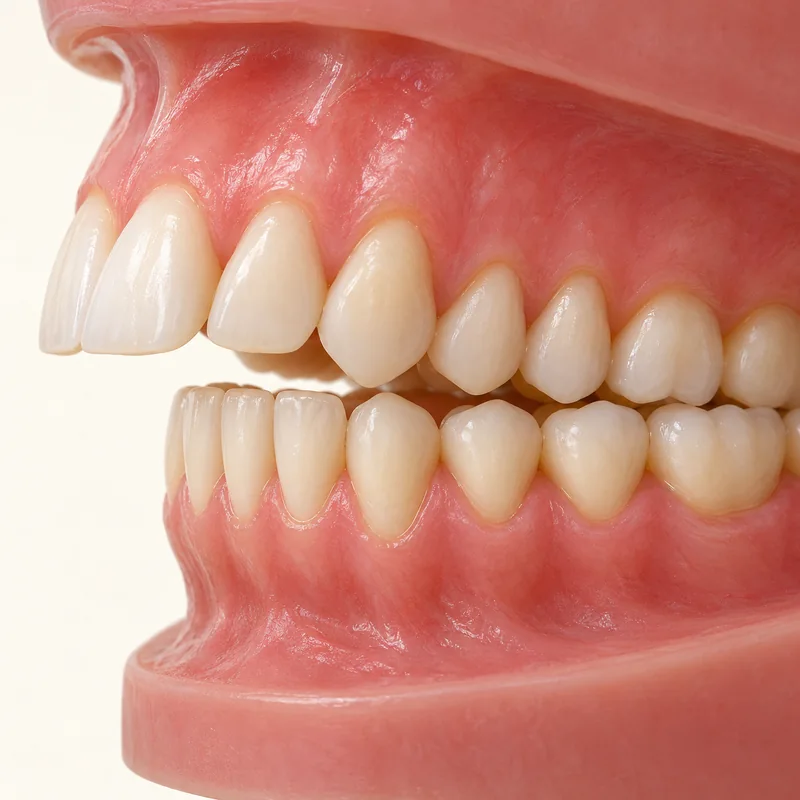
Overjet is assessed horizontally from the side. It does not describe how deeply the upper teeth overlap the lower teeth from above.
Upper teeth may be inclined forwards; the position of both jaws also influences the distance. Several factors can act together.
Assessment considers lip coverage, function, injury risk and development. Only the overall findings show whether treatment is appropriate and which approach may suit.
The horizontal distance between front teeth during biting.
Tooth inclination and the relationship between the jaws.
Lip coverage, function, injury risk and developmental stage.
Three steps. Straight to the point.
Explanations are also shown on screen.

Silent film in German · English explanations in the three views above
Overjet: horizontal distance from front to back. Overbite: vertical overlap from top to bottom.
The terms are sometimes confused in everyday language. Clinically, horizontal overjet and vertical overbite are distinguished.
More protruding front teeth, particularly with inadequate lip coverage, may be more vulnerable to injury. Individual risk is assessed.
No. Tooth inclination, lower-jaw position and the relationship of both jaws may also contribute.
A question to discuss with Dr. med. dent. Niusha Barahmand Pour:
What part do tooth inclination, jaw relationships and lip coverage play in my overjet?
Symptoms, examination findings and personal wishes form the basis of individual treatment planning.
Protruding front teeth are assessed in the context of the whole bite.
Discuss front-tooth positionChoose an appointment on DoctolibBuild on the simple explanation with clinical terms, key distinctions and a knowledge question.
Overjet is a tooth-position finding. On its own, it does not prove a specific skeletal jaw discrepancy.
Editorial research: 23 October 2026. This explanation covers general principles and does not replace a personal examination. Suitable treatment is discussed following individual assessment.