Always painful?
No.

An oral papilloma is a benign, wart-like mucosal growth. It may be pink or whitish and painless. Not every similar-looking lesion is a papilloma; examination and, when indicated, tissue assessment establish the diagnosis.
For training & practice ↓
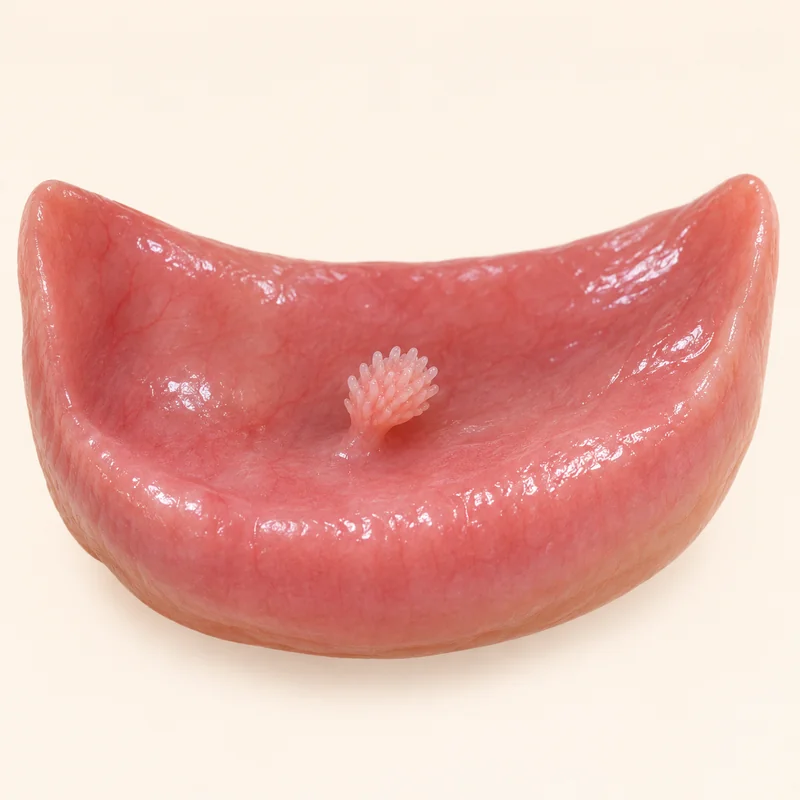
Its surface may have small finger-like projections. Location, size and development are assessed; a photograph alone cannot confirm the diagnosis.
Certain human papillomaviruses may be involved. The diagnosis alone does not establish when or how an infection was acquired.
Depending on the finding, the lesion may be removed and examined microscopically. New painless growths also merit dental assessment.
No.
Either is possible.
No; have it assessed.
Three steps. No audio.
Each scene can also be selected manually.

Silent educational film with German on-screen text and simplified teaching images. Not a patient case or a promised treatment outcome. The full English explanation is available as text.
Wart-like initially describes a surface. Irritation fibromas, other oral growths and suspicious tissue changes require their own assessment.
A papilloma is benign. First, however, a new growth must be identified correctly.
No. Low-risk types 6 and 11 are commonly described with typical oral squamous papilloma. Appearance cannot identify a viral type.
No. Skin wart products or home removal can injure oral tissue and delay assessment.
You can bring this question to your appointment:
Does the lesion fit a papilloma, and would microscopic tissue examination help?
An examination can clarify the finding and any need for referral.
Arrange an assessmentAppointment selection at DoctolibWart-like initially describes a surface. Irritation fibromas, other oral growths and suspicious tissue changes require their own assessment.
Editorial research: . General information, not an individual diagnosis or treatment recommendation. Teaching illustrations are simplified and do not depict a patient case.