What is assessed?
Initial signs of inflammation and deeper pockets around the tooth-supporting tissues.

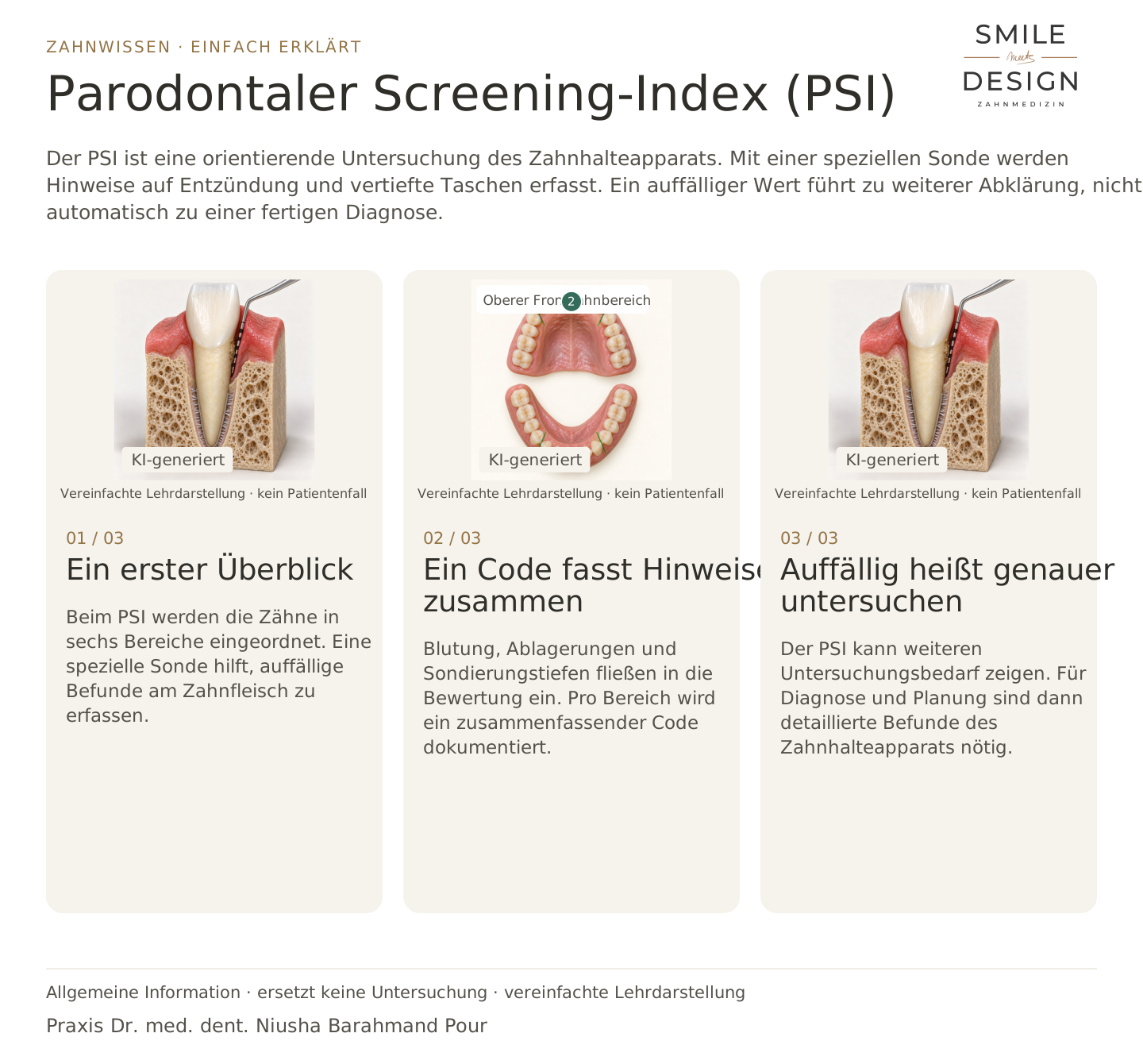
PSI is an initial screening examination of the tissues supporting the teeth. A special probe identifies signs of inflammation and deeper pockets. An abnormal score calls for further assessment, not an automatic diagnosis.
For dental trainees & teams
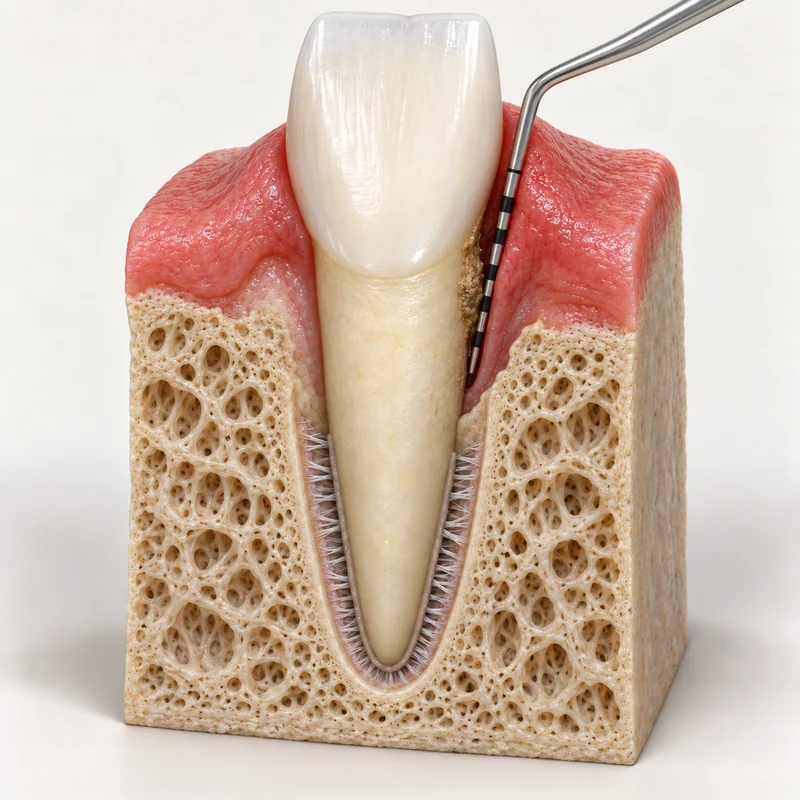
For PSI, the teeth are grouped into six sections. A special probe helps identify findings around the gums.
Bleeding, deposits and probing depths contribute to the assessment. A summary code is recorded for each section.
PSI can identify a need for further investigation. Detailed periodontal findings are then needed for diagnosis and planning.
Initial signs of inflammation and deeper pockets around the tooth-supporting tissues.
It helps dentists identify early signs of periodontal problems.
A more detailed assessment may be needed; a screening code alone is not a complete diagnosis.
Three steps. Straight to the point.
Explanations are also shown on screen.

Silent film in German · English explanations in the three views above
Screening looks for indications. A diagnosis comes from a more detailed examination and interpretation.
No. It is a screening check. A periodontal chart records the condition in greater detail.
No. The code does not predict an individual's future. It indicates that the findings need closer assessment.
No. It requires a suitable probe and professional technique. Self-measurement can cause injury or misleading results.
A question to discuss with Dr. med. dent. Niusha Barahmand Pour:
Does the screening show anything that needs a closer examination?
Preserving teeth and healthy structures are part of the practice philosophy.
A check-up can clarify whether the supporting tissues need closer examination.
Arrange a check-upChoose an appointment on DoctolibBuild on the simple explanation with clinical terms, key distinctions and a knowledge question.
A PSI code is neither a complete periodontal record nor an individual progression score.
Editorial research: 23 October 2026. This explanation covers general principles and does not replace a personal examination. Suitable treatment is discussed following individual assessment.