What is recorded?
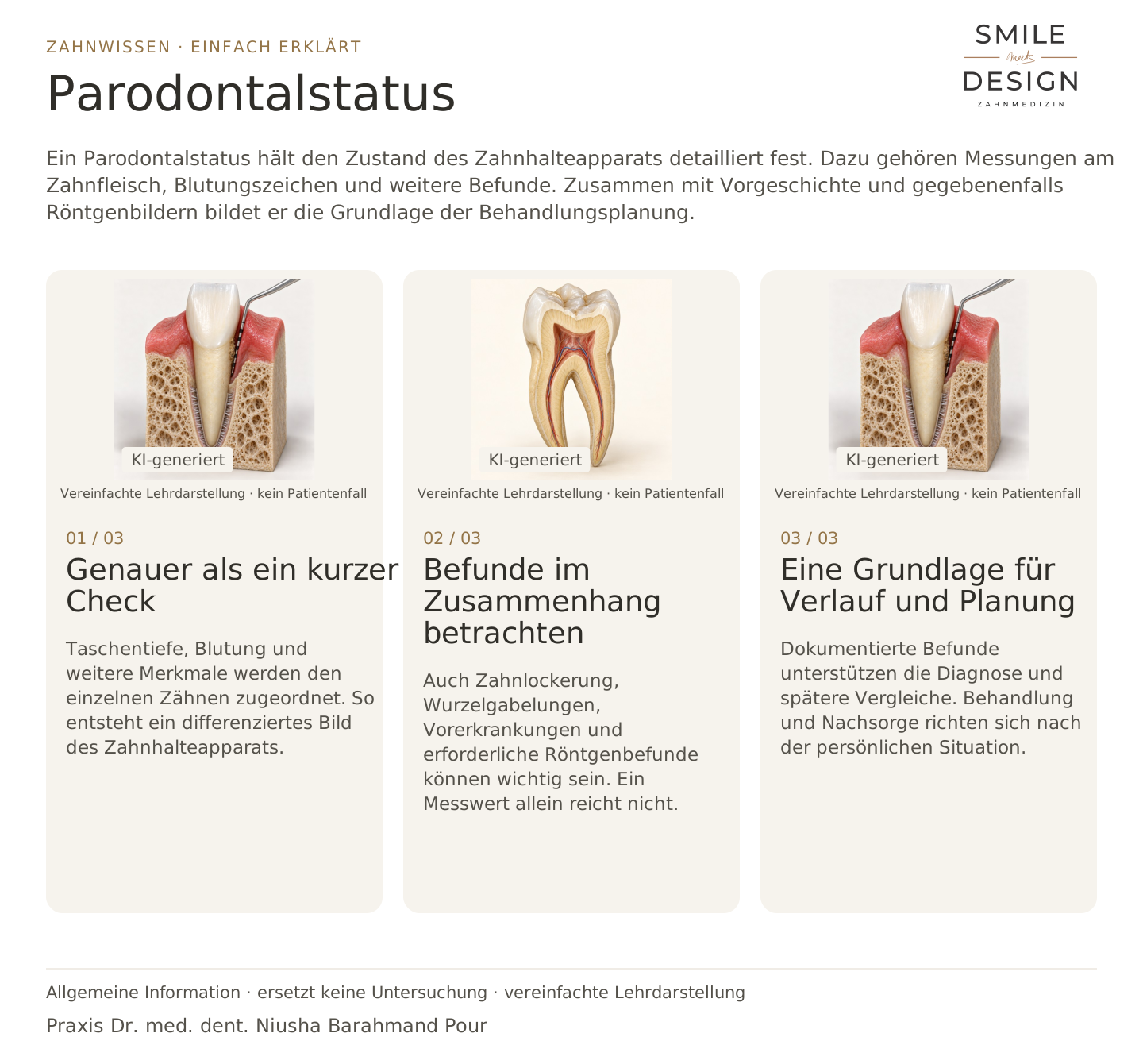
Detailed periodontal findings, such as probing depths, bleeding and tooth mobility.

Periodontal charting records the condition of the tissues supporting the teeth in detail. It includes gum measurements, bleeding and other findings. Together with medical history and, when indicated, X-rays, it supports treatment planning.
For dental trainees & teams
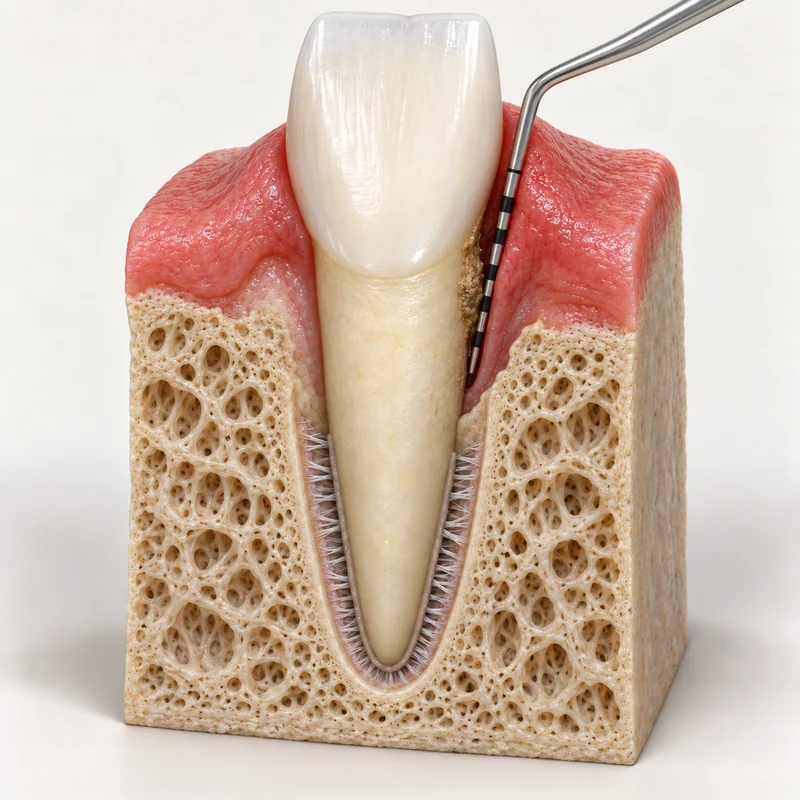
Pocket depths, bleeding and other features are recorded for individual teeth, producing a more detailed picture of their supporting tissues.
Tooth mobility, root branching areas, health conditions and necessary X-rays can also matter. One measurement alone is not enough.
Recorded findings support diagnosis and later comparisons. Treatment and follow-up depend on the individual's situation.
Detailed periodontal findings, such as probing depths, bleeding and tooth mobility.
When the supporting tissues need closer assessment for diagnosis, planning or follow-up.
Together with history and necessary additional findings, not as an isolated self-diagnosis.
Three steps. Straight to the point.
Explanations are also shown on screen.

Silent film in German · English explanations in the three views above
PSI gives an overview of further assessment needs. Periodontal charting documents the condition more fully for diagnosis and planning.
The condition can differ around the same tooth. One site does not represent the whole tooth.
X-rays are used when professionally justified. Existing suitable images may be relevant to planning.
Comparable findings help assess changes in inflammation and support. They are interpreted as part of the overall picture.
A question to discuss with Dr. med. dent. Niusha Barahmand Pour:
Which findings matter most for my treatment and future comparisons?
Planning considers the findings and individual circumstances.
Existing findings and next steps can be discussed together.
Discuss your findingsChoose an appointment on DoctolibBuild on the simple explanation with clinical terms, key distinctions and a knowledge question.
Pocket depth alone describes neither the complete findings nor the extent of all tissue loss.
Editorial research: 23 October 2026. This explanation covers general principles and does not replace a personal examination. Suitable treatment is discussed following individual assessment.