Where?
On tooth surfaces.

The acquired pellicle is a very thin film of salivary components, particularly proteins, that forms on tooth surfaces. It is part of the normal oral environment and can influence acid contact with enamel. It is different from bacterial plaque and does not make teeth acid-proof.
For training & practice ↓
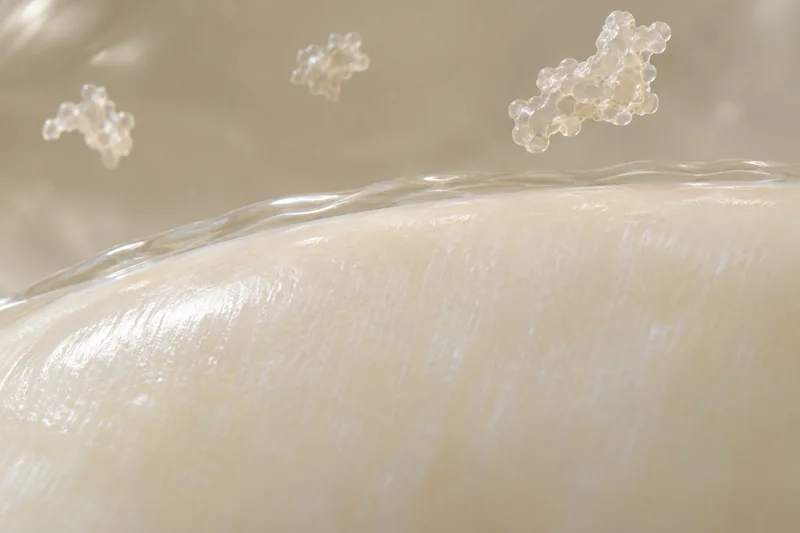
Salivary components attach to a cleaned tooth surface. The pellicle is normally not visible as a thick deposit.
The film changes the interface between tooth and oral fluid. Its protection is limited and depends on conditions.
Bacteria can attach to surfaces and develop a biofilm. Regular cleaning controls unwanted plaque; natural reformation of the salivary film is not a failure.
On tooth surfaces.
Not as a thick deposit.
Control plaque, not prevent every natural film.
Three steps. No audio.
Each scene can also be selected manually.

Silent educational film with German on-screen text and simplified teaching images. Not a patient case or a promised treatment outcome. The full English explanation is available as text.
Pellicle is mainly a salivary film. Plaque is an organised microbial deposit; the terms are not interchangeable.
Keeping teeth completely film-free is not a useful care goal. Appropriate oral hygiene and plaque control matter, rather than aggressive polishing.
Not necessarily. Roughness may have other causes, including plaque or calculus. A microscopically thin pellicle cannot be reliably identified this way.
No. Experimental protection does not mean complete protection in daily life. Frequent acid exposure can still damage dental hard tissue.
Editorially suggested question to discuss with Dr Niusha Barahmand Pour:
Is what I notice on my teeth plaque, tartar or something else?
Noticing a rough or discoloured deposit? Examination can distinguish its cause from normal surface-film formation.
Have tooth surfaces checkedAppointment selection at DoctolibPellicle is mainly a salivary film. Plaque is an organised microbial deposit; the terms are not interchangeable.
Editorial research: . General information, not an individual diagnosis or treatment recommendation. Teaching illustrations are simplified and do not depict a patient case.