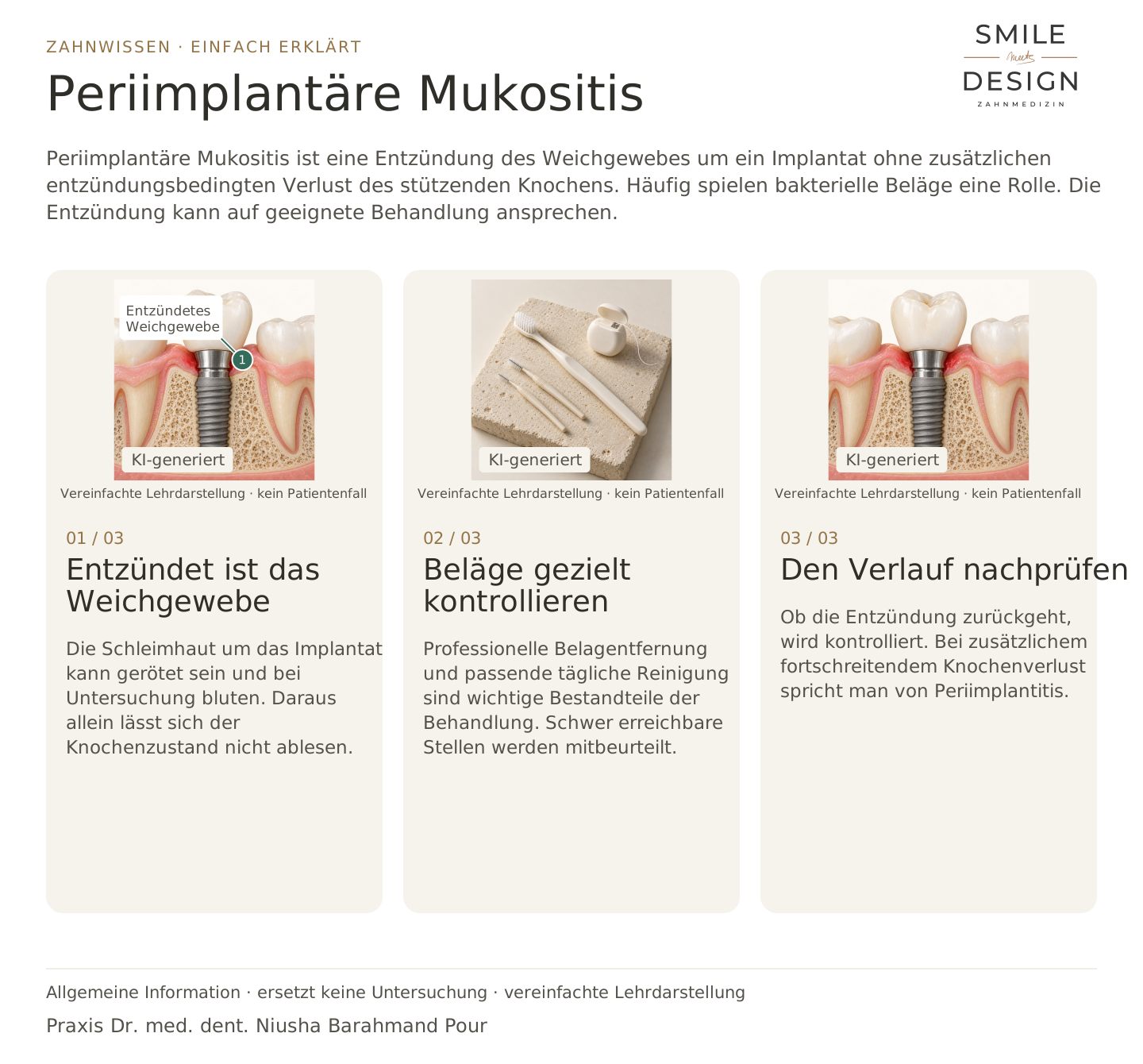
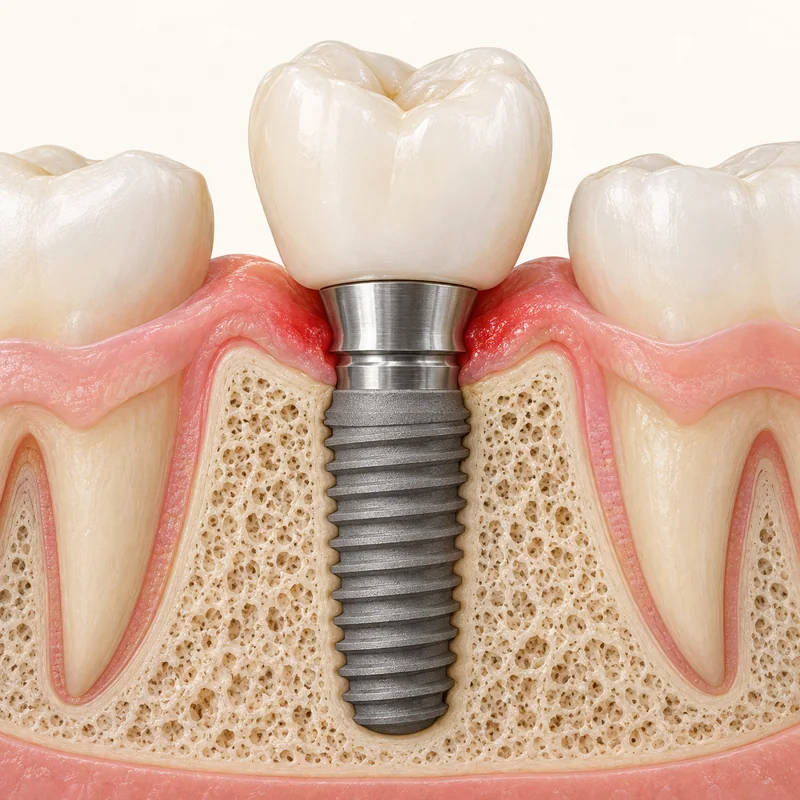
What is affected?
Soft tissue around an implant, without additional inflammatory bone loss.

Peri-implant mucositis is inflammation around an implant without additional inflammatory loss of supporting bone. Bacterial deposits often play a role. The inflammation can respond to suitable treatment.
For dental trainees & teams
The lining around the implant may be red and bleed during examination. This alone does not reveal the bone's condition.
Professional deposit removal and suitable daily cleaning are important parts of treatment. Areas that are hard to reach are also assessed.
Follow-up checks assess whether inflammation is resolving. Additional progressive bone loss indicates peri-implantitis.
Soft tissue around an implant, without additional inflammatory bone loss.
Bacterial deposits around the implant or its restoration.
Targeted plaque control and later reassessment of the response.
Three steps. Straight to the point.
Explanations are also shown on screen.

Silent film in German · English explanations in the three views above
Both affect soft tissues. Gingivitis occurs around natural teeth; peri-implant mucositis occurs around implants.
They are not the same. The key distinction is whether additional inflammatory loss of supporting bone is present.
A rinse replaces neither examination nor targeted removal of problematic deposits.
Yes. The agreed review helps assess whether the inflammation has sufficiently resolved.
A question to discuss with Dr. med. dent. Niusha Barahmand Pour:
Is only the soft tissue affected, and how will we monitor the response?
Planning considers the current findings and individual circumstances.
An examination can help determine the next step for irritated implant tissues.
Have the tissues examinedChoose an appointment on DoctolibBuild on the simple explanation with clinical terms, key distinctions and a knowledge question.
Mucositis affects soft tissue; additional progressive inflammatory bone loss indicates peri-implantitis.
Editorial research: 23 October 2026. This explanation covers general principles and does not replace a personal examination. Suitable treatment is discussed following individual assessment.