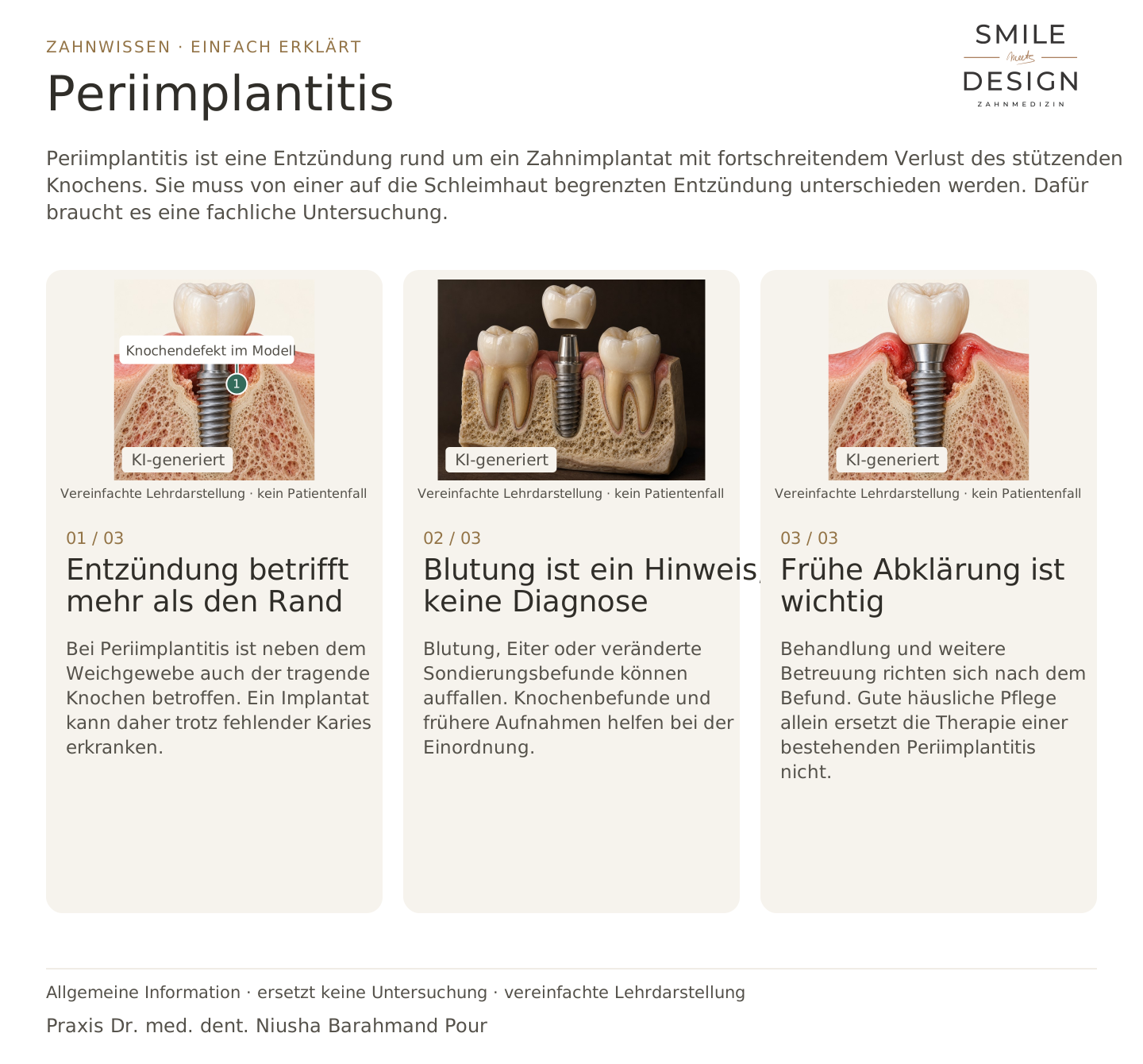
What is affected?
The tissues around a dental implant, including supporting bone.

Peri-implantitis is inflammation around a dental implant with progressive loss of supporting bone. It must be distinguished from inflammation limited to the soft tissues. Professional examination is needed.
For dental trainees & teams
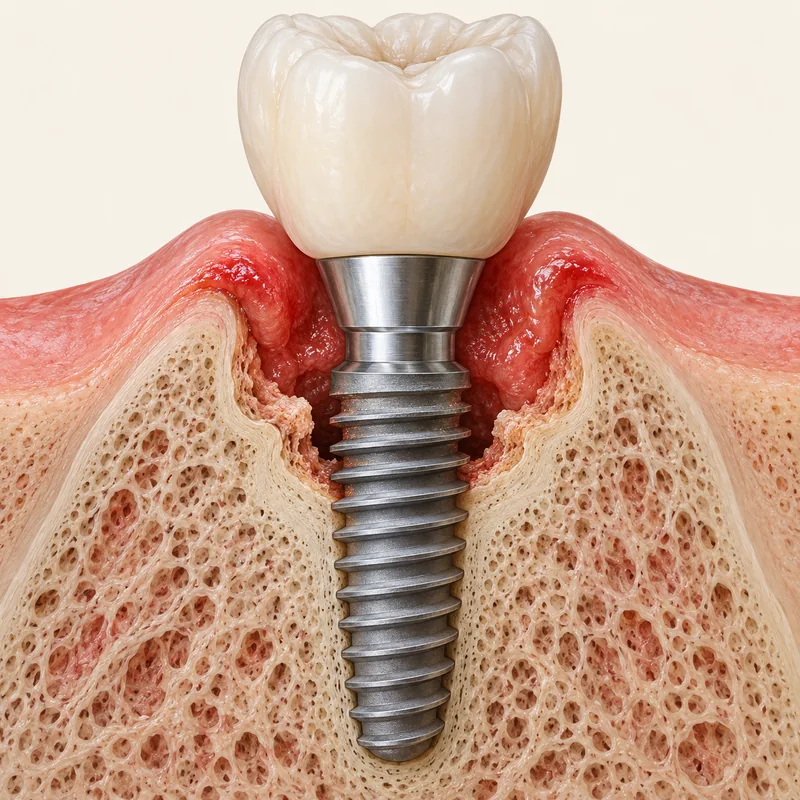
Peri-implantitis affects supporting bone as well as soft tissue. An implant can therefore develop disease even though it cannot develop tooth decay.
Bleeding, pus or changed probing findings may be present. Bone findings and earlier images help with interpretation.
Treatment and further care depend on the findings. Good home care alone does not replace treatment of existing peri-implantitis.
The tissues around a dental implant, including supporting bone.
There is additional progressive loss of supporting bone.
The extent and appropriate treatment require a professional examination.
Three steps. Straight to the point.
Explanations are also shown on screen.

Silent film in German · English explanations in the three views above
Peri-implantitis involves loss of supporting bone. Peri-implant mucositis is limited to the soft tissues.
The implant material does not develop decay. The surrounding tissues can still develop inflammatory disease.
No. Bone level and change are assessed alongside inflammation and clinical history.
Not automatically. Whether it can be maintained depends on the extent of disease and individual circumstances.
A question to discuss with Dr. med. dent. Niusha Barahmand Pour:
Which findings show inflammation, and how is the supporting bone assessed?
Healthy structures and the individual starting point come before treatment selection.
Bleeding or other changes around an implant should be examined.
Ask about an implant checkArrange an appointment with the practiceBuild on the simple explanation with clinical terms, key distinctions and a knowledge question.
A changed bone level alone does not prove active peri-implantitis; inflammation and the course also matter.
Editorial research: 23 October 2026. This explanation covers general principles and does not replace a personal examination. Suitable treatment is discussed following individual assessment.