
What may cause it?
Local pressure, friction, changed fit or another mucosal condition.

A denture sore spot is irritated or injured oral tissue caused by local pressure or friction. Changed fit, an unsuitable border or loading can contribute. Pain beneath dentures does not always have the same cause and persistent symptoms need examination.
For dental trainees & teams
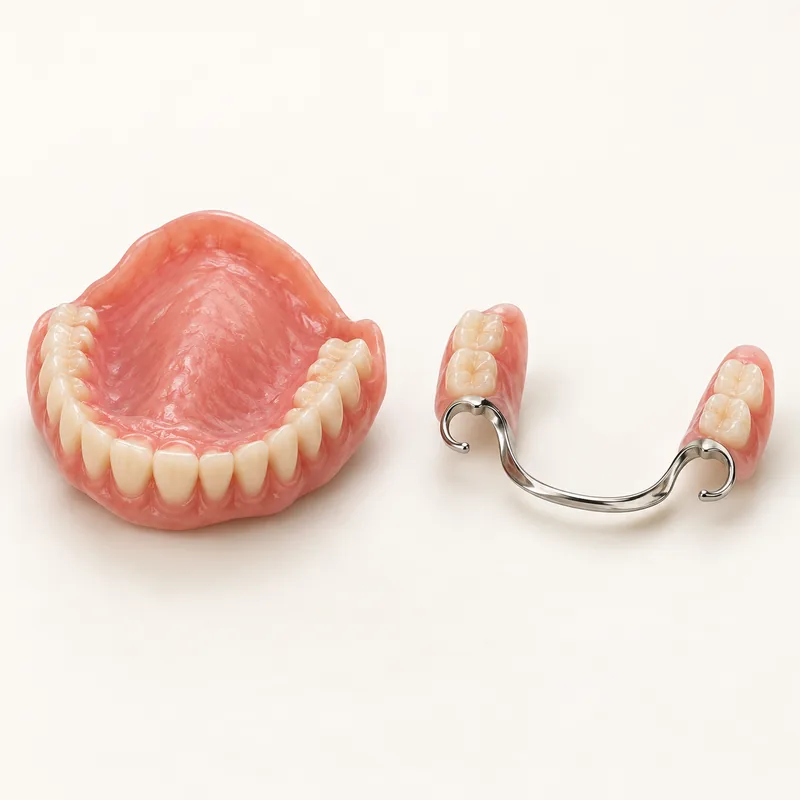
A small contact point can become painful during chewing. This may follow a new fitting or later changes in the mouth.
The dental team examines the tissues, denture fit and bite. Redness or burning can have other causes and are not automatically pressure sores.
Depending on the findings, a contact point or overall fit is corrected. Do not grind the denture yourself. With severe pain, ask by phone about further wear.
Local pressure, friction, changed fit or another mucosal condition.
Prompt examination of fit and tissues rather than self-grinding.
Follow care and wear instructions, and have non-healing areas reassessed.
Three steps. Straight to the point.
Explanations are also shown on screen.

Silent film in German · English explanations in the three views above
A pressure sore is locally mechanical. Inflammation under dentures may involve plaque or fungi; both can coexist.
No. Severe or persistent pain warrants review. If wearing is impossible, remove the denture and seek advice promptly.
That may help identify a pressure point but should not mean enduring severe pain. Ask the practice beforehand.
Persistent or recurring tissue changes need reassessment rather than being indefinitely labelled a denture sore.
A question to discuss with Dr. med. dent. Niusha Barahmand Pour:
Is the pain related to fit, bite or another change in the oral tissues?
At the practice, findings, personal wishes and possible next steps are discussed through a consultation and examination.
A precise description helps: where it rubs, since when and during speaking or chewing.
Have a sore spot checkedChoose an appointment on DoctolibBuild on the simple explanation with clinical terms, key distinctions and a knowledge question.
Redness alone does not establish a diagnosis. Healing should be checked after adjustment too.
Editorial research: 23 October 2026. This explanation covers general principles and does not replace a personal examination. Suitable treatment is discussed following individual assessment.