What is affected?
The soft tissue inside the tooth.

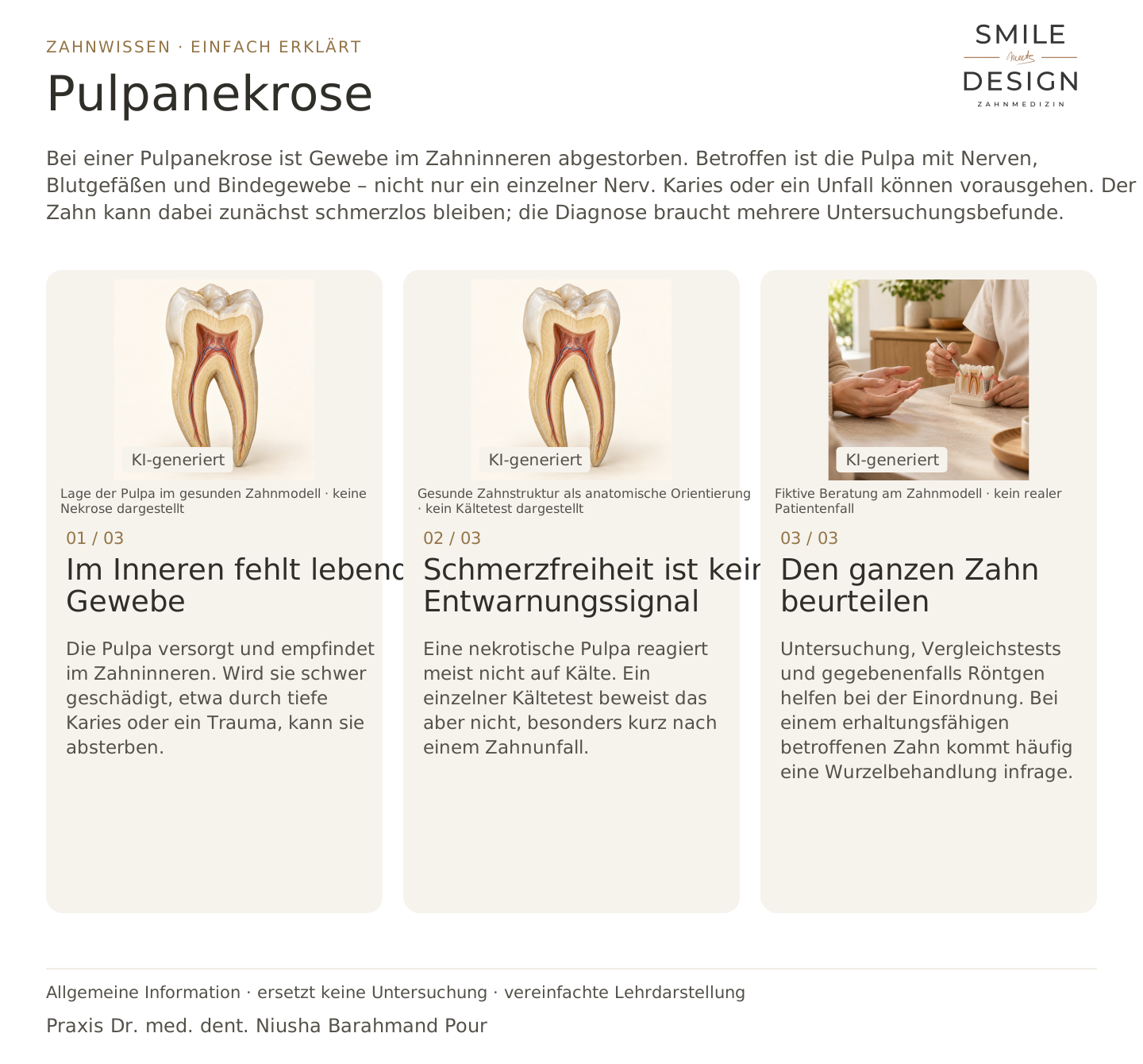
Pulp necrosis means that tissue inside a tooth has died. It affects the pulp, which contains nerves, blood vessels and connective tissue, rather than just one nerve. Decay or an injury may precede it. The tooth may initially be painless; diagnosis requires several findings.
For dental trainees & teams
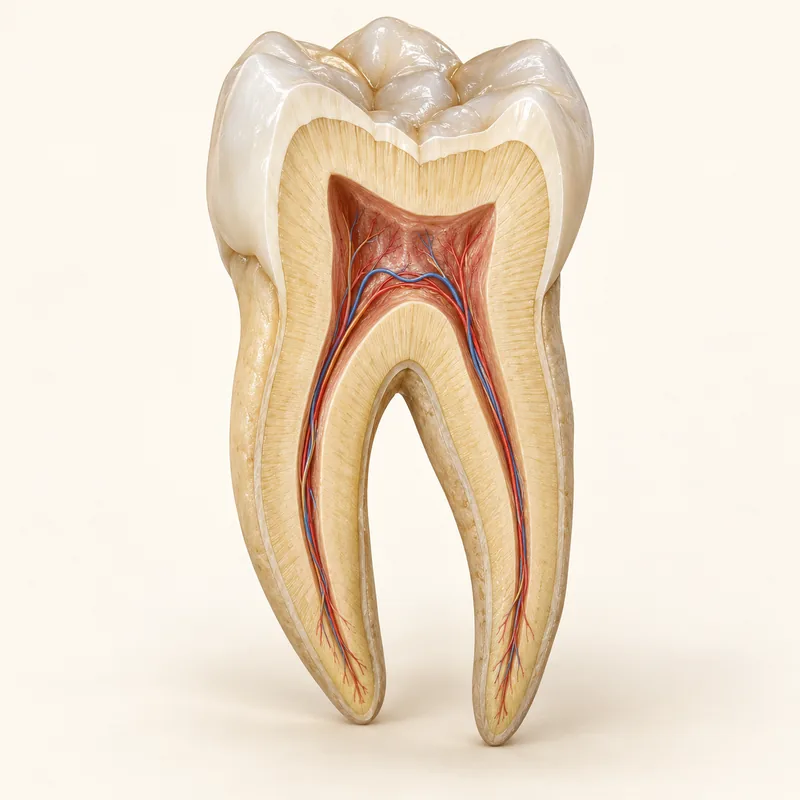
The pulp contains the tooth’s blood vessels and nerves. Severe damage, for example from deep decay or trauma, can cause this tissue to die.
A necrotic pulp usually does not respond to cold. A single cold test cannot prove this, especially soon after a dental injury.
Examination, comparison tests and X-rays when indicated help establish the diagnosis. Root canal treatment is often considered when the affected tooth can be retained.
The soft tissue inside the tooth.
Sometimes through symptoms or discolouration, sometimes only on examination.
The cause and options for retaining the tooth are assessed individually.
Three steps. Straight to the point.
Explanations are also shown on screen.

Silent film in German · English explanations in the three views above
Pulpitis means inflamed pulp tissue; necrosis means dead tissue. Symptoms may overlap or be absent. These terms are not a basis for self-diagnosis.
No. Symptoms may be absent or develop when tissue around the root becomes inflamed. Being pain-free is not a substitute for examination.
A tooth may change colour after an injury, but discolouration has other causes too. Colour alone cannot reliably show whether the pulp is alive.
Not automatically. Restorability, root development, infection and remaining tooth structure determine the options. Root canal treatment can help retain suitable teeth.
A question to discuss with Dr. med. dent. Niusha Barahmand Pour:
Which findings suggest damage to my tooth’s pulp, and how can we assess whether the tooth can be retained?
Symptoms, examination findings and personal wishes form the basis of individual treatment planning.
A previously injured or discoloured tooth can be examined specifically.
Have the tooth assessedChoose an appointment on DoctolibBuild on the simple explanation with clinical terms, key distinctions and a knowledge question.
A cold response tests sensibility, not blood flow directly. Pulpal and apical diagnoses are established separately.
Editorial research: 23 October 2026. This explanation covers general principles and does not replace a personal examination. Suitable treatment is discussed following individual assessment.